The Weight of Purpose: Finding Meaning in Sorrow
“Wherefore came I forth out of the womb to see labour and sorrow, that my days should be consumed with shame?” — Jeremiah 20:18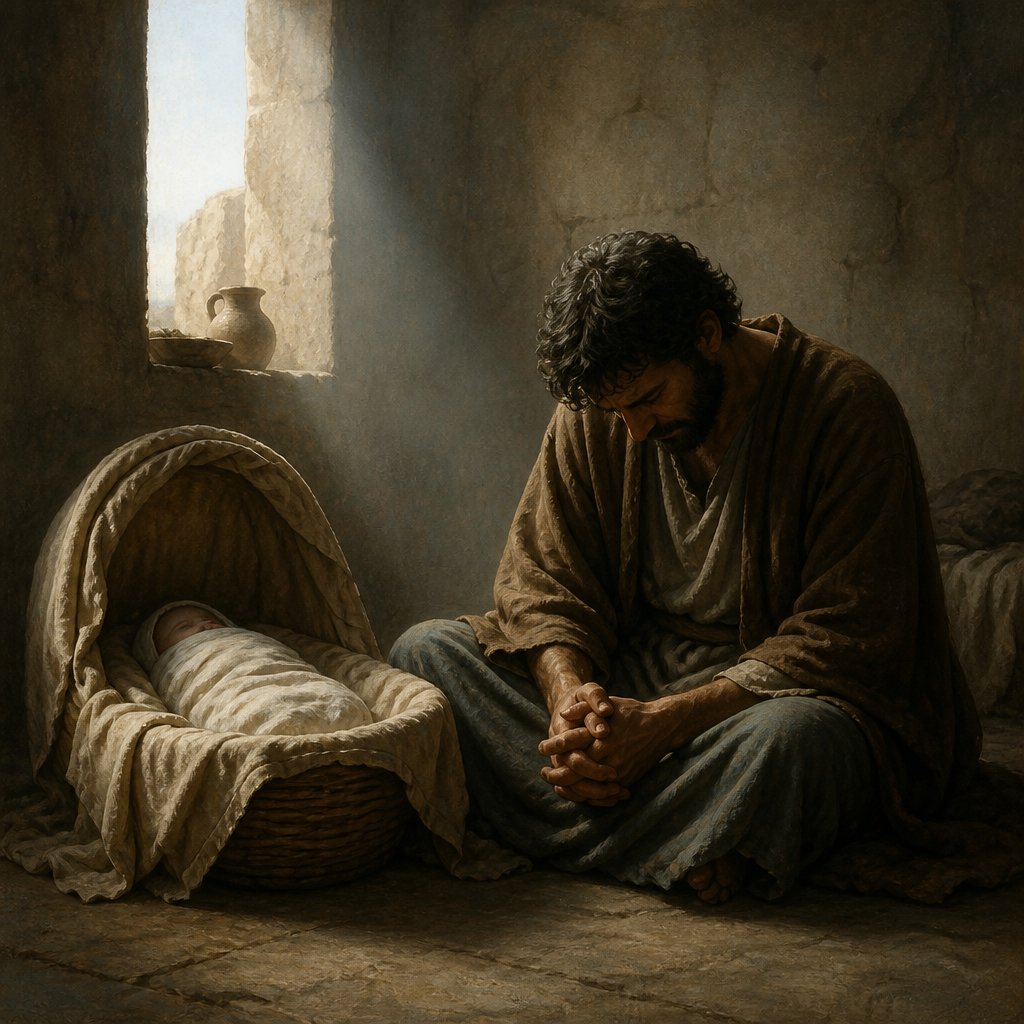
Jeremiah 20:18 poses a profound question that reflects the internal struggle of the prophet: “Wherefore came I forth out of the womb to see labour and sorrow, that my days should be consumed with shame?” This verse encapsulates a moment of existential despair, a contemplation of life’s burdens and the quest for purpose amid suffering.
Jeremiah, often referred to as the weeping prophet, experienced deep distress throughout his ministry—his words were met with resistance, his messages rejected, and his personal life marked by loneliness and anguish. This particular verse resonates with many who feel the weight of their hardships and question the value of their existence. It’s an emotive expression that goes beyond mere lamentation; it invites us to reflect on our own life journeys in light of God’s sovereignty.
As we delve into the context, we recognize that Jeremiah was not only grappling with external persecution but also wrestling with internal dismay about his role as a prophet. His life was defined by continuous labor—facing scorn and ridicule for delivering God’s messages, often warning of impending doom. Despite his faithfulness, he felt worn down, as though his existence was consumed by shame and sorrow. In his pain, he raised a poignant question: Is life worth living when it is filled with suffering?
This verse prompts us to examine our own lives. How often do we find ourselves questioning our purpose amid hardship? The answer lies not only in the acknowledgment of our pain but also in our response to it. Pain is a harsh teacher, yet it can be a pathway to greater understanding and closeness with God. Just as Jeremiah laid bare his struggles before the Lord, we too are encouraged to express our feelings of dissatisfaction or desolation to our Creator. God is not put off by our doubts; instead, He invites us to bring our burdens to Him.
As Christians, we are called to embrace the reality of suffering as part of the human experience. The apostle Paul reminds us in Romans 5:3-5 that suffering produces perseverance; perseverance, character; and character, hope. While we may not always understand the reasons behind our trials, we can rest in the assurance that God uses our labor and sorrow for His divine purposes. He refines us through our afflictions, drawing us closer to Him and enabling us to comfort others in their time of need.
It is crucial to recognize that sorrow does not define our existence; rather, it can strengthen our faith. The biblical narrative is filled with accounts of individuals who faced immense hardships—Joseph, Job, and even Jesus, who termed Himself “a man of sorrows.” These stories reveal that significant struggles are often precursors to divine breakthroughs. In understanding that pain carries the potential for growth, we can shift our perspective from one of despair to one of hopeful anticipation.
Moreover, in moments of shame, we are reminded that God does not lead us into condemnation but offers us grace and restoration. Jeremiah’s lament anticipates the New Covenant, through which we have the assurance of deliverance and hope in Christ. The gospel message serves as the ultimate answer to our existential queries, emphasizing that our worth is not found in circumstances but in the unyielding love of God.
In conclusion, while Jeremiah’s question resonates with the depths of human experience, it serves as an invitation for us to seek deeper understanding amid our trials. Life is a tapestry of experiences—woven with threads of labor, sorrow, joy, and hope. As we journey through each day, may we find comfort in knowing that God walks with us through the valley of despair, drawing us toward the promise of redemption. Let us not shy away from our pain but embrace it as an integral part of God’s good plan for our lives, unlocking the heart of our purpose.
Get our apps


Artwork for Jeremiah 20:18

Jeremiah 20:18 - "Wherefore came I forth out of the womb to see labour and sorrow, that my days should be consumed with shame?"
"Wherefore came I forth out of the womb to see labour and sorrow, that my days should be consumed with shame?" - Jeremiah 20:18

Jeremiah 18:20 - "Shall evil be recompensed for good? for they have digged a pit for my soul. Remember that I stood before thee to speak good for them, and to turn away thy wrath from them."

Jeremiah 18:1 - "The word which came to Jeremiah from the LORD, saying,"

Jeremiah 20:4

Jeremiah 32:18

Jeremiah 23:18

Matthew 18:20

Genesis 20-18

Genesis 18-20

Matthew 18:20

Matthew 18:20

Jeremiah 20:2 - "Then Pashur smote Jeremiah the prophet, and put him in the stocks that were in the high gate of Benjamin, which was by the house of the LORD."

Jeremiah 20:3 - "And it came to pass on the morrow, that Pashur brought forth Jeremiah out of the stocks. Then said Jeremiah unto him, The LORD hath not called thy name Pashur, but Magor-missabib."

Jeremiah 20:1 - "Now Pashur the son of Immer the priest, who was also chief governor in the house of the LORD, heard that Jeremiah prophesied these things."

Jeremiah 44:20 - "¶ Then Jeremiah said unto all the people, to the men, and to the women, and to all the people which had given him that answer, saying,"

Jeremiah 5:20 - "Declare this in the house of Jacob, and publish it in Judah, saying,"

Jeremiah 8:20 - "The harvest is past, the summer is ended, and we are not saved."

Jeremiah 18:5 - "Then the word of the LORD came to me, saying,"

2 Chronicles 20:18

Jeremiah 16:20 - "Shall a man make gods unto himself, and they are no gods?"

"The word which came to Jeremiah from the LORD, saying," - Jeremiah 18:1

Jeremiah 18:18 - "¶ Then said they, Come, and let us devise devices against Jeremiah; for the law shall not perish from the priest, nor counsel from the wise, nor the word from the prophet. Come, and let us smite him with the tongue, and let us not give heed to any of his words."

Jeremiah 51:18 - "They are vanity, the work of errors: in the time of their visitation they shall perish."

Jeremiah 26:20 - "And there was also a man that prophesied in the name of the LORD, Urijah the son of Shemaiah of Kirjath-jearim, who prophesied against this city and against this land according to all the words of Jeremiah:"

Jeremiah 46:20 - "Egypt is like a very fair heifer, but destruction cometh; it cometh out of the north."

Jeremiah 37:18 - "Moreover Jeremiah said unto king Zedekiah, What have I offended against thee, or against thy servants, or against this people, that ye have put me in prison?"

Jeremiah 18:3 - "Then I went down to the potter's house, and, behold, he wrought a work on the wheels."

Jeremiah 5:18 - "Nevertheless in those days, saith the LORD, I will not make a full end with you."

Jeremiah 18:19 - "Give heed to me, O LORD, and hearken to the voice of them that contend with me."