The Heart's Cry: Understanding Divine Justice in Our Trials
“But, O LORD of hosts, that triest the righteous, and seest the reins and the heart, let me see thy vengeance on them: for unto thee have I opened my cause.” — Jeremiah 20:12
Jeremiah 20:12 reads, "But, O LORD of hosts, that triest the righteous, and seest the reins and the heart, let me see thy vengeance on them: for unto thee have I opened my cause." This verse encapsulates the profound struggle of a prophet who stood faithfully in the face of adversity, seeking not just understanding but justice from God.
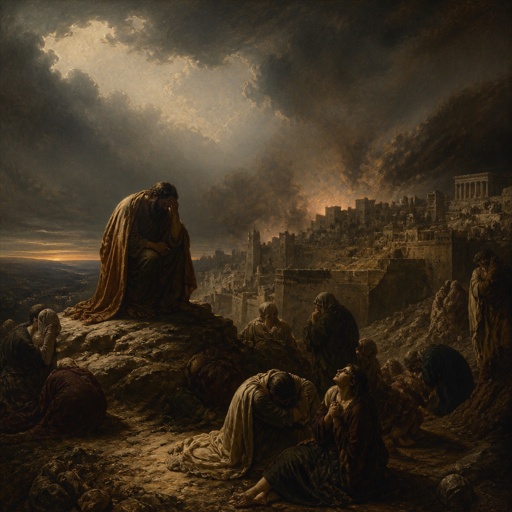
Jeremiah, often known as the Weeping Prophet, faced tremendous persecution for delivering God's messages to a rebellious nation. The imagery in this verse is significant because it reveals both the character of God and the deep human emotions experienced during trials.
When Jeremiah refers to the "LORD of hosts," he is acknowledging God’s sovereignty and power, the very Lord over the armies of heaven. It’s important to understand that in the midst of his turmoil, Jeremiah recognizes that God is not simply a distant figure but an active participant in the affairs of humanity—a God who "triests the righteous." This phrase resonates deeply as it acknowledges the refining fire that God uses to shape His people into instruments of righteousness. God tests the hearts and intentions of those who seek to follow Him. In essence, our struggles and trials are opportunities for spiritual growth, refining our character to be more like Christ's.
In the same breath, Jeremiah calls attention to the omniscience of God—"and seest the reins and the heart." The reins metaphorically point to the deepest parts of our being, the commands of our inner life. It is a reminder that God sees beyond our outward actions and examines our hearts—our motives, desires, and hidden sins. This dual acknowledgment invites us to become more introspective, prompting us to ask ourselves: what are the true conditions of our hearts? Are we harboring feelings of resentment or bitterness that may hinder our testimony? Or are we genuinely seeking God’s will in our circumstances?
Jeremiah’s plea for vengeance is a raw and honest expression of human emotion when faced with injustice. He longs for divine retribution against those who oppose him and mock the message he has been commanded to deliver. Here, we see an element of struggle that is both relatable and profound. It echoes our own deep-seated desires for justice and vindication in our life circumstances. We often wish for immediate justice when wronged, seeking God’s intervention against our adversaries. Yet, it raises a question: should we always seek vengeance, or is there a higher call in understanding God's justice?
In this age of grace, we are called to trust in God’s timing and His plans for justice rather than take matters into our own hands. Romans 12:19 reminds us of this principle: "Dearly beloved, avenge not yourselves, but rather give place unto wrath: for it is written, Vengeance is mine; I will repay, saith the Lord." Our role isn’t to seek revenge but to open our hearts before God, allowing Him to attend to our causes. Like Jeremiah, we can lay our grievances before Him, trusting that He sees all, knows all, and understands our pain.
Concluding with the phrase, "for unto thee have I opened my cause," Jeremiah expresses surrender and confidence in God’s ability to take hold of his situation. He places his troubles into the hands of the One who is just and righteous. So today, let us do likewise. As we navigate our feelings of anger or frustration in times of trial, let us turn our eyes to the LORD, the One who loves us deeply, sees our plight, and is intimately involved in our lives.
In prayer, we can share our burdens and unveil our innermost thoughts before God. As we trust in His perfect justice, we align ourselves with His divine purpose, remembering that we are the righteous under His wing, tested not to punish us, but to prepare us for His glory.
Get our apps


Artwork for Jeremiah 20:12
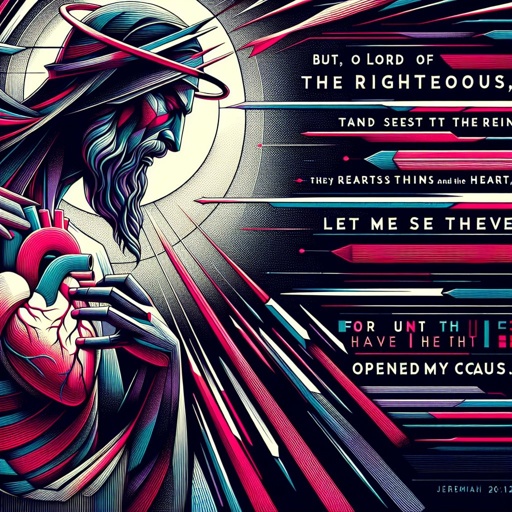
Jeremiah 20:12 - "But, O LORD of hosts, that triest the righteous, and seest the reins and the heart, let me see thy vengeance on them: for unto thee have I opened my cause."

"But, O LORD of hosts, that triest the righteous, and seest the reins and the heart, let me see thy vengeance on them: for unto thee have I opened my cause." - Jeremiah 20:12

Jeremiah 20:4

Jeremiah 35:12 - "¶ Then came the word of the LORD unto Jeremiah, saying,"

Jeremiah 34:12 - "¶ Therefore the word of the LORD came to Jeremiah from the LORD, saying,"

Jeremiah 20:2 - "Then Pashur smote Jeremiah the prophet, and put him in the stocks that were in the high gate of Benjamin, which was by the house of the LORD."

Jeremiah 20:3 - "And it came to pass on the morrow, that Pashur brought forth Jeremiah out of the stocks. Then said Jeremiah unto him, The LORD hath not called thy name Pashur, but Magor-missabib."
Jeremiah 5: 12.

Jeremiah 20:1 - "Now Pashur the son of Immer the priest, who was also chief governor in the house of the LORD, heard that Jeremiah prophesied these things."

Jeremiah 44:20 - "¶ Then Jeremiah said unto all the people, to the men, and to the women, and to all the people which had given him that answer, saying,"

Jeremiah 28:12 - "Then the word of the LORD came unto Jeremiah the prophet, after that Hananiah the prophet had broken the yoke from off the neck of the prophet Jeremiah, saying,"

Jeremiah 5:20 - "Declare this in the house of Jacob, and publish it in Judah, saying,"

Jeremiah 8:20 - "The harvest is past, the summer is ended, and we are not saved."

Nehemiah 12:12 - "And in the days of Joiakim were priests, the chief of the fathers: of Seraiah, Meraiah; of Jeremiah, Hananiah;"

Jeremiah 37:12 - "Then Jeremiah went forth out of Jerusalem to go into the land of Benjamin, to separate himself thence in the midst of the people."

Jeremiah 16:20 - "Shall a man make gods unto himself, and they are no gods?"

Genesis 20-12

Jeremiah 38:12 - "And Ebed-melech the Ethiopian said unto Jeremiah, Put now these old cast clouts and rotten rags under thine armholes under the cords. And Jeremiah did so."

Nehemiah 12:34 - "Judah, and Benjamin, and Shemaiah, and Jeremiah,"

"¶ Then came the word of the LORD unto Jeremiah, saying," - Jeremiah 35:12

Jeremiah 26:20 - "And there was also a man that prophesied in the name of the LORD, Urijah the son of Shemaiah of Kirjath-jearim, who prophesied against this city and against this land according to all the words of Jeremiah:"

1 Chronicles 12:10 - "Mishmannah the fourth, Jeremiah the fifth,"

1 Chronicles 12:13 - "Jeremiah the tenth, Machbanai the eleventh."

acts 20:7-12

Jeremiah 46:20 - "Egypt is like a very fair heifer, but destruction cometh; it cometh out of the north."

Jeremiah 15:12 - "Shall iron break the northern iron and the steel?"

John 20:11-12

Nehemiah 12:20 - "Of Sallai, Kallai; of Amok, Eber;"

"¶ Therefore the word of the LORD came to Jeremiah from the LORD, saying," - Jeremiah 34:12

Jeremiah 48:20 - "Moab is confounded; for it is broken down: howl and cry; tell ye it in Arnon, that Moab is spoiled,"