The Consequences of Forsaking God: A Call to Return
“How shall I pardon thee for this? thy children have forsaken me, and sworn by them that are no gods: when I had fed them to the full, they then committed adultery, and assembled themselves by troops in the harlots’ houses.” — Jeremiah 5:7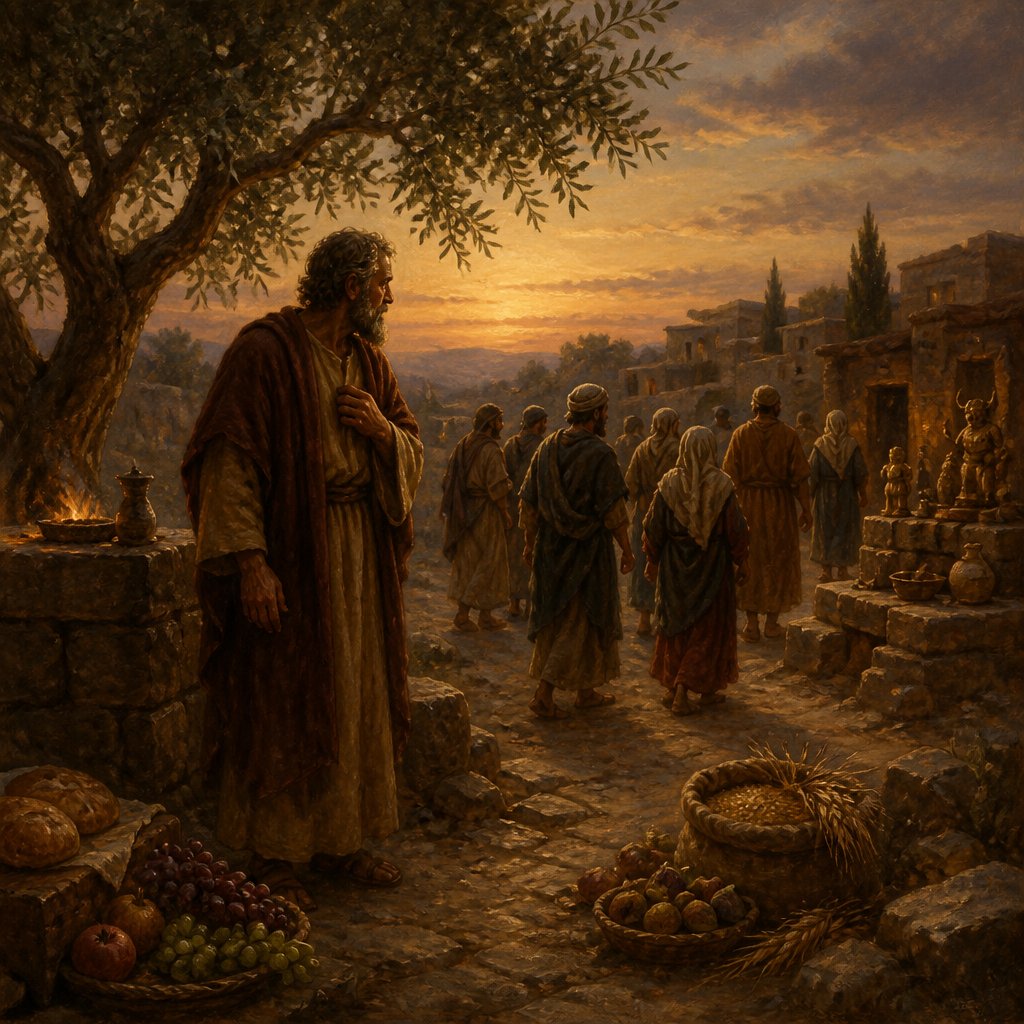
**Introduction**
Jeremiah 5:7 presents a powerful pleading from God through the prophet Jeremiah. In this verse, God is expressing His heartbrokenness over the way the Israelites have turned away from Him, indulging instead in idolatry and immorality. The King James Version states:
*“How shall I pardon thee for this? thy children have forsaken me, and sworn by them that are no gods: when I had fed them to the full, they then committed adultery, and assembled themselves by troops in the harlots' houses.”*
This verse is steeped in the themes of divine disappointment, the consequences of betrayal, and the deep yearning for restoration. As we delve into the text, we uncover layers of spiritual truths that resonate profoundly with our contemporary Christian walk.
**God’s Heartbreak**
In the outset of the verse, God poses a harrowing question: *“How shall I pardon thee for this?”* This rhetorical inquiry reveals a sense of anguish. God, the ultimate provider, had lovingly nurtured His people, yet they turned against Him. The image of feeding them to the full illustrates His generous provision and love. He provided sustenance, security, and steadfast guidance—but the response of the Israelites was betrayal. Their forsaking of God emphasizes a key truth: to turn from our Creator after tasting His goodness leads to great spiritual tragedy.
**The Forsaking of God**
The mention of the children forsaking God is not merely an indictment against a generation; it serves as a warning to all generations, including ours. Today, we might not bow before physical idols, but how often do we place other pursuits—money, ambition, relationships, or personal success—on the throne of our hearts? When God is not our foremost priority, we too have forsaken Him in a spiritual sense. The warnings in the Old Testament penetrate our contemporary lives, urging us to evaluate where our devotion lies and to whom we truly give our allegiance.
**Sworn by ‘No Gods’**
The phrase *“sworn by them that are no gods”* is particularly striking. It reveals a stark irony: the people, in their quest for fulfillment, have turned to entities that offer no sustenance, love, or truth. How often do we establish functional idols—things we lean on for hope and satisfaction—only to find they ultimately leave us empty? In our busyness, we may unknowingly create false gods that divert us from the truth found in Christ. This reminds us to root out the ‘no gods’ in our lives and to recognize that true fulfillment lies solely in the presence of the true God.
**Committing Adultery**
The latter part of the verse addresses the grave sin of adultery, not merely in the physical sense but also in the spiritual betrayal of covenant love with God. Adultery here symbolizes the Israelites’ unfaithfulness to their God, exchanging His love for fleeting pleasures found in idol worship. The metaphor of assembling in *“harlots' houses”* reflects the deep moral decay that accompanies abandoning God’s ways. It is a stark warning about the consequences of a wayward heart. When we indulge in sin, we not only hurt ourselves but also wound the heart of God.
**A Call to Repentance and Restoration**
The sorrow reflected in this verse should ignite in us a flame of repentance. It highlights the urgency to return to God with sincere hearts. If God can feel such deep heartache over His people’s unfaithfulness, how much more should we feel compelled to honor Him with our lives? This is more than just about avoiding sin; it's about nurturing an intimate relationship with our Creator.
In conclusion, Jeremiah 5:7 serves as a poignant reminder of the danger of forsaking God and the emptiness that comes from pursuing anything apart from Him. It challenges us to reflect on our lives and examine our allegiances. May we turn our hearts back to God, who longs for us to return to Him, filled with grace and ready to forgive. Let's commit to living in faithful obedience, acknowledging Him in all our ways, and nurturing our relationship with the One who has fed us to the full and desires our heart above all else.
Get our apps


Artwork for Jeremiah 5:7
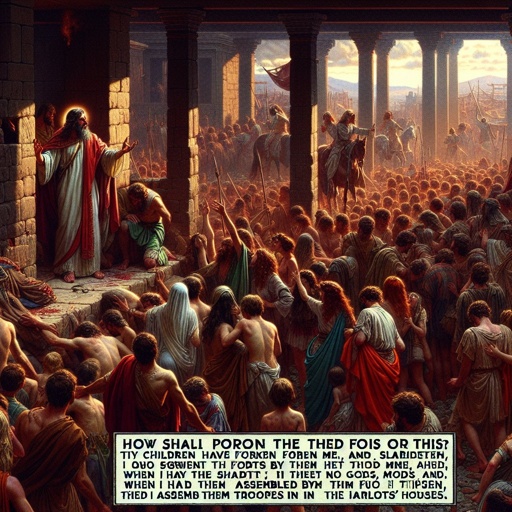
Jeremiah 5:7 - "¶ How shall I pardon thee for this? thy children have forsaken me, and sworn by them that are no gods: when I had fed them to the full, they then committed adultery, and assembled themselves by troops in the harlots' houses."
"¶ How shall I pardon thee for this? thy children have forsaken me, and sworn by them that are no gods: when I had fed them to the full, they then committed adultery, and assembled themselves by troops in the harlots' houses." - Jeremiah 5:7

Jeremiah 7:5 - "For if ye throughly amend your ways and your doings; if ye throughly execute judgment between a man and his neighbour;"

Jeremiah 7:1 - "The word that came to Jeremiah from the LORD, saying,"

Jeremiah 42:7 - "¶ And it came to pass after ten days, that the word of the LORD came unto Jeremiah."

Jeremiah 10:5

Jeremiah 26:7 - "So the priests and the prophets and all the people heard Jeremiah speaking these words in the house of the LORD."

Jeremiah 7:5-6 - "For if you truly amend your ways and your deeds, if you truly execute justice one with another, if you do not oppress the stranger, the orphan, or the widow, or shed innocent blood in this place, and if you do not go after other gods to your own harm."
"For if ye throughly amend your ways and your doings; if ye throughly execute judgment between a man and his neighbour;" - Jeremiah 7:5

Jeremiah 36:5 - "And Jeremiah commanded Baruch, saying, I am shut up; I cannot go into the house of the LORD:"

Prophet Jeremiah 1:5

Jeremiah 17:7-8

Jeremiah 28:5 - "Then the prophet Jeremiah said unto the prophet Hananiah in the presence of the priests, and in the presence of all the people that stood in the house of the LORD,"

Jeremiah 17:7-8

Jeremiah 17:7-8

Jeremiah 17:7-8

"The word that came to Jeremiah from the LORD, saying," - Jeremiah 7:1

Jeremiah 7:7 - "Then will I cause you to dwell in this place, in the land that I gave to your fathers, for ever and ever."

Jeremiah 18:5 - "Then the word of the LORD came to me, saying,"

Jeremiah 5:30 - "¶ A wonderful and horrible thing is committed in the land;"

Jeremiah 42:7 And it happened after ten days that the word of the Lord came to Jeremiah.

Jeremiah 5:20 - "Declare this in the house of Jacob, and publish it in Judah, saying,"

Jeremiah 5:16 - "Their quiver is as an open sepulchre, they are all mighty men."

Jeremiah 42:7 And it happened after ten days that the word of the Lord came to Jeremiah.

Jeremiah 5:2 - "And though they say, The LORD liveth; surely they swear falsely."

Jeremiah 5:23 - "But this people hath a revolting and a rebellious heart; they are revolted and gone."

Jeremiah 17:7 - "Blessed is the man that trusteth in the LORD, and whose hope the LORD is."

Jeremiah 7:8 - "¶ Behold, ye trust in lying words, that cannot profit."

Jeremiah 38:7 - "¶ Now when Ebed-melech the Ethiopian, one of the eunuchs which was in the king's house, heard that they had put Jeremiah in the dungeon; the king then sitting in the gate of Benjamin;"

Jeremiah 13:5 - "So I went, and hid it by Euphrates, as the LORD commanded me."