The Hope of Redemption: A Journey Through Job's Declaration
“For I know that my redeemer liveth, and that he shall stand at the latter day upon the earth: And though after my skin worms destroy this body, yet in my flesh shall I see God: Whom I shall see for myself, and mine eyes shall behold, and not another; though my reins be consumed within me.” — Job 19:25-27
In the distress of suffering, when all hope seems lost, the words of Job in Job 19:25-27 radiate a profound light of faith and assurance that speaks across the ages. The King James Version encapsulates Job's powerful proclamation: "For I know that my redeemer liveth, and that he shall stand at the latter day upon the earth: And though after my skin worms destroy this body, yet in my flesh shall I see God: Whom I shall see for myself, and mine eyes shall behold, and not another; though my reins be consumed within me."
Job’s declaration emerges from the darkest valley of affliction. At this juncture in his life, he found himself bereaved of family, suffering from physical ailments, and shunned by friends. Each layer of grief and despair seemed to suffocate him, leaving him to grapple with the questions of existence and purpose. Yet even in this anguish, Job’s faith flickered like a steadfast flame. In these verses, he reveals an unwavering conviction: his Redeemer lives.
The term "Redeemer" holds vast theological depth. In the ancient context of Job, it implies a family member who has the right and duty to restore a person. It embodies the hope of restoration in circumstances that seem irrevocably broken. Despite Job’s unbearable plight, he confidently asserts that there is a Redeemer—active, alive, and intimately involved in the affairs of humanity. This stands as a testament to God’s sovereign goodness amid suffering.
"For I know that my redeemer liveth…" This declaration starts with certainty. Job does not say he believes or hopes. Instead, he knows. This knowledge is rooted in a relationship with God that transcends his immediate suffering. Herein lies an important lesson for us: our understanding of God can solidify in the crucibles of life’s trials. It is in these moments of testing when our faith can transform from theoretical to experiential. As the Apostle Paul encourages us in Romans 5:3-5, suffering produces perseverance; perseverance, character; and character, hope.
Next, Job looks prophetically into the future when he states, "he shall stand at the latter day upon the earth." Job’s eyes are not just fixed on his present distress; he possesses a vision that extends beyond the grave. This is significant. In a time framed by uncertainty and despair, Job anticipates a future where justice will be served, and he will stand before his God. This assurance points to the ultimate resurrection—a pivotal doctrine that assures believers that death is not the end, but a gateway into eternal communion with God. The resurrection hope that Job articulates resonates profoundly with the Christian faith; for we know, as revealed in the New Testament, that Jesus Christ is our Redeemer who has conquered death.
Job’s next assertion, "And though after my skin worms destroy this body, yet in my flesh shall I see God," powerfully underscores the reality of physical mortality balanced by the promise of divine sight. Despite the decay of the body—a fate we all confront—Job speaks of being transformed. He defiantly declares that he will see God in his flesh; there is a radical hope in the renewal that God promises. For Christians, this extends beyond mere sight; it reflects relational intimacy with the Creator who knows us personally.
Finally, Job concludes with a beautiful affirmation: "Whom I shall see for myself, and mine eyes shall behold, and not another…" This evokes a longing for personal encounter. Faith is inherently personal, and Job’s anticipation of seeing God serves to remind us that our relationship with Him is not merely communal but intensely personal. Each tear we shed, each question we raise, they are not lost in the void but held by a God who sees and knows us intimately.
Job’s journey through devastation ultimately leads us to a promise of hope, renewal, and restoration. His declaration encourages us to cling to our Redeemer, especially when facing trials. We carry forward his courage into our lives today, affirming that despite our present afflictions, we serve a living Redeemer who transforms our suffering into glory. He is alive today, and in Him, we find hope, healing, and the promise of a future where we will behold Him face to face.
Get our apps


Artwork for Job 19:25-27

Job 19:25-27 - "For I know that my redeemer liveth, and that he shall stand at the latter day upon the earth: And though after my skin worms destroy this body, yet in my flesh shall I see God: Whom I shall see for myself, and mine eyes shall behold, and not another; though my reins be consumed within me."

"For I know that my redeemer liveth, and that he shall stand at the latter day upon the earth: And though after my skin worms destroy this body, yet in my flesh shall I see God: Whom I shall see for myself, and mine eyes shall behold, and not another; though my reins be consumed within me." - Job 19:25-27

John 19:25-27

John 19:25-27

John 19:25-27 with emphasis on Mary

Job 39:19-25 – "Do you give the horse its strength or clothe its neck with a flowing mane?"

Job 19:25 - "For I know that my redeemer liveth, and that he shall stand at the latter day upon the earth:"

Job 27:19 - "The rich man shall lie down, but he shall not be gathered: he openeth his eyes, and he is not."
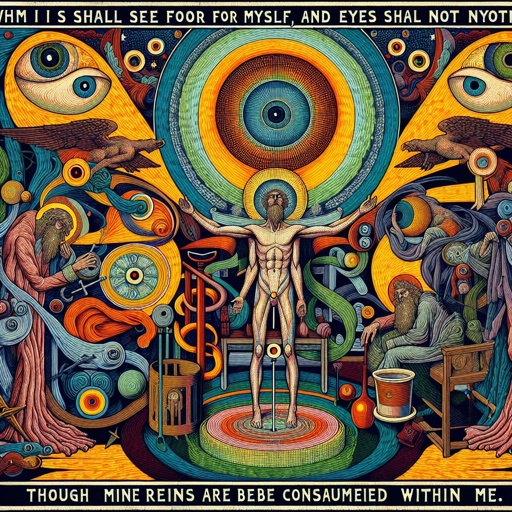
Job 19:27 - "Whom I shall see for myself, and mine eyes shall behold, and not another; though my reins be consumed within me."

"For I know that my redeemer liveth, and that he shall stand at the latter day upon the earth:" - Job 19:25

Job 27:1 - "Moreover Job continued his parable, and said,"

"The rich man shall lie down, but he shall not be gathered: he openeth his eyes, and he is not." - Job 27:19

Job 19:1 - "Then Job answered and said,"

Job 27:6

1 Corinthians 9:25-27

1 Corinthians 9:25-27

Genesis 25-27

1 Corinthians 9:25-27

1 Corinthians 9:25-27

"Then Job answered and said," - Job 19:1

Job 39:13-25
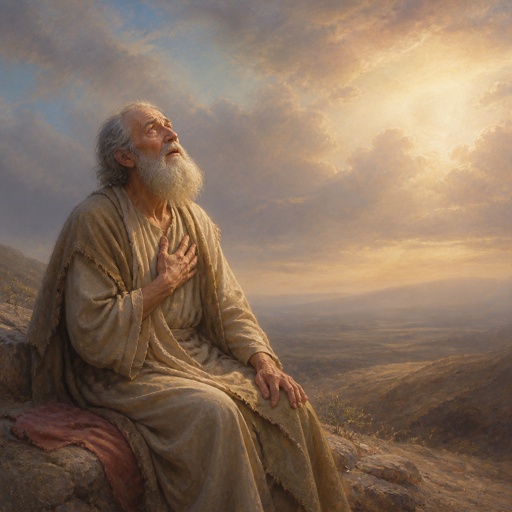
"Whom I shall see for myself, and mine eyes shall behold, and not another; though my reins be consumed within me." - Job 19:27

"Moreover Job continued his parable, and said," - Job 27:1

Job 25:1 - "Then answered Bildad the Shuhite, and said,"

Job 18-19

Job 41:27 - "He esteemeth iron as straw, and brass as rotten wood."

Genesis 19-27

Genesis 19-25

Job 30:27 - "My bowels boiled, and rested not: the days of affliction prevented me."

Job 19:19 - "All my inward friends abhorred me: and they whom I loved are turned against me."