The Weight of Words: Navigating Suffering with Wisdom
“Then answered Zophar the Naamathite, and said,” — Job 20:1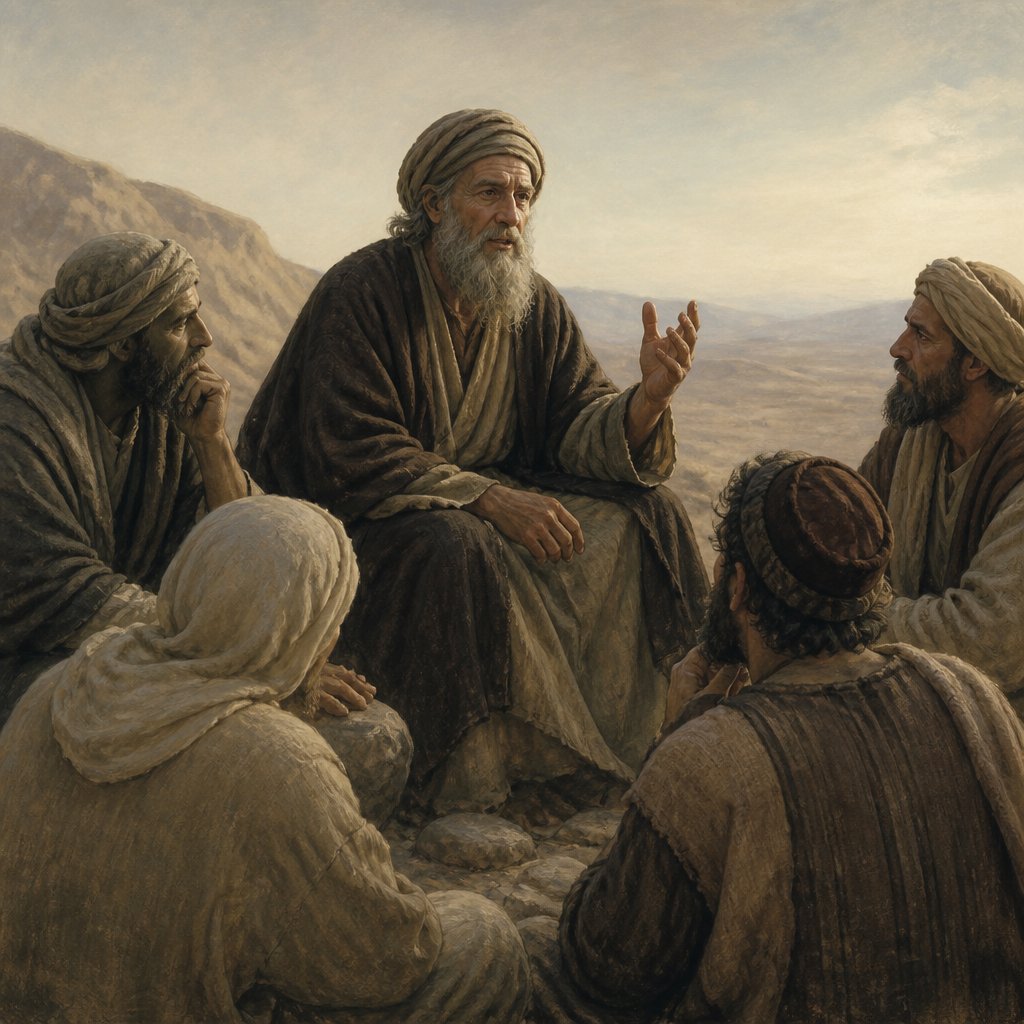
The book of Job, rich in its exploration of human suffering, wisdom, and the character of God, remains a profound dialogue on the complexities of faith in trials. In Job 20:1, we find Zophar the Naamathite entering the discourse with an answer: "Then answered Zophar the Naamathite, and said," suggesting an engagement that goes beyond mere conversation, delving into wisdom, rebuke, and understanding.
Zophar, one of Job’s friends, represents the voice of religious regulation—someone who adheres strictly to the conventional beliefs regarding sin and retribution. His response to Job is not one of comfort but rather a sharp admonition. In the previous chapters, Job has lamented his suffering and questioned the justice of God. Zophar is quick to assert that Job's suffering is a direct consequence of his wrongdoing. This is where we begin to see the first challenge within the renowned narrative of Job: the often painful disparity between our perceptions of righteousness and the reality of our suffering.
As we meditate on Zophar’s words, we are invited to consider how we respond to the struggles of our peers. In times of suffering, do we offer swift judgments, or do we pause to listen? Zophar’s immediate assumption about Job's guilt reveals a heart that lacks compassion. The wisdom literature in Scripture often highlights the importance of understanding and empathy. Proverbs 18:13 warns us, "He that answereth a matter before he heareth it, it is folly and shame unto him." When faced with another’s anguish, our first response should be to listen, to reflect, and to become a safe space for their lament.
Zophar’s answer can serve as a reminder for us. It draws us to examine our own hearts; are we like Zophar, quick to blame and slow to understand? Or can we embrace a posture of grace, realizing that not all suffering is the result of personal sin? This truth, while often lost in the noise of our societal narratives, echoes throughout Scripture. Jesus himself confronted the disciples' assumptions concerning suffering in John 9:1-3 when asked about a man born blind. He clarified that the man’s blindness was not due to sin but so that "the works of God should be made manifest in him."
The story progresses, and amidst Zophar’s unsolicited advice, we are given a chance to reflect on our convictions regarding suffering. Zophar will continue to speak, but so will Job, and their exchanges will reveal a fundamental truth: that understanding God and His ways does not sometimes correlate with human logic. This is pivotal for us as seekers of truth. In our own journeys through suffering—whether personal or as we walk alongside others—let us guard against the temptation to simplify complex emotional and spiritual realities with trite answers.
Moreover, let us hold fast to the truth that God is omniscient. He knows the depths of our struggles, and often our questions are not seeking resolution but will lead us to greater intimacy with Him. In moments of despair, it can feel as if we are isolated within our pain, yet God is present—even when His answers seem distant.
In conclusion, Zophar’s pronouncement reminds us of the weight our words carry, especially as we engage with those in pain. Let us strive to be people who lead with empathy and understanding, who listen before we speak, and who grace those around us with the compassion that echoes the heart of God.
In your own struggles, remember that God is not distant. He's intricately aware of your pain, and like Job, your honesty in suffering might be the most authentic act of worship you could offer.
Let us respond with open hearts, trusting in God's sovereignty, and choosing dialogue over dogma as we navigate the complexities of our faith.
Get our apps


Artwork for Job 20:1

Job 20:1 - "Then answered Zophar the Naamathite, and said,"
"Then answered Zophar the Naamathite, and said," - Job 20:1

Job 1:20

Job 1:20

Job 1:20 - "Then Job arose, and rent his mantle, and shaved his head, and fell down upon the ground, and worshipped,"

"Then Job arose, and rent his mantle, and shaved his head, and fell down upon the ground, and worshipped," - Job 1:20

Job 3:20-21 - "Job 3:20-21: Why is light given to those in misery, and life to the bitter of soul, to those who long for death that does not come, who search for it more than for hidden treasure?"

Job 20:5 - "That the triumphing of the wicked is short, and the joy of the hypocrite but for a moment?"

Job 20:20 - "Surely he shall not feel quietness in his belly, he shall not save of that which he desired."

Job 28:20 - "Whence then cometh wisdom? and where is the place of understanding?"

Job 36:20 - "Desire not the night, when people are cut off in their place."

Job 20:4 - "Knowest thou not this of old, since man was placed upon earth,"

Job 20:17 - "He shall not see the rivers, the floods, the brooks of honey and butter."

Job 4:20 - "They are destroyed from morning to evening: they perish for ever without any regarding it."

Job 3:20 - "Wherefore is light given to him that is in misery, and life unto the bitter in soul;"

Job 29:20 - "My glory was fresh in me, and my bow was renewed in my hand."

Job 22:20 - "Whereas our substance is not cut down, but the remnant of them the fire consumeth."

Job 33:20 - "So that his life abhorreth bread, and his soul dainty meat."

Job 6:20 - "They were confounded because they had hoped; they came thither, and were ashamed."

Job 20:13 - "Though he spare it, and forsake it not; but keep it still within his mouth:"

Job 12:20 - "He removeth away the speech of the trusty, and taketh away the understanding of the aged."

Job 32:20 - "I will speak, that I may be refreshed: I will open my lips and answer."

Job 27:20 - "Terrors take hold on him as waters, a tempest stealeth him away in the night."

Job 20:29 - "This is the portion of a wicked man from God, and the heritage appointed unto him by God."

Job 20:2 - "Therefore do my thoughts cause me to answer, and for this I make haste."

Job 39:20 - "Canst thou make him afraid as a grasshopper? the glory of his nostrils is terrible."
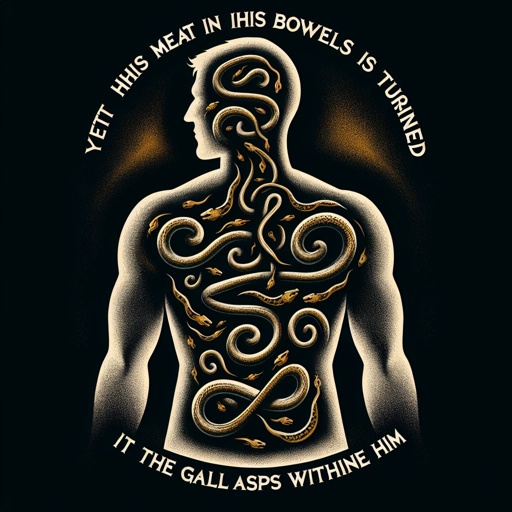
Job 20:14 - "Yet his meat in his bowels is turned, it is the gall of asps within him."

Job 12:1 - "And Job answered and said,"

Job 23:1 - "Then Job answered and said,"

Job 38:20 - "That thou shouldest take it to the bound thereof, and that thou shouldest know the paths to the house thereof?"