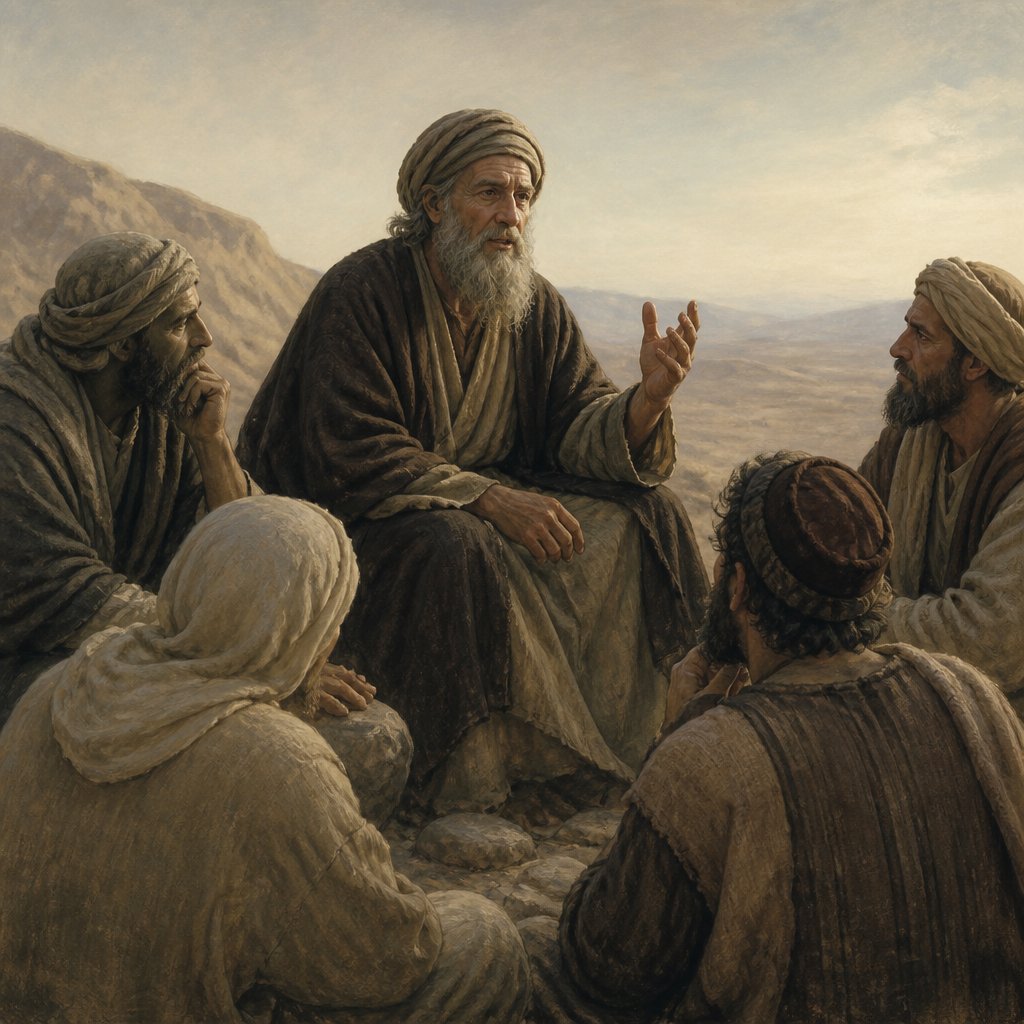
Job 20:1 from the King James Version (KJV) reads, "Then answered Zophar the Naamathite, and said," This verse marks the beginning of a speech by Zophar, one of Job's friends, in the book of Job in the Old Testament. Zophar's speech is part of the ongoing dialogue between Job and his friends as they try to make sense of Job's suffering and the nature of God's justice.
To truly understand the deeper meaning and commentary of Job 20:1, it is important to examine the overall context of the book of Job. The story of Job is a powerful exploration of human suffering, faith, and the nature of God. Job, a righteous and blameless man, experiences a series of devastating tragedies, including the loss of his wealth, health, and family. In the midst of his suffering, Job questions God's justice and struggles to make sense of his circumstances. His friends, including Zophar, come to comfort him but end up engaging in theological debates about the reasons for Job's suffering.
Zophar's speech in Job 20 is characterized by its harsh and accusatory tone. He responds to Job's previous speech, where Job laments his suffering and questions why God has allowed such hardships to befall him. In his response, Zophar accuses Job of being wicked and deserving of the suffering he is enduring. This verse, "Then answered Zophar the Naamathite, and said," marks the beginning of Zophar's speech, setting the stage for his harsh words and judgmental attitude towards Job.
The themes present in Zophar's speech and, by extension, Job 20:1, revolve around the concepts of justice, righteousness, and the consequences of sin. Zophar's argument reflects the traditional understanding of divine retribution, which suggests that suffering is a direct result of one's sin and disobedience to God. Zophar believes that Job's suffering is evidence of his hidden sins, and he urges Job to repent and seek forgiveness from God.
However, Job's story presents a challenge to this traditional understanding of suffering and divine justice. Despite his friends' accusations, Job maintains his innocence and refuses to accept their simplistic explanations for his suffering. Throughout the book, Job expresses a longing for a fair trial where he can present his case before God and seek understanding for his plight. Ultimately, Job's resilience and unwavering faith in God serve as a powerful testament to the complexity of human suffering and the limitations of human understanding.
Job 20:1 and Zophar's subsequent speech also reveal the human tendency to judge and condemn others in times of suffering. Zophar's words are driven by a desire to assign blame and make sense of a difficult situation, but his approach lacks empathy and understanding. This aspect of Zophar's character serves as a cautionary tale, reminding readers of the importance of compassion and humility in the face of adversity.
In addition to the themes of justice and suffering, Job 20:1 and Zophar's speech also contain symbolic significance. Zophar's words represent the larger pattern of misguided human attempts to comprehend the mysteries of God's actions. His speech reflects the limitations of human wisdom and the danger of making hasty judgments based on incomplete understanding. In this sense, Zophar's role in the narrative serves as a reminder of the complexity of divine justice and the need for humility in the face of life's challenges.
In conclusion, Job 20:1, "Then answered Zophar the Naamathite, and said," marks the beginning of a significant moment in the narrative of Job. Zophar's speech, characterized by its judgmental tone and accusatory nature, highlights the themes of justice, suffering, and the limitations of human understanding. Zophar's words also serve as a cautionary example of the dangers of making hasty judgments and the importance of compassion and humility in the face of adversity. Ultimately, Job's story challenges traditional notions of divine retribution and raises profound questions about the nature of suffering and the complexity of God's justice. This verse and the subsequent speech by Zophar invite readers to wrestle with these fundamental questions and to approach the mystery of God's actions with reverence and humility.
Get our apps


Artwork for Job 20:1

Job 20:1 - "Then answered Zophar the Naamathite, and said,"
"Then answered Zophar the Naamathite, and said," - Job 20:1

Job 1:20

Job 1:20

Job 1:20 - "Then Job arose, and rent his mantle, and shaved his head, and fell down upon the ground, and worshipped,"

"Then Job arose, and rent his mantle, and shaved his head, and fell down upon the ground, and worshipped," - Job 1:20

Job 3:20-21 - "Job 3:20-21: Why is light given to those in misery, and life to the bitter of soul, to those who long for death that does not come, who search for it more than for hidden treasure?"

Job 20:5 - "That the triumphing of the wicked is short, and the joy of the hypocrite but for a moment?"

Job 20:20 - "Surely he shall not feel quietness in his belly, he shall not save of that which he desired."

Job 28:20 - "Whence then cometh wisdom? and where is the place of understanding?"

Job 36:20 - "Desire not the night, when people are cut off in their place."

Job 20:4 - "Knowest thou not this of old, since man was placed upon earth,"

Job 20:17 - "He shall not see the rivers, the floods, the brooks of honey and butter."

Job 4:20 - "They are destroyed from morning to evening: they perish for ever without any regarding it."

Job 3:20 - "Wherefore is light given to him that is in misery, and life unto the bitter in soul;"

Job 29:20 - "My glory was fresh in me, and my bow was renewed in my hand."

Job 22:20 - "Whereas our substance is not cut down, but the remnant of them the fire consumeth."

Job 33:20 - "So that his life abhorreth bread, and his soul dainty meat."

Job 6:20 - "They were confounded because they had hoped; they came thither, and were ashamed."

Job 20:13 - "Though he spare it, and forsake it not; but keep it still within his mouth:"

Job 12:20 - "He removeth away the speech of the trusty, and taketh away the understanding of the aged."

Job 32:20 - "I will speak, that I may be refreshed: I will open my lips and answer."

Job 27:20 - "Terrors take hold on him as waters, a tempest stealeth him away in the night."

Job 20:29 - "This is the portion of a wicked man from God, and the heritage appointed unto him by God."

Job 20:2 - "Therefore do my thoughts cause me to answer, and for this I make haste."

Job 39:20 - "Canst thou make him afraid as a grasshopper? the glory of his nostrils is terrible."

Job 20:14 - "Yet his meat in his bowels is turned, it is the gall of asps within him."

Job 12:1 - "And Job answered and said,"

Job 23:1 - "Then Job answered and said,"

Job 38:20 - "That thou shouldest take it to the bound thereof, and that thou shouldest know the paths to the house thereof?"