The Enigma of the Wicked: A Deep Reflection on Job 21:7
“Wherefore do the wicked live, become old, yea, are mighty in power?” — Job 21:7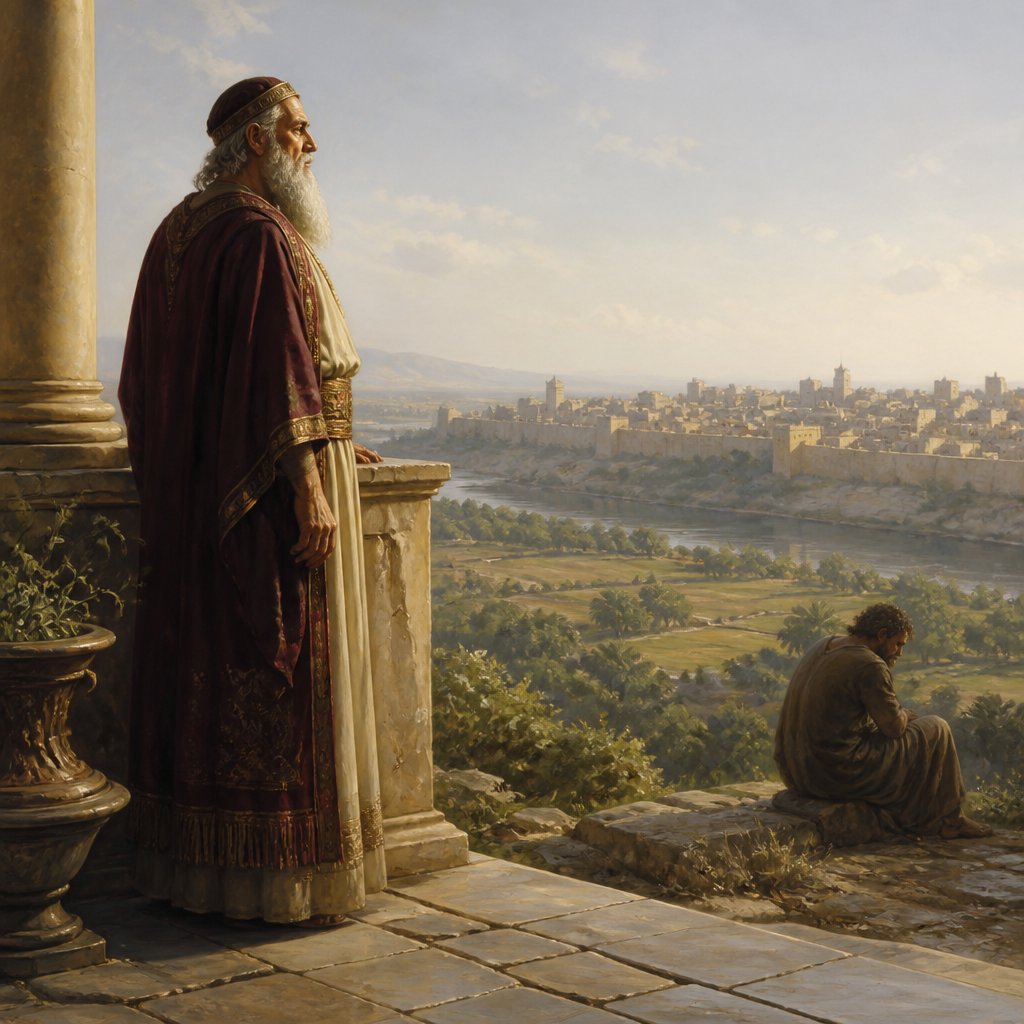
The question posed in Job 21:7—"Wherefore do the wicked live, become old, yea, are mighty in power?"—is one of profound importance. It echoes through the corridors of our human experience as we confront the reality of injustice and the seeming prosperity of those who do wrong. This inquiry, arising from Job's discourse with his friends, prompts us to consider the nature of God's justice and the complexities of life in a fallen world.
At first glance, the verse seems to signal a glaring inconsistency in the moral order of the universe: why do the wicked not only survive but thrive? They hold positions of power, wield influence, and accumulate wealth. As believers, we might wrestle with this observation, expecting that righteousness should lead to blessings while wickedness should be swiftly punished. Yet, the truth is much more nuanced and requires a careful examination of divine sovereignty, human freedom, and the ultimate nature of justice.
The Book of Job serves as a profound meditation on suffering and righteousness. Job’s trials are not merely a narrative of personal loss but an invitation for deeper understanding. Job's friends offered him simplistic views, asserting that suffering is always a direct consequence of wrongdoing. However, Job's experience challenges these assumptions, as he maintains his innocence amidst his profound suffering. Job does not shy away from questioning God; rather, he leans into his, often painful, quest for meaning in the face of calamity. In doing so, he engages in the timeless struggle between our human perspective of fairness and God’s divine justice.
To understand why the wicked may appear to prosper, we must turn our eyes to the eternal perspective. Scripture repeatedly emphasizes the fleeting nature of earthly success and power. Psalms 37:1-2 reminds us, "Fret not thyself because of evildoers, neither be thou envious against the workers of iniquity. For they shall soon be cut down like the grass, and wither as the green herb." Here, we are assured that the situations we observe in this life are temporary, and the true measure of individuals lies beyond the material and immediate.
We are also invited to cultivate patience and faith, trusting that God’s timing and methods are often beyond our understanding. In Exodus 34:7, God declares, "visiting the iniquity of the fathers upon the children... unto the third and fourth generation." This indicates a multi-generational perspective on justice that addresses the long-term consequences of sin that may not be apparent in our immediate experience. The prosperity of the wicked might serve many purposes in God’s plan: it could be a means to draw others to Him, a test for the righteous, or part of a larger narrative that transcends our understanding.
In our pursuit of understanding, we cannot overlook the book's ultimate resolution. God does intervene—and when He does, it is not to explain Himself, but to remind Job—and us—of His sovereign power and wisdom. In Job 42:2, Job himself states, "I know that thou canst do every thing, and that no thought can be withholden from thee." This acknowledgment leads Job to repentance and restoration, emphasizing that our human minds may struggle to grasp the entirety of God’s purposes.
Men of power may rise, and the wicked may seem to flourish, but we must remember that earthly existence is transient. As believers, we are called to focus on the eternal, fix our eyes on Jesus, and engage in righteous living. We find our identity not in the outcome of earthly measures but in our relationship with Christ, who ultimately triumphed over sin and death. We are reminded in Romans 12:19, "Dearly beloved, avenge not yourselves... for it is written, Vengeance is mine; I will repay, saith the Lord.”
As we navigate the complexities of life, Job 21:7 invites us to ponder, pray, and remain steadfast in faith, cherishing the hope that, while we may not fully grasp why the wicked thrive, we can trust in the righteousness and goodness of our God, who is both loving and just.
Get our apps


Artwork for Job 21:7

Job 21:7 - "Wherefore do the wicked live, become old, yea, are mighty in power?"
"Wherefore do the wicked live, become old, yea, are mighty in power?" - Job 21:7

Job 21:1 - "But Job answered and said,"

Job 7:21 - "And why dost thou not pardon my transgression, and take away mine iniquity? for now shall I sleep in the dust; and thou shalt seek me in the morning, but I shall not be."

"But Job answered and said," - Job 21:1

Job 1:21

Job 1:21

Job 3:20-21 - "Job 3:20-21: Why is light given to those in misery, and life to the bitter of soul, to those who long for death that does not come, who search for it more than for hidden treasure?"

Job 21:21 - "For what pleasure hath he in his house after him, when the number of his months is cut off in the midst?"

Job 34:7 - "What man is like Job, who drinketh up scorning like water?"

Job 21:12 - "They take the timbrel and harp, and rejoice at the sound of the organ."

Job 21:8 - "Their seed is established in their sight with them, and their offspring before their eyes."

Job 21:2 - "Hear diligently my speech, and let this be your consolations."

Job 1:7

Job 1:7

Job 1:7

Job 21:13 - "They spend their days in wealth, and in a moment go down to the grave."

Job 21:18 - "They are as stubble before the wind, and as chaff that the storm carrieth away."

Job 18:21 - "Surely such are the dwellings of the wicked, and this is the place of him that knoweth not God."

Job 21:24 - "His breasts are full of milk, and his bones are moistened with marrow."

Job 12:21 - "He poureth contempt upon princes, and weakeneth the strength of the mighty."

Job 21:10 - "Their bull gendereth, and faileth not; their cow calveth, and casteth not her calf."

Job 21:11 - "They send forth their little ones like a flock, and their children dance."

Job 21:16 - "Lo, their good is not in their hand: the counsel of the wicked is far from me."

Job 40:21 - "He lieth under the shady trees, in the covert of the reed, and fens."

Job 21:25 - "And another dieth in the bitterness of his soul, and never eateth with pleasure."

Job 21:32 - "Yet shall he be brought to the grave, and shall remain in the tomb."

Job 24:21 - "He evil entreateth the barren that beareth not: and doeth not good to the widow."

Job 41:21 - "His breath kindleth coals, and a flame goeth out of his mouth."

Job 3:21 - "Which long for death, but it cometh not; and dig for it more than for hid treasures;"