The Quest for Justification: Understanding Our State Before God
“How then can man be justified with God? or how can he be clean that is born of a woman?” — Job 25:4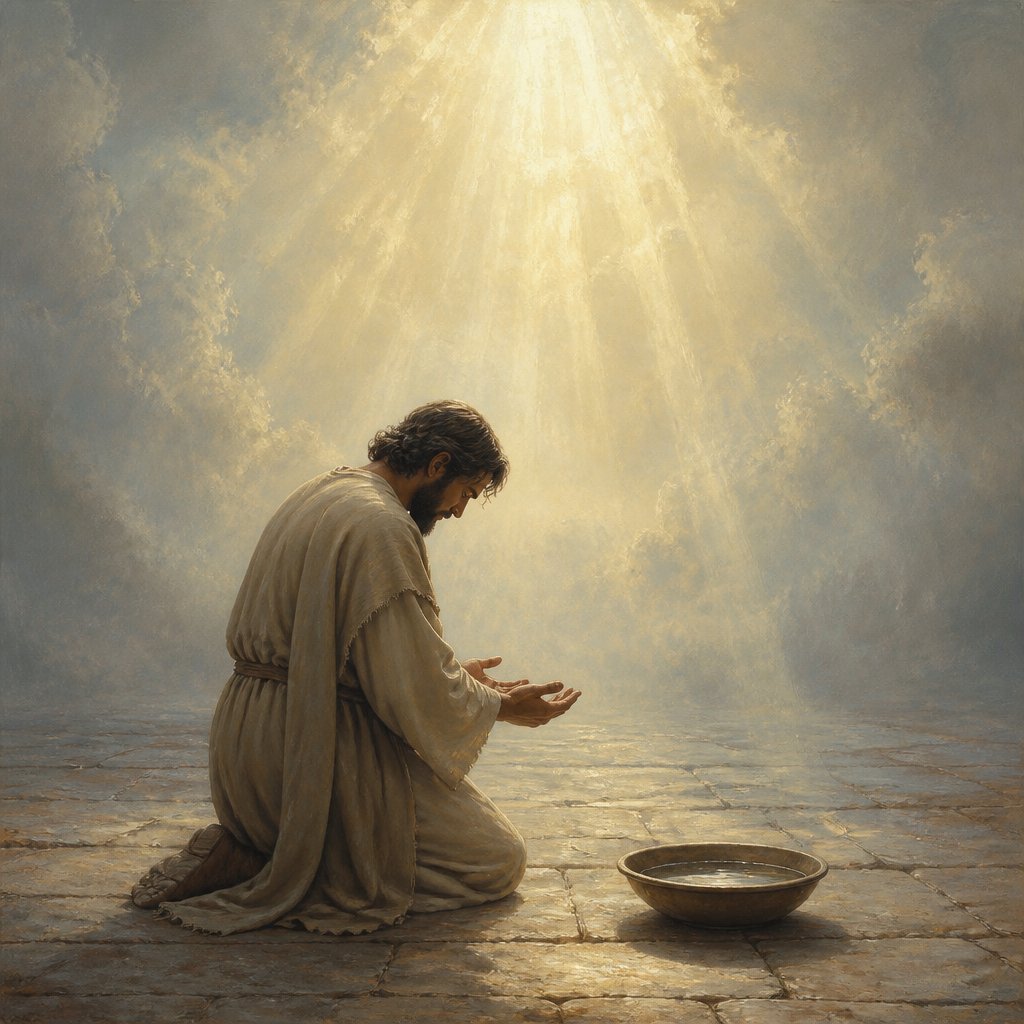
Job 25:4 asks a profound question: "How then can man be justified with God? or how can he be clean that is born of a woman?" This verse captures the essence of our human predicament as we grapple with the concept of justification and the inherent sinfulness that comes with being born of woman. In a world where righteousness is often equated with mere outward actions, Job urges us to look deeper into the heart of what it means to stand before a holy God.
Throughout the Book of Job, we witness the struggle of a man who has lost everything yet clings to his desire for understanding and justice. His friends offer explanations rooted in their limited view of divine justice, but Job’s questions probe the very foundation of humanity’s relationship with God. When Job voices, "How then can man be justified with God?", he echoes the ancient reality that our inherent nature is tainted by sin. The stark truth is that none can stand justified before a holy God based purely on their merits or actions; it is the recognition of our sinfulness that marks the beginning of our journey toward grace.
The idea of justification is fundamental to the Christian faith. It is not merely about being declared innocent but being counted as righteous through faith in God. The Apostle Paul expounds this in Romans 5:1, stating, "Therefore being justified by faith, we have peace with God through our Lord Jesus Christ." Such peace is not earned by our works but is a gift from God. Job's question invites us to ponder whether we can achieve this state of righteousness by ourselves, highlighting our utter dependence on God’s grace.
Job’s contemplation also brings to mind the poetic imagery of being "clean" in a spiritual sense. To be clean before God means more than moral uprightness; it necessitates a purification that can only come from above. In the Old Testament, the sacrificial system was instituted to temporarily cover sin, but these sacrifices pointed to a deeper need for ultimate redemption. The blood of lambs and goats could not purify the soul; they were merely symbols of the sacrifice that was to come. Christ's sacrifice on the cross fulfills what Job and the entire Old Testament point toward — the Lamb of God who takes away the sin of the world (John 1:29).
In light of our need for justification, Job’s question beckons us to examine our lives. Are we relying on our own efforts, our supposed righteousness, or are we embracing the grace offered through Christ? The question reminds us that true humility comes from acknowledging our failures and recognizing that in our flesh dwells no good thing (Romans 7:18). It is this humility that leads us to Christ; it is in recognizing our filthy rags that we can grasp the beauty of His robe of righteousness (Isaiah 64:6).
As we reflect on our journey, let us consider the significance of confession and repentance. 1 John 1:9 encourages us with a promise: "If we confess our sins, he is faithful and just to forgive us our sins, and to cleanse us from all unrighteousness." This verse underlines the process of being made clean before God. It is a continual journey of coming to the Lord, laying bare our hearts, and seeking His grace.
In conclusion, the question posed in Job 25:4 does not just linger as an intellectual inquiry but serves as an invitation into deeper relationship with God. It calls us to pursue a life of faith in Jesus Christ, the only one who can justify us and render us clean. Let us come boldly before the throne of grace, not because we are worthy, but because He is gracious — knowing that through Him, we are justified and made clean.
Get our apps


Artwork for Job 25:4

Job 25:4 - "How then can man be justified with God? or how can he be clean that is born of a woman?"
"How then can man be justified with God? or how can he be clean that is born of a woman?" - Job 25:4

Job 39:13-25

Job 25:1 - "Then answered Bildad the Shuhite, and said,"

Job 28:25 - "To make the weight for the winds; and he weigheth the waters by measure."

Eliphaz speaks to Job in Job 4.

Job 21:25 - "And another dieth in the bitterness of his soul, and never eateth with pleasure."

Job 30:25 - "Did not I weep for him that was in trouble? was not my soul grieved for the poor?"

Job 25:5 - "Behold even to the moon, and it shineth not; yea, the stars are not pure in his sight."

Job 36:25 - "Every man may see it; man may behold it afar off."

Job 6:25 - "How forcible are right words! but what doth your arguing reprove?"

Job 25:2 - "Dominion and fear are with him, he maketh peace in his high places."

Job 25:6 - "How much less man, that is a worm? and the son of man, which is a worm?"

Job 38:25 - "Who hath divided a watercourse for the overflowing of waters, or a way for the lightning of thunder;"
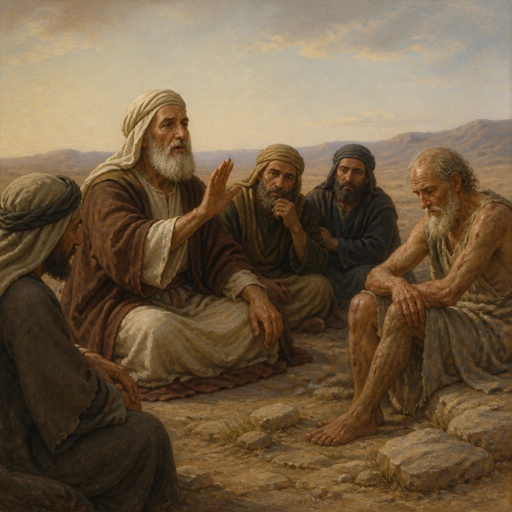
"Then answered Bildad the Shuhite, and said," - Job 25:1

Job 25:3 - "Is there any number of his armies? and upon whom doth not his light arise?"

Job 34:25 - "Therefore he knoweth their works, and he overturneth them in the night, so that they are destroyed."

Job 9:25 - "Now my days are swifter than a post: they flee away, they see no good."

Job 22:25 - "Yea, the Almighty shall be thy defence, and thou shalt have plenty of silver."

Job 15:25 - "For he stretcheth out his hand against God, and strengtheneth himself against the Almighty."

Job 13:25 - "Wilt thou break a leaf driven to and fro? and wilt thou pursue the dry stubble?"

Job 41:25 - "When he raiseth up himself, the mighty are afraid: by reason of breakings they purify themselves."

Job 39:19-25 – "Do you give the horse its strength or clothe its neck with a flowing mane?"

Job 24:25 - "And if it be not so now, who will make me a liar, and make my speech nothing worth?"

Job 12:25 - "They grope in the dark without light, and he maketh them to stagger like a drunken man."

Job 19:25 - "For I know that my redeemer liveth, and that he shall stand at the latter day upon the earth:"

Job 31:25 - "If I rejoiced because my wealth was great, and because mine hand had gotten much;"

Job 33:25 - "His flesh shall be fresher than a child's: he shall return to the days of his youth:"

Job 5:25 - "Thou shalt know also that thy seed shall be great, and thine offspring as the grass of the earth."

Job 29:25 - "I chose out their way, and sat chief, and dwelt as a king in the army, as one that comforteth the mourners."