The Fleeting Nature of Life: A Reflection on Job 7:7
“O remember that my life is wind: mine eye shall no more see good.” — Job 7:7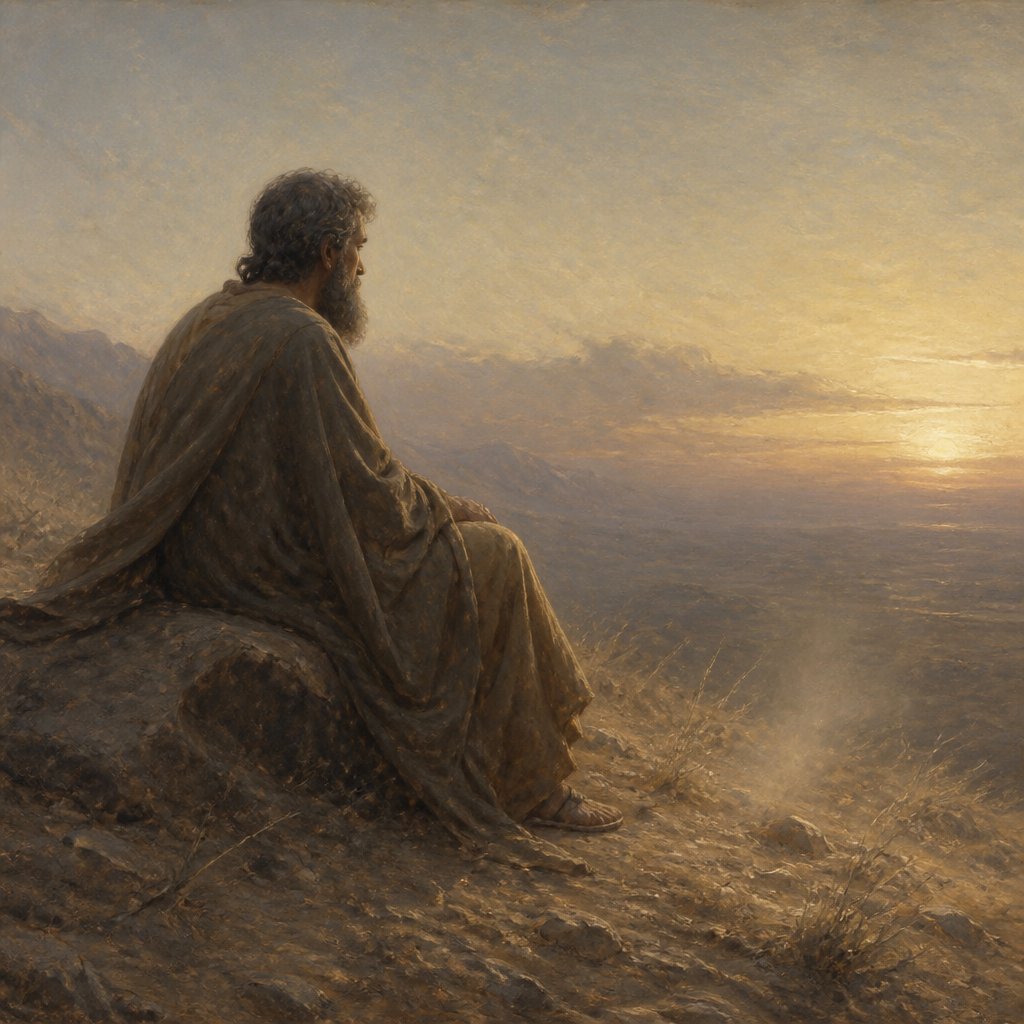
In the heart-wrenching narrative of Job, we find a man grappling with the profound depths of suffering and despair. Job 7:7 resonates with a poignant simplicity and depth: "O remember that my life is wind: mine eye shall no more see good." This verse encapsulates a visceral understanding of the fragility and transience of human existence. It is essential to explore the layers of meaning embedded in Job's lament, especially as we confront our own struggles and the ephemeral nature of life.
The metaphorical comparison of his life to wind evokes imagery that is both powerful and haunting. Wind is invisible; we feel it, yet we cannot grasp it. It is a force that can be gentle, caressing our skin with warmth, or fierce, uprooting trees and reshaping landscapes. Job poignantly acknowledges that life itself can mirror this elusive nature. Moments of joy, laughter, and peace can feel insubstantial, easily swept away by the storms of hardship and sorrow.
In this moment of despair, we uncover Job's profound realization: the certainty of suffering and the unpredictability of life. He speaks almost as though he is conversing with a greater reality, asking the listener—perhaps even God—to reflect upon the transient nature of our existence. Who among us can claim permanence in this world? Just as the wind cannot be held back or captured, neither can we hold on to the bright moments of life forever. They come and go, sometimes leaving us bewildered and aching for what once was.
Job's declaration, "mine eye shall no more see good," adds a layer of poignant sorrow. It suggests that in the throes of his suffering, he feels robbed of hope and the prospect of goodness. It serves as a reminder of the heavy burden of despair, crushing dreams of restored health, relationships, and joy. For many of us, the shadows of challenge can overtake the memory of light. We may wonder if we will ever feel happiness or see good in our lives again.
It is crucial, however, to view this verse through the lens of hope and trust in God’s sovereign plan. Job's lament is not merely a statement of defeat but a profound expression of vulnerability. It invites us to contemplate our struggles honestly—acknowledging our pain and pleading for understanding. This authenticity draws us closer to God. In our darkest moments, when like Job, we feel as if our eyes will never behold good again, we must remember that acknowledging pain does not contradict faith; it can cultivate a deeper reliance on God's promises.
Furthermore, we are reminded that the biblical narrative continues beyond Job's lament. The story ultimately points to restoration and hope. Through enduring faith, Job emerged not only restored but transformed. His life continued, filled with new purpose and goodness. Our struggles are not the final chapter of our stories. Goodness can re-emerge, often shaped by the trials we have endured.
Let us approach our own trials with a dual understanding of vulnerability and hope. Like Job, we may declare our pain before God, pouring out our hearts with raw honesty. We will encounter wind in our lives, but we must also seek to remember the foundations of our faith, where in the midst of uncertainty, God remains constant. His promises of redemption, restoration, and renewal beckon us not to despair but to trust in the horizon of hope He sets before us.
As we ponder Job 7:7, let it be a call to prayer—a call to remind ourselves that though our lives may feel like wind, there is a steadfastness in God that anchors our hearts. While the moments of goodness may come and go, the essence of God’s presence remains ever faithful, ready to guide us through the storms and into the light again.
Get our apps


Artwork for Job 7:7

Job 7:7 - "O remember that my life is wind: mine eye shall no more see good."
"O remember that my life is wind: mine eye shall no more see good." - Job 7:7

Job 1:7

Job 1:7

Job 1:7

Job 34:7 - "What man is like Job, who drinketh up scorning like water?"

Job 38:4-7

Job 13:7 - "Will ye speak wickedly for God? and talk deceitfully for him?"

Job 9:7 - "Which commandeth the sun, and it riseth not; and sealeth up the stars."

Job 24:7 - "They cause the naked to lodge without clothing, that they have no covering in the cold."

Job 7:14 - "Then thou scarest me with dreams, and terrifiest me through visions:"

Job 38:7 - "When the morning stars sang together, and all the sons of God shouted for joy?"

Job 28:7 draw a hidden path

Job 30:7 - "Among the bushes they brayed; under the nettles they were gathered together."

Job 5:7 - "Yet man is born unto trouble, as the sparks fly upward."

Job 6:7 - "The things that my soul refused to touch are as my sorrowful meat."

Job 21:7 - "Wherefore do the wicked live, become old, yea, are mighty in power?"

Job 7:2 - "As a servant earnestly desireth the shadow, and as an hireling looketh for the reward of his work:"

Job 3:7 - "Lo, let that night be solitary, let no joyful voice come therein."

Job 39:7 - "He scorneth the multitude of the city, neither regardeth he the crying of the driver."

Job 7:12 - "Am I a sea, or a whale, that thou settest a watch over me?"
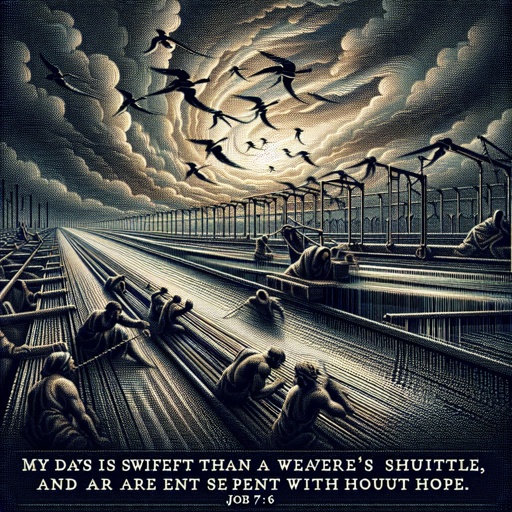
Job 7:6 - "My days are swifter than a weaver's shuttle, and are spent without hope."

Job 28:7 - "There is a path which no fowl knoweth, and which the vulture's eye hath not seen:"

Job 2:7 - "¶ So went Satan forth from the presence of the LORD, and smote Job with sore boils from the sole of his foot unto his crown."

Job 32:7 - "I said, Days should speak, and multitude of years should teach wisdom."

Job 27:7 - "Let mine enemy be as the wicked, and he that riseth up against me as the unrighteous."

Job 14:7 - "For there is hope of a tree, if it be cut down, that it will sprout again, and that the tender branch thereof will not cease."

Job 15:7 - "Art thou the first man that was born? or wast thou made before the hills?"

Job 7:18 - "And that thou shouldest visit him every morning, and try him every moment?"

Job 7:15 - "So that my soul chooseth strangling, and death rather than my life."