The Sovereign Command of God: Understanding Divine Authority
“Which commandeth the sun, and it riseth not; and sealeth up the stars.” — Job 9:7
In Job 9:7, we encounter a profound insight into the majestic authority of God: "Which commandeth the sun, and it riseth not; and sealeth up the stars." This verse arises in the context of Job’s discourse, where he grapples with suffering, justice, and the incomprehensible nature of God. In this passage, Job acknowledges God's ultimate sovereignty over creation, pointing to the sun and the stars as symbols of divine control over the universe.
To unpack the implications of this verse, we must first recognize that the sun, a vital source of light and life for our planet, operates under the direct command of God. Job uses the imagery of the sun not merely to signify the day-to-day rhythm of existence but to highlight the profound truth that both existence and temporality are ultimately regulated by God’s will. The act of commanding the sun to rise and set speaks to God’s omnipotence and the totality of His dominion over all that exists. In stark contrast, there can be moments in our lives when the sun seems as though it never rises—when despair clouds our hearts and our paths are shrouded in darkness.
Job’s acknowledgment that God “sealeth up the stars” further emphasizes this theme of divine control. The stars, often regarded as symbols of hope and constancy, are also under God’s sovereign command. To “seal” them suggests a level of authority that restricts or contains—they are not left to their own devices but are accurately measured by God’s will. It brings us to ponder our own lives. How often do we feel lost in the vastness of our struggles, as if the stars have been obscured and the light of hope has been utterly extinguished? Yet this verse reminds us that even in such moments, the divine command is present, and God reigns even when it feels that all is lost.
In a world that often seems chaotic and unpredictable, this verse can serve as a source of comfort and strength. God does not simply observe the universe; He commands it. He is not an indifferent spectator watching the world unfold; rather, He is an active participant in His creation, managing the cosmos with authority and precision. This should instill in us a sense of awe and reverence. When we recognize that the same God who commands the sun and seals the stars also cares for us, we can find solace in knowing that He orchestrates all things according to His divine purpose.
Moreover, Job's acknowledgment of God’s sovereignty can lead us into a profound understanding of humility. It reminds us that we are not the ultimate arbiters of our fate. We often desire to dictate our paths, to chart our courses, and in our arrogance, we forget the truth that our lives are ultimately in God’s hands. When we yield to this truth, we cultivate a posture of surrender and trust. It allows us to approach our challenges, losses, and even our joys, with the understanding that our timeline and God's divine orchestration may not always align, yet His plans are always for our good.
Finally, as we reflect on Job 9:7, let us consider the light it brings to our prayers. When we call upon God, we engage with the One who commands the sun and seals the stars. In our prayers, we invoke the authority of the Creator of all—the One who has the power to penetrate darkness and bring forth light. In times of uncertainty, let us remember that God’s command still holds, and although the sun may seem delayed in its rising, there is a deep assurance that His light will break through our circumstances at the right moment. Let us trust in God’s omnipotent authority over our lives and reaffirm our commitment to walk in faith, knowing that He commands the tides of creation and our very existence.
Get our apps


Artwork for Job 9:7

Job 9:7 - "Which commandeth the sun, and it riseth not; and sealeth up the stars."

"Which commandeth the sun, and it riseth not; and sealeth up the stars." - Job 9:7

Job 9:1 - "Then Job answered and said,"

"Then Job answered and said," - Job 9:1

Job 1:9 - "Then Satan answered the LORD, and said, Doth Job fear God for nought?"

Job 9:9 - "Which maketh Arcturus, Orion, and Pleiades, and the chambers of the south."
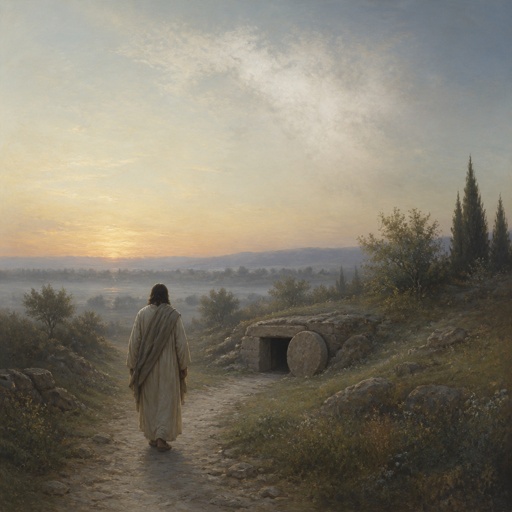
"As the cloud is consumed and vanisheth away: so he that goeth down to the grave shall come up no more." - Job 7:9

Job 34:7 - "What man is like Job, who drinketh up scorning like water?"

Job 1:7

Job 1:7

Job 1:7

Job 1:9 no words

Job 1:9 no words

Job 7:7 - "O remember that my life is wind: mine eye shall no more see good."

Job 38:4-7

Job 42:9 - "So Eliphaz the Temanite and Bildad the Shuhite and Zophar the Naamathite went, and did according as the LORD commanded them: the LORD also accepted Job."

Job 9:29 - "If I be wicked, why then labour I in vain?"

Job 29:9 - "The princes refrained talking, and laid their hand on their mouth."

Job 12:9 - "Who knoweth not in all these that the hand of the LORD hath wrought this?"

Job 39:9 - "Will the unicorn be willing to serve thee, or abide by thy crib?"

Job 4:9 - "By the blast of God they perish, and by the breath of his nostrils are they consumed."

Job 37:9 - "Out of the south cometh the whirlwind: and cold out of the north."

Job 9:35 - "Then would I speak, and not fear him; but it is not so with me."

Job 24:9 - "They pluck the fatherless from the breast, and take a pledge of the poor."

Job 36:9 - "Then he sheweth them their work, and their transgressions that they have exceeded."

Job 9:26 - "They are passed away as the swift ships: as the eagle that hasteth to the prey."

Job 9:23 - "If the scourge slay suddenly, he will laugh at the trial of the innocent."

"Which maketh Arcturus, Orion, and Pleiades, and the chambers of the south." - Job 9:9

Job 2:7 - "¶ So went Satan forth from the presence of the LORD, and smote Job with sore boils from the sole of his foot unto his crown."

Job 30:9 - "And now am I their song, yea, I am their byword."