Crying Out in the Silent Desolation
“O LORD, to thee will I cry: for the fire hath devoured the pastures of the wilderness, and the flame hath burned all the trees of the field.” — Joel 1:19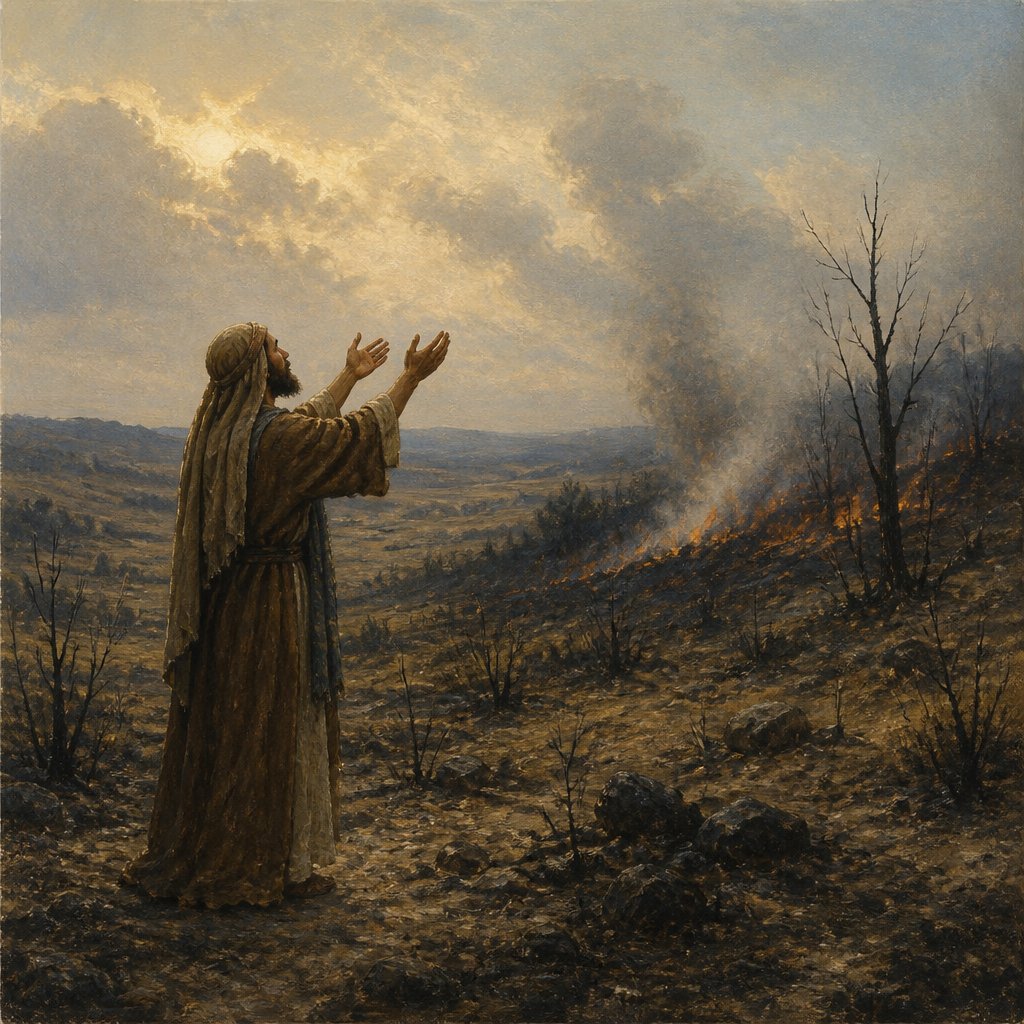
In the heart of the book of Joel, we find a poignant reminder of the devastation that calamity can bring upon both nature and humanity. The verse, "O LORD, to thee will I cry: for the fire hath devoured the pastures of the wilderness, and the flame hath burned all the trees of the field" (Joel 1:19, KJV), serves as a powerful invocation in the face of destruction, distress, and despair. It calls us to reflect on the nature of our cries, the landscapes of our lives, and most importantly, the nature of our relationship with God during challenging times.
**Understanding the Context**
Joel is a prophet who speaks to a people grappling with the aftermath of a locust plague—a natural disaster that has annihilated their crops and left their lands barren. The desolation is not merely physical; it represents a deep spiritual crisis as well. The people of Judah are confronted with their vulnerabilities, and as their livelihoods lie in ruins, Joel invites them to turn their gaze toward God with earnestness and desperation. In this cry of anguish, we can identify a relatable sound that echoes through the ages, a sound that we all have made in various forms.
**The Nature of Our Cries**
Joel’s heartfelt plea to the Lord illustrates the necessity of expressing our grief and desperation. It is not uncommon to experience moments in life when it feels as though everything we’ve built or taken for granted is engulfed by flames of adversity. Perhaps it is the loss of a job, the end of a significant relationship, or the illness of a loved one. When faced with the roar of flames consuming our pastures, we may also feel helpless, lost in the wilderness of our circumstances. The cry to the Lord serves a dual purpose: it is an acknowledgment of our need and a proclamation of our faith that God alone can intervene.
In moments of despair, as we cry out, we recognize our place as dependents on God’s grace. God does not shy away from our cries; instead, He invites us to bring our burdens before Him. This verse reminds us that we are not to remain silent spectators in the face of calamity; rather, we are to engage our relationship with God actively. We are given the liberty to voice our fears, our frustrations, and even our frustrations with Him. Crying out to God is an act of trust that He hears and cares about our plight.
**Nature of Devastation and Spiritual Renewal**
Moreover, the imagery of fire and devastation in this verse can also lead us toward introspective contemplation. What are the 'pastures' in our own lives that are being consumed? Are there areas marked by disobedience, neglect, or spiritual apathy that God may be using these trials to touch? Sometimes, desolation can be a precursor to renewal. When the locusts ravaged the land, what initially appeared as destruction could also serve as God’s means of leading His people back to Him, igniting a divine revival. Fires, although devastating, can also prepare the ground for new growth.
**Hope in the Midst of Destruction**
As we immerse ourselves in the narrative of despair presented in Joel, we are reminded that hope is still alive. When we turn to the Lord in our desperation, we take a step toward reclaiming the hope that can transform our ashes into beauty. Joel’s cry is one that can resonate deeply within our spirit, reminding us that while we may experience moments of drought and desolation, the Lord is ever-present to restore and revive.
In the quietness of your wilderness, do not shy away from your cries. Rather, let them spiral upward into the heart of the One who holds the answers. Janus-faced, our cries reflect both our desperation and our hope in the God who sees us, hears us, and walks with us through the flames of life. Let us take forth today an assurance that amidst the fires, we can still cry out knowing our God is mighty to save.
Get our apps


Artwork for Joel 1:19

Joel 1:19 - "O LORD, to thee will I cry: for the fire hath devoured the pastures of the wilderness, and the flame hath burned all the trees of the field."
"O LORD, to thee will I cry: for the fire hath devoured the pastures of the wilderness, and the flame hath burned all the trees of the field." - Joel 1:19

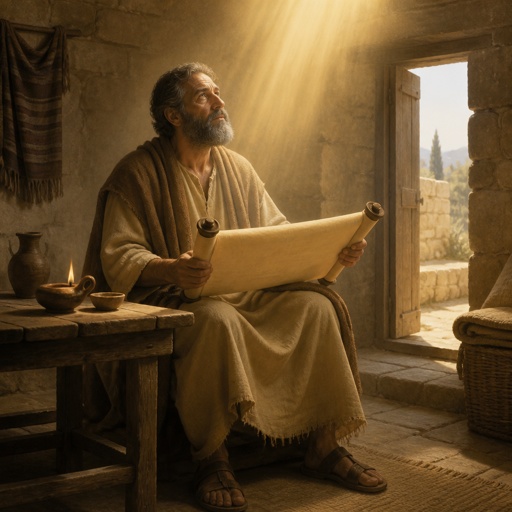
Joel 1:1 - "The word of the LORD that came to Joel the son of Pethuel."
"The word of the LORD that came to Joel the son of Pethuel." - Joel 1:1

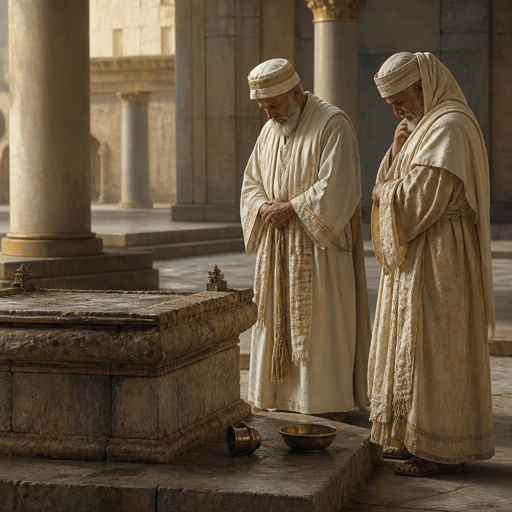
Joel 1:9 - "The meat offering and the drink offering is cut off from the house of the LORD; the priests, the LORD'S ministers, mourn."

Joel 1 natural disaster

Joel 3:19 - "Egypt shall be a desolation, and Edom shall be a desolate wilderness, for the violence against the children of Judah, because they have shed innocent blood in their land."

1 Chronicles 11:38 - "Joel the brother of Nathan, Mibhar the son of Haggeri,"

Joel 1:2-4, 13-20
"The meat offering and the drink offering is cut off from the house of the LORD; the priests, the LORD'S ministers, mourn." - Joel 1:9

1 Chronicles 23:8 - "The sons of Laadan; the chief was Jehiel, and Zetham, and Joel, three."

Joel 1:8 - "¶ Lament like a virgin girded with sackcloth for the husband of her youth."

1 Chronicles 5:12 - "Joel the chief, and Shapham the next, and Jaanai, and Shaphat in Bashan."

1 Chronicles 4:35 - "And Joel, and Jehu the son of Josibiah, the son of Seraiah, the son of Asiel,"

1 Chronicles 6:36 - "The son of Elkanah, the son of Joel, the son of Azariah, the son of Zephaniah,"

1 Chronicles 15:7 - "Of the sons of Gershom; Joel the chief, and his brethren an hundred and thirty:"

Joel 1:15 - "Alas for the day! for the day of the LORD is at hand, and as a destruction from the Almighty shall it come."
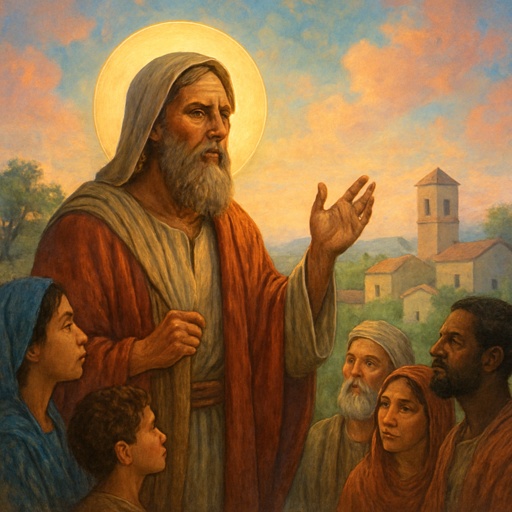
Prophet Joel in a small village surrounded by a small diverse group of listeners. Joel has an aura about his head. The background sky and cloud are seen in soft pastels pinks, yellows, and blues.

Prophet Joel in a small village surrounded by a small diverse group of listeners. Joel has an aura about his head. The background sky and cloud are seen in soft pastels pinks, yellows, and blues.
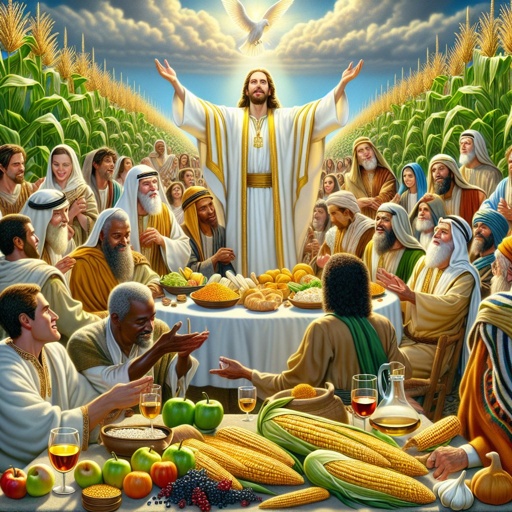
Joel 2:19 - "Yea, the LORD will answer and say unto his people, Behold, I will send you corn, and wine, and oil, and ye shall be satisfied therewith: and I will no more make you a reproach among the heathen:"

1 Chronicles 6:33 - "And these are they that waited with their children. Of the sons of the Kohathites: Heman a singer, the son of Joel, the son of Shemuel,"

Joel 1:10 - "The field is wasted, the land mourneth; for the corn is wasted: the new wine is dried up, the oil languisheth."

Joel 1:3 - "Tell ye your children of it, and let your children tell their children, and their children another generation."

1 Chronicles 5:4 - "The sons of Joel; Shemaiah his son, Gog his son, Shimei his son,"

Joel 1:17 - "The seed is rotten under their clods, the garners are laid desolate, the barns are broken down; for the corn is withered."

Joel 3:1 - "For, behold, in those days, and in that time, when I shall bring again the captivity of Judah and Jerusalem,"

1 Chronicles 27:20 - "Of the children of Ephraim, Hoshea the son of Azaziah: of the half tribe of Manasseh, Joel the son of Pedaiah:"

Joel 1:16 - "Is not the meat cut off before our eyes, yea, joy and gladness from the house of our God?"

1 Chronicles 15:11 - "And David called for Zadok and Abiathar the priests, and for the Levites, for Uriel, Asaiah, and Joel, Shemaiah, and Eliel, and Amminadab,"

1 Chronicles 26:22 - "The sons of Jehieli; Zetham, and Joel his brother, which were over the treasures of the house of the LORD."