The Anointing of Mary: A Lesson in Devotion and Faith
“( It was that Mary which anointed the Lord with ointment, and wiped his feet with her hair, whose brother Lazarus was sick.)” — John 11:2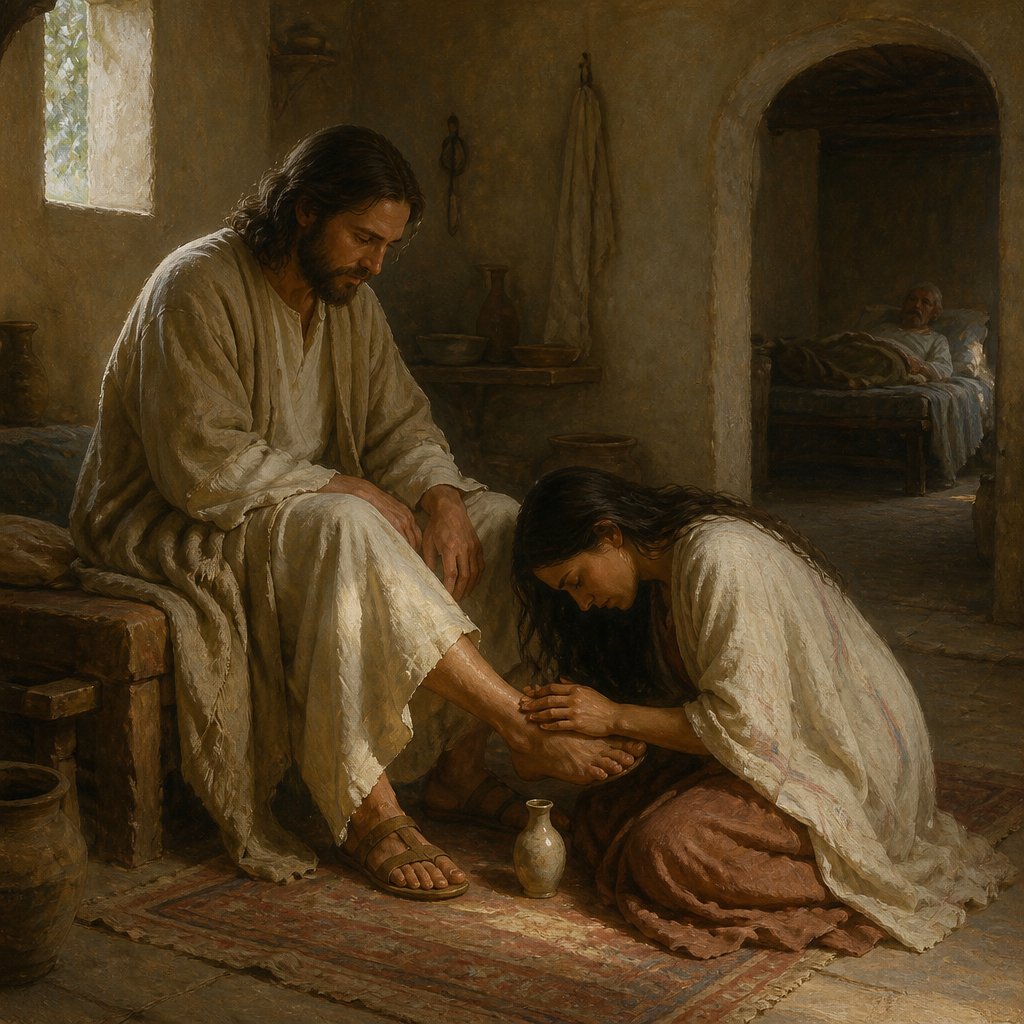
In the Gospel of John, chapter 11, verse 2, we are introduced to a remarkable woman named Mary, who is known for her extraordinary act of devotion to Jesus: "It was that Mary which anointed the Lord with ointment, and wiped his feet with her hair, whose brother Lazarus was sick" (John 11:2 KJV). This verse not only marks Mary as one of the prominent figures in the ministry of Jesus but also encapsulates her deep devotion and recognition of Jesus's divinity through her actions.
As we delve into this verse, we encounter a heartwarming narrative that reveals not only the character of Mary but also her poignant relationship with her brother, Lazarus. The mention of her anointing Jesus adds layers of meaning to this passage, setting the stage for the events that follow in the chapter. It is essential to consider the cultural significance of anointing in the time of Christ. Anointing was often reserved for kings, priests, and ceremonial occasions, demonstrating respect, honor, and love. When Mary poured expensive ointment on Jesus's feet, she displayed an attitude of worship that was radical in its intimacy and vulnerability.
This powerful image leads us to contemplate our personal acts of worship and devotion. Are we willing to give our very best to God? Mary did not hold back; the ointment she used was costly, a sign of her deep appreciation for who Jesus is in her life. Are we offering God our finest and dedicating ourselves to intimate worship? In our world, where distractions abound, how often do we take time to kneel before Him, remove our layers of pride, and humbly lay our hearts at His feet?
Furthermore, this verse calls us to reflect on what it means to love deeply and sacrificially. Mary’s heartache for her sick brother, Lazarus, drives the narrative, yet instead of being paralyzed by loss or fear, she responds with a profound act of love towards Jesus. In moments of desperation, how do we react? Like Mary, can we choose to express our faith through acts of adoration, trusting that God sees and hears us? Her example encourages us not to let our burdens overshadow our unreserved love for Christ.
Additionally, it is essential to note how Jesus responds to Mary’s act of devotion. Later in the same chapter, we see the profound impact of her faith manifested in Jesus raising Lazarus from the dead. Mary's declaration of faith, coupled with her humble anointing of Jesus, paves the way for a very tangible miracle—a promise of resurrection and life not just for Lazarus, but symbolically for all who believe.
Mary also faced societal norms that dictated women's roles at that time; nevertheless, she chose to step outside those boundaries for the sake of her faith. As modern believers, we can draw strength from her willingness to be authentic and to embrace our calling in Christ, regardless of societal expectations.
Let us remember that in our journeys of faith, God can use our devotion in significant ways, even when the circumstances appear bleak. The act of anointing Jesus was personal yet profoundly public, influencing not only Mary’s life but also those around her. In moments of prayer and worship, let us seek to be genuine, washing Jesus’s feet with the tears of our love and faith.
In conclusion, Mary’s life illustrates that true devotion is not just in our words but acts of sacrifice and faith. Let her example challenge us to anoint the feet of our Lord with our own lives, worshipping Him with authenticity and trust, even as challenges arise. As we reflect on her story, may we cultivate a heart that is eager to share in the deep, transformative love of Christ, confident that our devotion is never in vain.
Get our apps


Artwork for John 11:2

John 11:2 - "(It was that Mary which anointed the Lord with ointment, and wiped his feet with her hair, whose brother Lazarus was sick.)"
"(It was that Mary which anointed the Lord with ointment, and wiped his feet with her hair, whose brother Lazarus was sick.)" - John 11:2

2 John 1:11 - "For he that biddeth him God speed is partaker of his evil deeds."

Matthew 11:2 - "Now when John had heard in the prison the works of Christ, he sent two of his disciples,"

John 2:11 - "This beginning of miracles did Jesus in Cana of Galilee, and manifested forth his glory; and his disciples believed on him."

1 John 2:11 - "But he that hateth his brother is in darkness, and walketh in darkness, and knoweth not whither he goeth, because that darkness hath blinded his eyes."

John (11:35) Jesus wept.

"For he that biddeth him God speed is partaker of his evil deeds." - 2 John 1:11

John (11:35) Jesus wept.

John (11:35) Jesus wept.

John 11:35

John 15.1-11

John 11:35

John (11:35) Jesus wept.

John (11:35) Jesus wept.

John (11:35) Jesus wept.

John (11:35) Jesus wept.
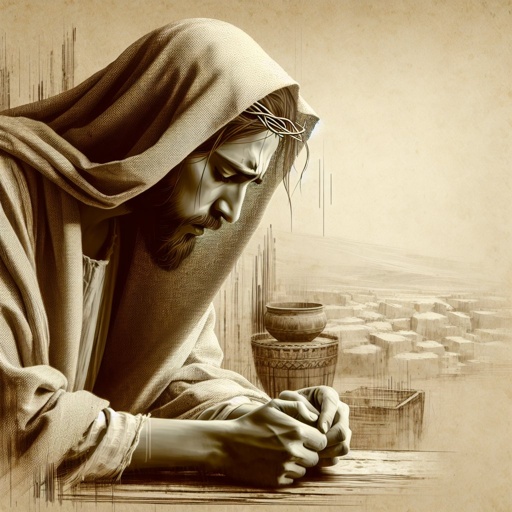
John 11:35 - "Jesus wept."

John (11:35) Jesus wept.

John (11:35) Jesus wept.

John (11:35) Jesus wept.

John (11:35) Jesus wept.

John (11:35) Jesus wept.

John (11:35) Jesus wept.

John (11:35) Jesus wept.

John 20:11-12

JOHN 6:11-13

John 20:11-13

John 8:4-11

John 16:11 - "Of judgment, because the prince of this world is judged."