The Miracle That Drew a Crowd: Understanding John 12:18
“For this cause the people also met him, for that they heard that he had done this miracle.” — John 12:18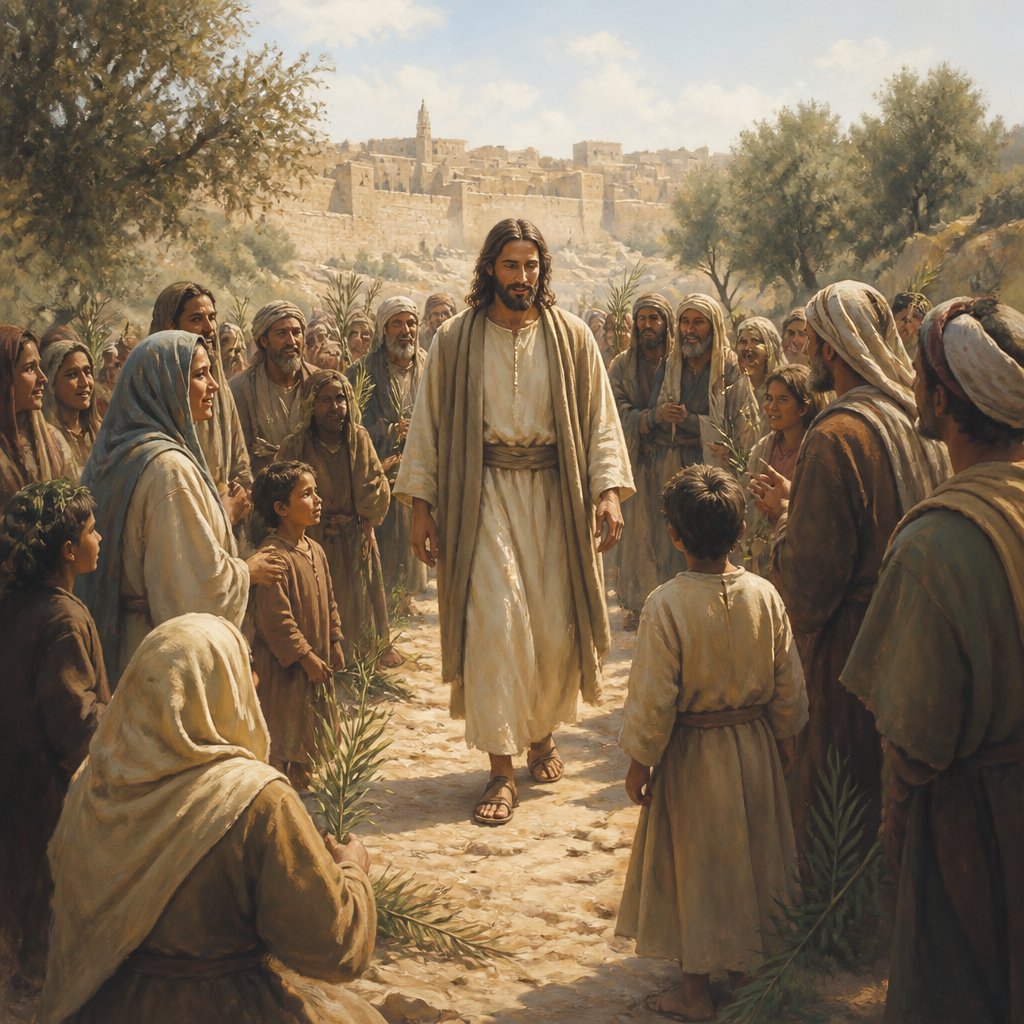
As we reflect on the profound events of John 12:18, where we read, "For this cause the people also met him, for that they heard that he had done this miracle," we are invited into a deeper understanding of the implications of Jesus’s miracles and their effects on the people who witnessed or heard about them. This verse lies at the heart of a pivotal moment in the Gospel, encapsulating not just the excitement of the crowd, but the significance of faith and revelation in the life of a believer.
To appreciate the moment captured in this passage, we must first set the scene. Just prior to this verse, Jesus had raised Lazarus from the dead in a display of divine power and authority that shocked the onlookers and transformed the landscape of Jerusalem’s spiritual environment. Lazarus, a man who had been dead for four days, was resurrected not merely as a miracle to impress, but as a sign that pointed toward the greater miracle of salvation that Jesus offered. The news of this miracle spread quickly, causing a buzz that reverberated throughout the city. It was for this reason that the people gathered to meet Jesus, eager to see the one who had defied death.
The gathering of the people highlights a fundamental aspect of human nature: we are naturally drawn to the extraordinary. The miraculous captivates our attention, instilling hope and wonder. In our own lives, we often seek signs that reaffirm our faith or demonstrate God's involvement in our circumstances. The crowd's reaction to Jesus's miracle mirrors our own responses to the moments where God intervenes in our lives, sparking a desire to draw near to Him.
However, we must examine what draws us toward Jesus. Is it merely the spectacle of miracles, or is it the invitation to enter into a relationship with the miracle worker Himself? The challenge lies in seeking God for who He is and what He offers—not just for what He can do for us. In John 6:26, Jesus rebukes the multitudes who sought Him for bread, saying, "Verily, verily, I say unto you, Ye seek me, not because ye saw the miracles, but because ye did eat of the loaves, and were filled." This serves as a reminder that our faith must not be founded solely upon the visible wonders of life but should transcend to a deeper trust and relationship with Christ.
The gathering at the triumphal entry also signifies more than excitement; it signifies anticipation for a coming kingdom. The crowd represents a multitude of hopes and dreams, a collective yearning for deliverance. They had witnessed Jesus's miraculous power and hoped He would fulfill their messianic expectations. Yet, they would soon learn that Jesus’s kingdom would not come in the way they imagined—by military might or political power—but through sacrificial love and redemption.
As we contemplate this moment, we are challenged to reassess our own expectations of Jesus. Are we limiting Him to our understanding of miracles and signs, or are we opening our hearts to the fullness of His majesty and the depth of His love? Are we gathering around Him for what He can give us or for who He is? In doing so, we discover that the greatest miracle of all is not just what Jesus can do in our circumstances but what He has done through the cross—offering us life eternal and a relationship reconciled with God.
Ultimately, John 12:18 beckons us to seek not just the miraculous, but to understand the person of Christ. As we cultivate a deeper faith, let us remember that although miracles can draw people together, it is our commitment to Christ that sustains us in the long term. Let us not get lost in the crowd, but strive to be individuals with genuine faith, realizing that every miracle points us to the profound truth of biblical salvation and the hope that we have in Jesus Christ.
Get our apps


Artwork for John 12:18
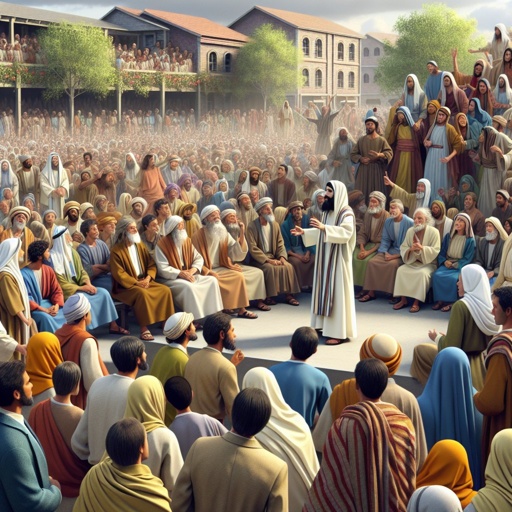
John 12:18 - "For this cause the people also met him, for that they heard that he had done this miracle."
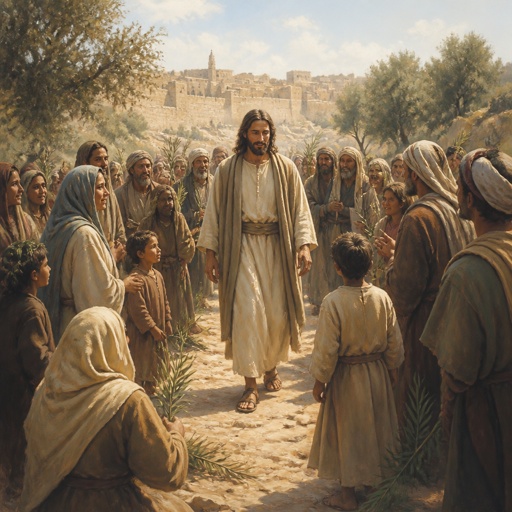
"For this cause the people also met him, for that they heard that he had done this miracle." - John 12:18

John 18:12 - "Then the band and the captain and officers of the Jews took Jesus, and bound him,"
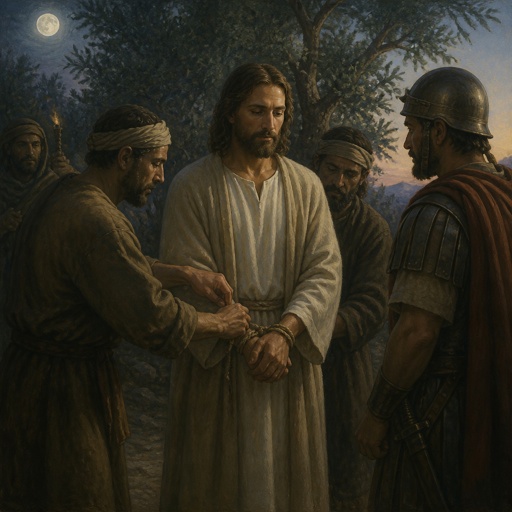
"Then the band and the captain and officers of the Jews took Jesus, and bound him," - John 18:12

John 7:17-18

John 7:17-18

John 7:17-18

John 7:17-18

John 18:25

john 18:36

John 18:12-14 - "So the band of soldiers, the tribune, and the Jewish police arrested Jesus and bound him. They brought him to Annas first, for he was the father-in-law of Caiaphas, who was high priest that year. Caiaphas was the one who had advised the Jews that it was better to have one person die for the people."
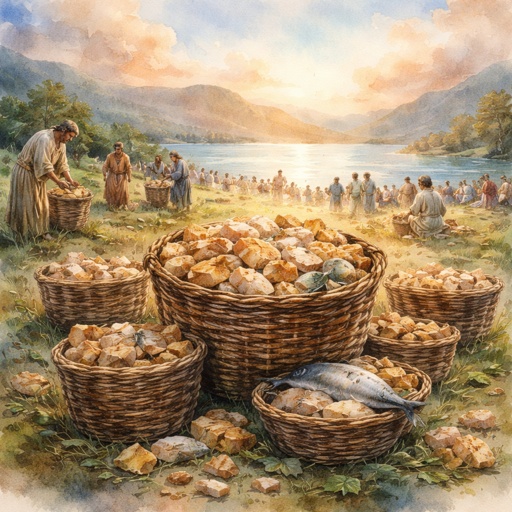
John 6:12

John 8:12

1 John 5:18

1 John 4:18

1 John 4:18

John 12:25
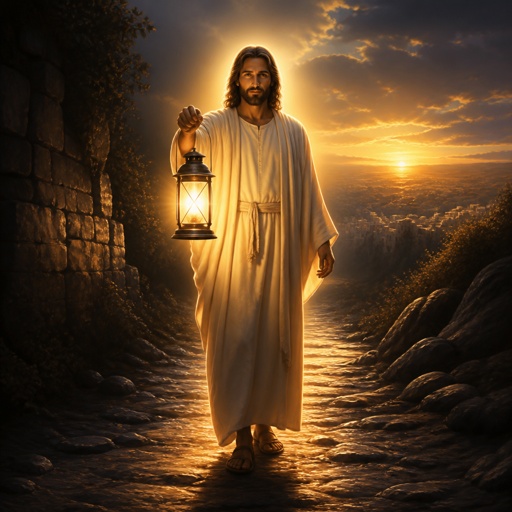
John 8:12

John 8:12

John 8:12
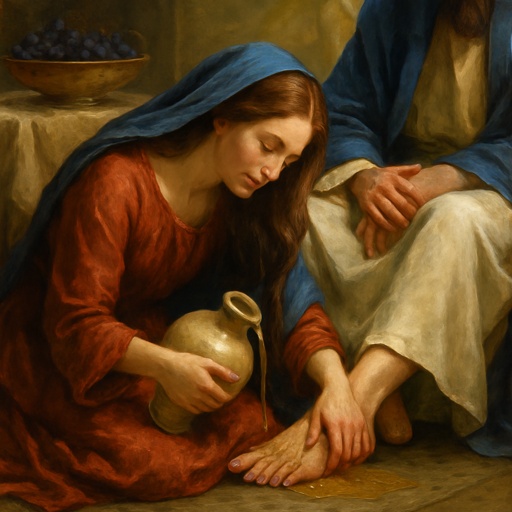
John 12:3

John 8:12

John 18:27 - "Peter then denied again: and immediately the cock crew."

John 6:18 - "And the sea arose by reason of a great wind that blew."

John 20:11-12

Mark 2:18 - "And the disciples of John and of the Pharisees used to fast: and they come and say unto him, Why do the disciples of John and of the Pharisees fast, but thy disciples fast not?"

John 12:12 - "¶ On the next day much people that were come to the feast, when they heard that Jesus was coming to Jerusalem,"
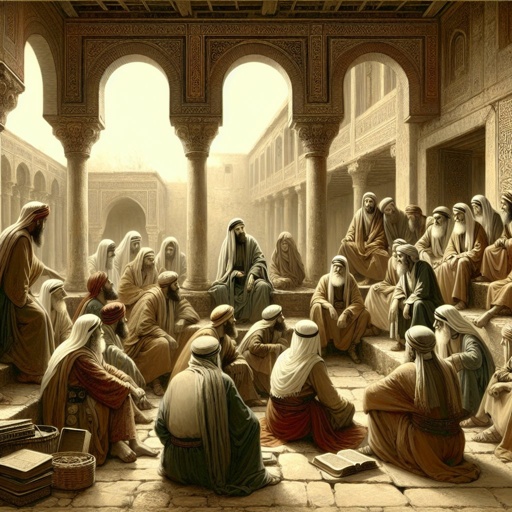
Luke 7:18 - "And the disciples of John shewed him of all these things."

Genesis 18-12

John 18:18 - "And the servants and officers stood there, who had made a fire of coals; for it was cold: and they warmed themselves: and Peter stood with them, and warmed himself."