Behold the Man: A Reflection on the Trials of Christ

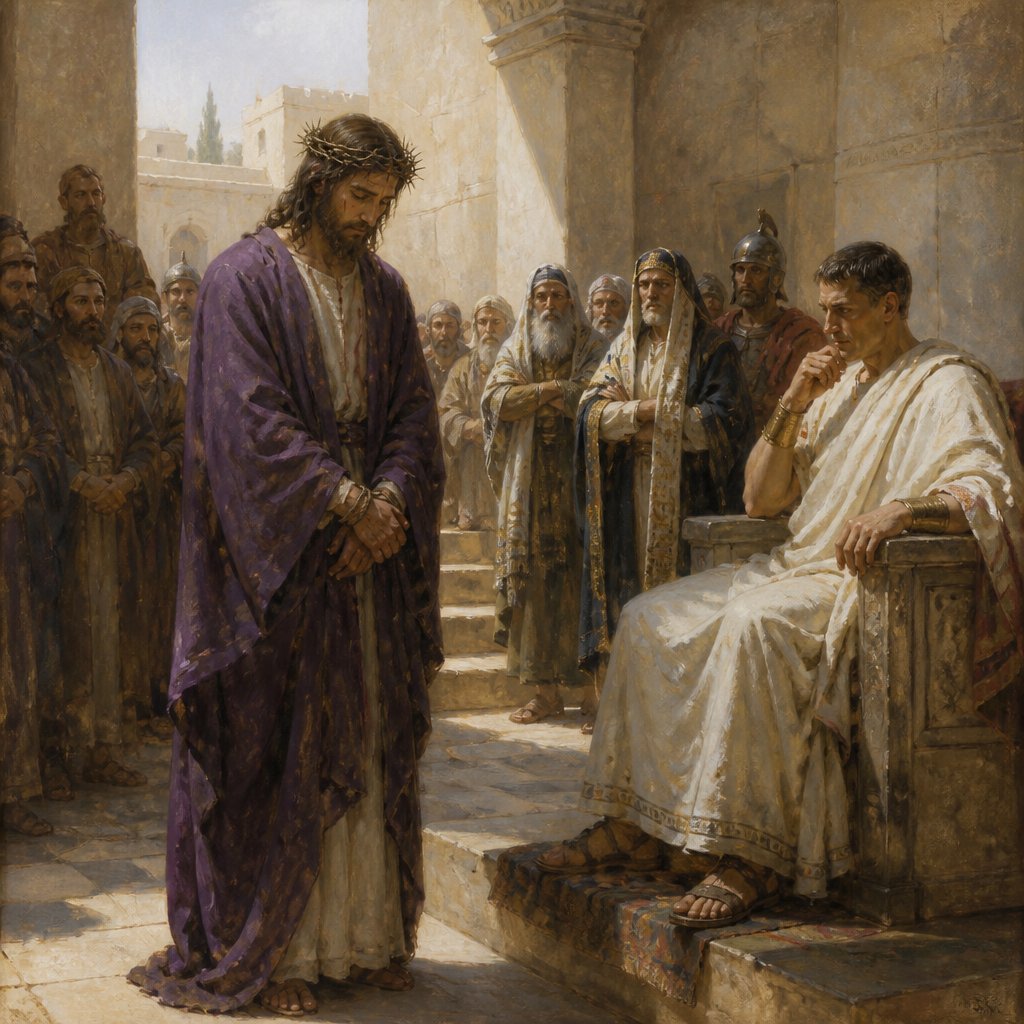
"Then Pilate therefore took Jesus, and scourged him. And the soldiers platted a crown of thorns, and put it on his head, and they put on him a purple robe, And said, Hail, King of the Jews! and they smote him with their hands. Pilate therefore went forth again, and saith unto them, Behold, I bring him forth to you, that ye may know that I find no fault in him. Then came Jesus forth, wearing the crown of thorns, and the purple robe. And Pilate saith unto them, Behold the man! When the chief priests therefore and officers saw him, they cried out, saying, Crucify him, crucify him. Pilate saith unto them, Take ye him, and crucify him: for I find no fault in him. The Jews answered him, We have a law, and by our law he ought to die, because he made himself the Son of God. When Pilate therefore heard that saying, he was the more afraid; And went again into the judgment hall, and saith unto Jesus, Whence art thou? But Jesus gave him no answer. Then saith Pilate unto him, Speakest thou not unto me? knowest thou not that I have power to crucify thee, and have power to release thee? Jesus answered, Thou couldest have no power at all against me, except it were given thee from above: therefore he that delivered me unto thee hath the greater sin. And from thenceforth Pilate sought to release him: but the Jews cried out, saying, If thou let this man go, thou art not Caesar's friend: whosoever maketh himself a king speaketh against Caesar. When Pilate therefore heard that saying, he brought Jesus forth, and sat down in the judgment seat in a place that is called the Pavement, but in the Hebrew, Gabbatha. And it was the preparation of the passover, and about the sixth hour: and he saith unto the Jews, Behold your King! But they cried out, Away with him, away with him, crucify him. Pilate saith unto them, Shall I crucify your King? The chief priests answered, We have no king but Caesar. Then delivered he him therefore unto them to be crucified." - John 19:1-16

"Then Pilate therefore took Jesus, and scourged him. And the soldiers platted a crown of thorns, and put it on his head, and they put on him a purple robe, And said, Hail, King of the Jews! and they smote him with their hands. 

Pilate therefore went forth again, and saith unto them, Behold, I bring him forth to you, that ye may know that I find no fault in him. Then came Jesus forth, wearing the crown of thorns, and the purple robe. And Pilate saith unto them, Behold the man! When the chief priests therefore and officers saw him, they cried out, saying, Crucify him, crucify him. Pilate saith unto them, Take ye him, and crucify him: for I find no fault in him. The Jews answered him, We have a law, and by our law he ought to die, because he made himself the Son of God.

When Pilate therefore heard that saying, he was the more afraid; And went again into the judgment hall, and saith unto Jesus, Whence art thou? But Jesus gave him no answer. Then saith Pilate unto him, Speakest thou not unto me? knowest thou not that I have power to crucify thee, and have power to release thee? Jesus answered, Thou couldest have no power at all against me, except it were given thee from above: therefore he that delivered me unto thee hath the greater sin. 

And from thenceforth Pilate sought to release him: but the Jews cried out, saying, If thou let this man go, thou art not Caesar's friend: whosoever maketh himself a king speaketh against Caesar. When Pilate therefore heard that saying, he brought Jesus forth, and sat down in the judgment seat in a place that is called the Pavement, but in the Hebrew, Gabbatha. And it was the preparation of the passover, and about the sixth hour: and he saith unto the Jews, Behold your King! But they cried out, Away with him, away with him, crucify him. Pilate saith unto them, Shall I crucify your King? The chief priests answered, We have no king but Caesar. Then delivered he him therefore unto them to be crucified." - John 19:{verse.verse_number}

As we delve into the heart-wrenching narrative of John 19:1-16, we find ourselves at a pivotal moment in history, encapsulated in a vivid scene filled with irony, injustice, and profound spiritual significance. In this passage, Pilate stands as a conflicted figure, wrestling with the gravity of the decision that will seal the fate of Jesus, the one declared innocent in his judgment. The King James Version presents this narrative in a stark and sobering manner — ‘Then Pilate therefore took Jesus, and scourged him.’ What follows is a dreadful account of mockery, abuse, and the eventual cry for crucifixion that echoes through the ages.

### The Mocking King

The image of Jesus, crowned with thorns and adorned in a purple robe, emerges as a powerful symbol of the suffering servant who bears the weight of humanity's sin. The soldiers, fully aware of the literal irony of their actions, hail him mockingly as the King of the Jews. These moments remind us of the cruelty of mankind. The crown of thorns represents a perverse parody of the royal dignity due to Him, highlighting the stark contrast between how the world perceives power and authority and the humble, sacrificial reign of Christ.

‘And Pilate saith unto them, Behold the man!’ (John 19:5) This declaration should resonate deeply within us. Pilate, perhaps unconsciously, draws attention to the humanity and vulnerability of Christ. The very act of presenting Jesus in His beaten state, naked of honor yet filled with grace, challenges us to behold Him as both fully God and fully man. In Him, we see the full spectrum of human suffering and divine love. It reverberates across time, calling us to engage deeply with our own humanity — our pain, our fears, our struggles. We encounter the Man of sorrows who bore our griefs and carried our sorrows (Isaiah 53:4).

### The Weight of Authority

As Pilate grapples with his role, his powerful position rapidly becomes a source of spiritual turmoil. In response to Jesus’ silence, he boasts about his authority, asking, ‘knowest thou not that I have power to crucify thee, and have power to release thee?’ (John 19:10). Yet, it is Jesus’ reply that pierces through the façade of power. ‘Thou couldest have no power at all against me, except it were given thee from above.’ (John 19:11)

Here we confront the ultimate irony: earthly authority, in the presence of divine purpose, is but a fleeting illusion. As followers of Christ, we are reminded of our own positions — whether in the workplace, home, or community — and how they align with God’s calling on our lives. Authority is meant to serve, to protect, and to embody the very nature of Christ. When we wield authority selfishly or unjustly, we risk aligning ourselves with the actions of those who would reject the suffering Savior.

### The Choice of Barabbas

The tension builds as we witness the desperate cries of the religious leaders driving Pilate to deliver Jesus to be crucified. They boldly declare, ‘We have no king but Caesar.’ (John 19:15) In those chilling words, we hear the sound of idolatry. The people of God, challenged by their circumstances, choose allegiance to a worldly ruler over the King of Kings. This moment begs us to examine our own faithfulness: Do we prioritize our comfort, our societal ties, or our cultural affiliations over our allegiance to Christ?

As we reflect on the events of this passage, let us ask ourselves: Who is our King? Who do we advocate for in our decisions and actions? The crowd's” choice of Barabbas over Jesus forces us to confront what or whom we truly desire to lead our lives.

### Conclusion

In this scripture, the real tragedy is not only found in the physical suffering of Jesus but in the rejection of His rightful place as King. In our own lives, we have the opportunity and responsibility to acknowledge Him as our sovereign ruler. As we come to 'behold the man,' let us embrace the profound love He displayed through His suffering and continue to trust in His sovereign will over all earthly powers. May we ever recognize Him not just as the man who suffered, but as our King who reigns victorious over sin and death. Amen.

Want to reflect more on John 19:1-16?

Continue your spiritual journey with Bible Chat — an AI-powered tool for exploring God's Word through conversation. Ask questions, discover connections, and deepen your understanding.

John 19:1-16 Artwork

John 19:1-16 - "Then Pilate took Jesus and had him flogged. The soldiers twisted together a crown of thorns and put it on his head. They clothed him in a purple robe and went up to him again and again, saying, “Hail, king of the Jews!” And they slapped him in the face.

Once more Pilate came out and said to the Jews gathered there, “Look, I am bringing him out to you to let you know that I find no basis for a charge against him.” When Jesus came out wearing the crown of thorns and the purple robe, Pilate said to them, “Here is the man!”

As soon as the chief priests and their officials saw him, they shouted, “Crucify! Crucify!”

But Pilate answered, “You take him and crucify him. As for me, I find no basis for a charge against him.”

The Jewish leaders insisted, “We have a law, and according to that law he must die, because he claimed to be the Son of God.”

When Pilate heard this, he was even more afraid, and he went back inside the palace. “Where do you come from?” he asked Jesus, but Jesus gave him no answer. “Do you refuse to speak to me?” Pilate said. “Don’t you realize I have power either to free you or to crucify you?”

Jesus answered, “You would have no power over me if it were not given to you from above. Therefore the one who handed me over to you is guilty of a greater sin.”

From then on, Pilate tried to set Jesus free, but the Jewish leaders kept shouting, “If you let this man go, you are no friend of Caesar. Anyone who claims to be a king opposes Caesar.”

When Pilate heard this, he brought Jesus out and sat down on the judge’s seat at a place known as the Stone Pavement (which in Aramaic is Gabbatha). It was the day of Preparation of the Passover; it was about noon.

“Here is your king,” Pilate said to the Jews.

But they shouted, “Take him away! Take him away! Crucify him!”

“Shall I crucify your king?” Pilate asked.

“We have no king but Caesar,” the chief priests answered.

Finally Pilate handed him over to them to be crucified."

John 19:1-16 - "Then Pilate took Jesus and had him flogged. The soldiers twisted together a crown of thorns and put it on his head. They clothed him in a purple robe and went up to him again and again, saying, “Hail, king of the Jews!” And they slapped him in the face. Once more Pilate came out and said to the Jews gathered there, “Look, I am bringing him out to you to let you know that I find no basis for a charge against him.” When Jesus came out wearing the crown of thorns and the purple robe, Pilate said to them, “Here is the man!” As soon as the chief priests and their officials saw him, they shouted, “Crucify! Crucify!” But Pilate answered, “You take him and crucify him. As for me, I find no basis for a charge against him.” The Jewish leaders insisted, “We have a law, and according to that law he must die, because he claimed to be the Son of God.” When Pilate heard this, he was even more afraid, and he went back inside the palace. “Where do you come from?” he asked Jesus, but Jesus gave him no answer. “Do you refuse to speak to me?” Pilate said. “Don’t you realize I have power either to free you or to crucify you?” Jesus answered, “You would have no power over me if it were not given to you from above. Therefore the one who handed me over to you is guilty of a greater sin.” From then on, Pilate tried to set Jesus free, but the Jewish leaders kept shouting, “If you let this man go, you are no friend of Caesar. Anyone who claims to be a king opposes Caesar.” When Pilate heard this, he brought Jesus out and sat down on the judge’s seat at a place known as the Stone Pavement (which in Aramaic is Gabbatha). It was the day of Preparation of the Passover; it was about noon. “Here is your king,” Pilate said to the Jews. But they shouted, “Take him away! Take him away! Crucify him!” “Shall I crucify your king?” Pilate asked. “We have no king but Caesar,” the chief priests answered. Finally Pilate handed him over to them to be crucified."
"Then Pilate took Jesus and had him flogged. The soldiers twisted together a crown of thorns and put it on his head. They clothed him in a purple robe and went up to him again and again, saying, “Hail, king of the Jews!” And they slapped him in the face.

Once more Pilate came out and said to the Jews gathered there, “Look, I am bringing him out to you to let you know that I find no basis for a charge against him.” When Jesus came out wearing the crown of thorns and the purple robe, Pilate said to them, “Here is the man!”

As soon as the chief priests and their officials saw him, they shouted, “Crucify! Crucify!”

But Pilate answered, “You take him and crucify him. As for me, I find no basis for a charge against him.”

The Jewish leaders insisted, “We have a law, and according to that law he must die, because he claimed to be the Son of God.”

When Pilate heard this, he was even more afraid, and he went back inside the palace. “Where do you come from?” he asked Jesus, but Jesus gave him no answer. “Do you refuse to speak to me?” Pilate said. “Don’t you realize I have power either to free you or to crucify you?”

Jesus answered, “You would have no power over me if it were not given to you from above. Therefore the one who handed me over to you is guilty of a greater sin.”

From then on, Pilate tried to set Jesus free, but the Jewish leaders kept shouting, “If you let this man go, you are no friend of Caesar. Anyone who claims to be a king opposes Caesar.”

When Pilate heard this, he brought Jesus out and sat down on the judge’s seat at a place known as the Stone Pavement (which in Aramaic is Gabbatha). It was the day of Preparation of the Passover; it was about noon.

“Here is your king,” Pilate said to the Jews.

But they shouted, “Take him away! Take him away! Crucify him!”

“Shall I crucify your king?” Pilate asked.

“We have no king but Caesar,” the chief priests answered.

Finally Pilate handed him over to them to be crucified." - John 19:1-16

"Then Pilate took Jesus and had him flogged. The soldiers twisted together a crown of thorns and put it on his head. They clothed him in a purple robe and went up to him again and again, saying, “Hail, king of the Jews!” And they slapped him in the face. Once more Pilate came out and said to the Jews gathered there, “Look, I am bringing him out to you to let you know that I find no basis for a charge against him.” When Jesus came out wearing the crown of thorns and the purple robe, Pilate said to them, “Here is the man!” As soon as the chief priests and their officials saw him, they shouted, “Crucify! Crucify!” But Pilate answered, “You take him and crucify him. As for me, I find no basis for a charge against him.” The Jewish leaders insisted, “We have a law, and according to that law he must die, because he claimed to be the Son of God.” When Pilate heard this, he was even more afraid, and he went back inside the palace. “Where do you come from?” he asked Jesus, but Jesus gave him no answer. “Do you refuse to speak to me?” Pilate said. “Don’t you realize I have power either to free you or to crucify you?” Jesus answered, “You would have no power over me if it were not given to you from above. Therefore the one who handed me over to you is guilty of a greater sin.” From then on, Pilate tried to set Jesus free, but the Jewish leaders kept shouting, “If you let this man go, you are no friend of Caesar. Anyone who claims to be a king opposes Caesar.” When Pilate heard this, he brought Jesus out and sat down on the judge’s seat at a place known as the Stone Pavement (which in Aramaic is Gabbatha). It was the day of Preparation of the Passover; it was about noon. “Here is your king,” Pilate said to the Jews. But they shouted, “Take him away! Take him away! Crucify him!” “Shall I crucify your king?” Pilate asked. “We have no king but Caesar,” the chief priests answered. Finally Pilate handed him over to them to be crucified." - John 19:1-16

John 19:1

John 19:1

John 19:1-3

John 19:1-3

John 19:1 - "Then Pilate therefore took Jesus, and scourged him."

John 19:1 - "Then Pilate therefore took Jesus, and scourged him."

"Then Pilate therefore took Jesus, and scourged him." - John 19:1

"Then Pilate therefore took Jesus, and scourged him." - John 19:1

John 19:16 - "Then delivered he him therefore unto them to be crucified. And they took Jesus, and led him away."

John 19:16 - "Then delivered he him therefore unto them to be crucified. And they took Jesus, and led him away."

John 14:16

John 14:16

John 3:16

John 3:16

John 3:16

John 3:16

John 3:16

John 3:16

John 3:16

John 3:16

John 3-16

John 3-16

John 3:16

John 3:16

John 3:16

John 3:16

John 1:19 - "¶ And this is the record of John, when the Jews sent priests and Levites from Jerusalem to ask him, Who art thou?"

John 1:19 - "¶ And this is the record of John, when the Jews sent priests and Levites from Jerusalem to ask him, Who art thou?"

Exodus 19:16-20

Exodus 19:16-20

1 John 4:19 - "We love him, because he first loved us."

1 John 4:19 - "We love him, because he first loved us."

1 John 5:19 - "And we know that we are of God, and the whole world lieth in wickedness."

1 John 5:19 - "And we know that we are of God, and the whole world lieth in wickedness."

John 1:16 - "And of his fulness have all we received, and grace for grace."

John 1:16 - "And of his fulness have all we received, and grace for grace."

1 Chronicles 16:19 - "When ye were but few, even a few, and strangers in it."

1 Chronicles 16:19 - "When ye were but few, even a few, and strangers in it."

John 16:1 - "These things have I spoken unto you, that ye should not be offended."

John 16:1 - "These things have I spoken unto you, that ye should not be offended."

1 John 3:19 - "And hereby we know that we are of the truth, and shall assure our hearts before him."

1 John 3:19 - "And hereby we know that we are of the truth, and shall assure our hearts before him."

1 John 2:16 - "For all that is in the world, the lust of the flesh, and the lust of the eyes, and the pride of life, is not of the Father, but is of the world."
1 John 2:16 - "For all that is in the world, the lust of the flesh, and the lust of the eyes, and the pride of life, is not of the Father, but is of the world."

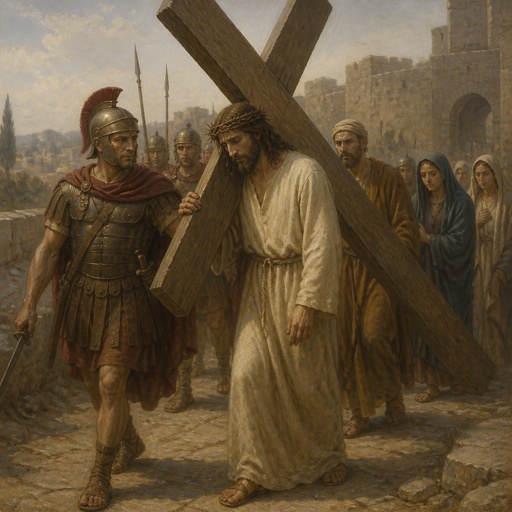
"Then delivered he him therefore unto them to be crucified. And they took Jesus, and led him away." - John 19:16

"Then delivered he him therefore unto them to be crucified. And they took Jesus, and led him away." - John 19:16

1 Corinthians 16:19 - "The churches of Asia salute you. Aquila and Priscilla salute you much in the Lord, with the church that is in their house."

1 Corinthians 16:19 - "The churches of Asia salute you. Aquila and Priscilla salute you much in the Lord, with the church that is in their house."

1 Samuel 19:16 - "And when the messengers were come in, behold, there was an image in the bed, with a pillow of goats' hair for his bolster."

1 Samuel 19:16 - "And when the messengers were come in, behold, there was an image in the bed, with a pillow of goats' hair for his bolster."

John 16:19 - "Now Jesus knew that they were desirous to ask him, and said unto them, Do ye enquire among yourselves of that I said, A little while, and ye shall not see me: and again, a little while, and ye shall see me?"

John 16:19 - "Now Jesus knew that they were desirous to ask him, and said unto them, Do ye enquire among yourselves of that I said, A little while, and ye shall not see me: and again, a little while, and ye shall see me?"

1 John 4;19

1 John 4;19

John 16:33

John 16:33