The Innocence of Christ: A King Among Accusations
“Pilate therefore went forth again, and saith unto them, Behold, I bring him forth to you, that ye may know that I find no fault in him.” — John 19:4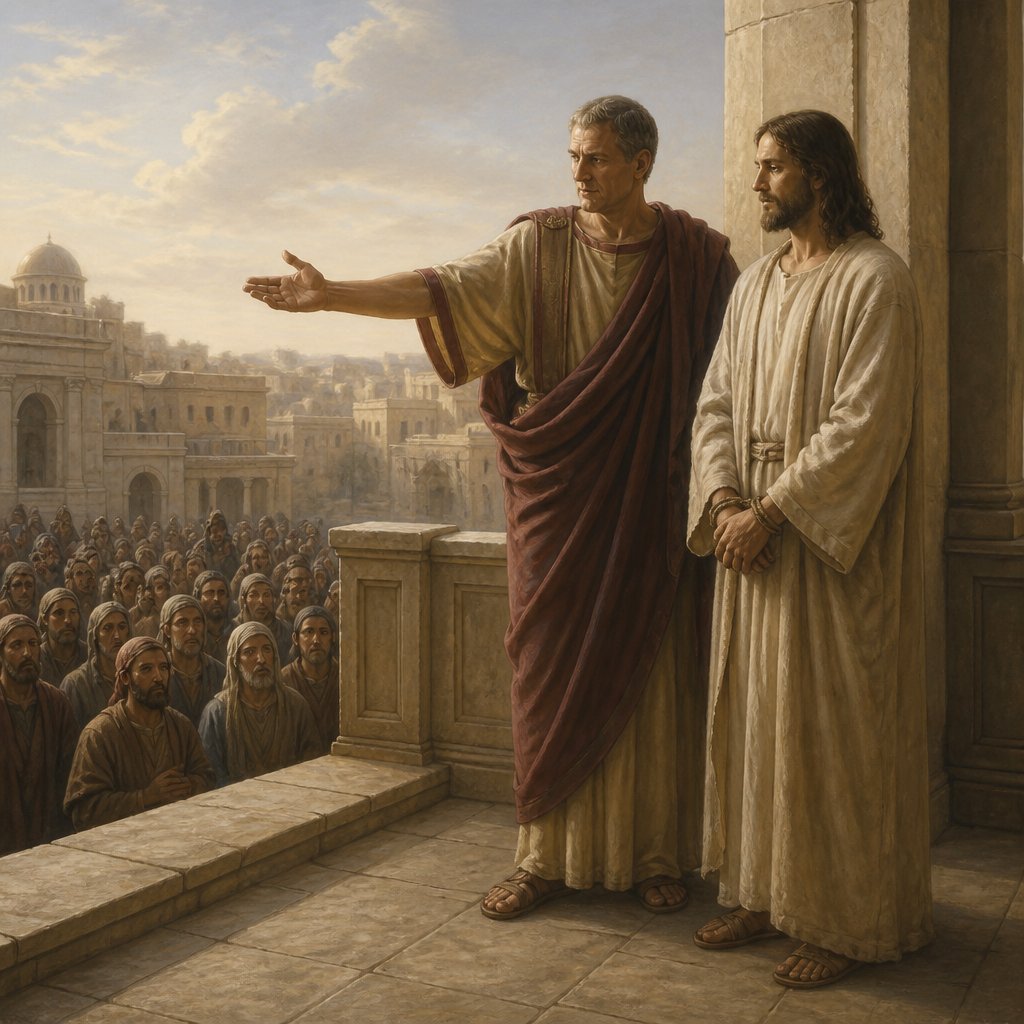
In the heart of the Gospel according to John, we encounter a profound moment in the Passion narrative that invites us to reflect deeply on the nature of innocence and the weight of human judgment. John 19:4 reads, "Pilate therefore went forth again, and saith unto them, Behold, I bring him forth to you, that ye may know that I find no fault in him." These words spoken by Pontius Pilate resonate through the annals of time, uncovering layers of meaning about truth, righteousness, and the tragic irony of the world's response to the innocent.
As we delve into this verse, we must first consider the context. Pilate, the Roman governor, is caught in a precarious situation which demonstrates the complexities of power and justice. He stands before a crowd clamoring for the condemnation of Jesus, who he himself, after interrogation, declares innocent. How remarkable it is that the representative of a worldly government, a man who exercised authority over life and death, recognized something profound in Jesus’ demeanor and unparalleled character. Pilate’s proclamation, "I find no fault in him," is not simply a legal declaration; it is a testimony to Christ’s purity and divine nature amid baseless accusations.
In our world, the concept of innocence is often overshadowed by suspicion and prejudice. Many have been wrongfully judged by public opinion, much like Jesus was. This raises pertinent questions for us: How often do we find ourselves like Pilate, recognizing the righteousness in others, yet faltering in our stand against the swirling tide of societal pressure? How do we respond to injustice when we see it around us, especially when it challenges our comfort or status?
This moment serves as a mirror reflecting our own spiritual and moral standings. Pilate attempts to satisfy a restless crowd by presenting Jesus, yet he does so without taking a clear stand. His wishy-washy stance reminds us that recognizing innocence is not enough; mere acknowledgment is devoid of action and responsibility. The thought-provoking notion here is that acknowledgment of truth demands action from those who claim enlightenment. If Pilate found no fault in Jesus, why did he still allow the crucifixion to proceed? This illustrates our struggle in living out the truth when it becomes inconvenient or challenging.
Moreover, in his declaration, Pilate unwittingly becomes a herald of truth. The irony is tangible; a governor known for administering law and order is the one to proclaim the innocence of the Lamb of God who was about to bear the sins of the world. In this light, we are reminded of 1 Peter 2:22 which states, "Who did no sin, neither was guile found in his mouth." Jesus, the sinless one, stood before his accusers not defensive but submissive, demonstrating a strength of character that would transform the world.
As we grapple with these themes, we are called to embody the very principles that Jesus exemplified—truth, compassion, grace, and righteousness. His innocence should spur us towards a quest for justice in a world that often distorts the truth. We are to advocate for those who cannot speak for themselves, standing as witnesses of Christ’s example in a society that may often overlook the innocent.
When we contemplate Pilate’s words, we should ask ourselves, how can we be a voice for the voiceless? How can we work towards justice and righteousness in our daily lives? Recognizing the innocence of Christ is a call for us to engage in restorative action—living lives that reflect His love and grace. Ultimately, in the face of an unjust world, let us boldly declare, just like Pilate, that there is no fault in Him, and let us bring forth Christ’s light to dispel darkness in the lives of those around us.
Get our apps


Artwork for John 19:4
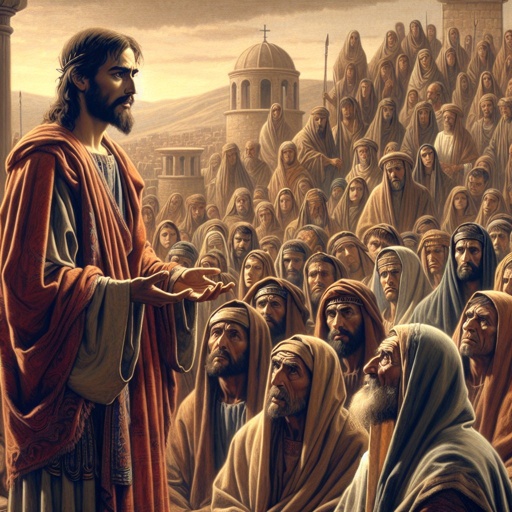
John 19:4 - "Pilate therefore went forth again, and saith unto them, Behold, I bring him forth to you, that ye may know that I find no fault in him."
"Pilate therefore went forth again, and saith unto them, Behold, I bring him forth to you, that ye may know that I find no fault in him." - John 19:4

1 John 4:19 - "We love him, because he first loved us."

John 4:19 - "The woman saith unto him, Sir, I perceive that thou art a prophet."

"We love him, because he first loved us." - 1 John 4:19

Acts 4:19 - "But Peter and John answered and said unto them, Whether it be right in the sight of God to hearken unto you more than unto God, judge ye."

"We love him, because he first loved us." - 1 John 4:19

Acts 19:4 - "Then said Paul, John verily baptized with the baptism of repentance, saying unto the people, that they should believe on him which should come after him, that is, on Christ Jesus."

"The woman saith unto him, Sir, I perceive that thou art a prophet." - John 4:19

1 John 4:18-19 - "There is no fear in love; but perfect love casteth out fear: because fear hath torment. He that feareth is not made perfect in love. We love him, because he first loved us."

John 19:38

John 19:1

John 19:19 - "¶ And Pilate wrote a title, and put it on the cross. And the writing was, JESUS OF NAZARETH THE KING OF THE JEWS."

John 17.6-19

The Source of Our Love New Testament 1 John 4:7: "Dear friends, let us love one another, for love comes from God. Everyone who loves has been born of God and knows God." 1 John 4:19: "We love because he first loved us."

The Source of Our Love New Testament 1 John 4:7: "Dear friends, let us love one another, for love comes from God. Everyone who loves has been born of God and knows God." 1 John 4:19: "We love because he first loved us."

John 19:1-3

John 19:25-27

The Source of Our Love HOLY SPIRIT DOVE HEARTS New Testament 1 John 4:7: "Dear friends, let us love one another, for love comes from God. Everyone who loves has been born of God and knows God." 1 John 4:19: "We love because he first loved us."

The Source of Our Love HOLY SPIRIT DOVE HEARTS New Testament 1 John 4:7: "Dear friends, let us love one another, for love comes from God. Everyone who loves has been born of God and knows God." 1 John 4:19: "We love because he first loved us."

The Source of Our Love HOLY SPIRIT DOVE HEARTS New Testament 1 John 4:7: "Dear friends, let us love one another, for love comes from God. Everyone who loves has been born of God and knows God." 1 John 4:19: "We love because he first loved us."

John 1:19 - "¶ And this is the record of John, when the Jews sent priests and Levites from Jerusalem to ask him, Who art thou?"

John 19:25-27

John 19:26-27

John 21:15-19

The Source of Our Love HOLY SPIRIT DOVE HEARTS New Testament 1 John 4:7: "Dear friends, let us love one another, for love comes from God. Everyone who loves has been born of God and knows God." 1 John 4:19: "We love because he first loved us."

The Source of Our Love HOLY SPIRIT DOVE New Testament 1 John 4:7: "Dear friends, let us love one another, for love comes from God. Everyone who loves has been born of God and knows God." 1 John 4:19: "We love because he first loved us."

The Source of Our Love HOLY SPIRIT DOVE HEARTS New Testament 1 John 4:7: "Dear friends, let us love one another, for love comes from God. Everyone who loves has been born of God and knows God." 1 John 4:19: "We love because he first loved us."

The Source of Our Love HOLY SPIRIT DOVE HEARTS New Testament 1 John 4:7: "Dear friends, let us love one another, for love comes from God. Everyone who loves has been born of God and knows God." 1 John 4:19: "We love because he first loved us."

1 John 4;19