Thirsting for More: The Encounter at the Well
“There cometh a woman of Samaria to draw water: Jesus saith unto her, Give me to drink.” — John 4:7
In John 4:7, we encounter a pivotal moment in the ministry of Jesus Christ, one that not only illustrates His compassion and humanity but also serves as a profound lesson on the importance of divine encounters in our spiritual journey. The verse states: "There cometh a woman of Samaria to draw water: Jesus saith unto her, Give me to drink." This interaction at Jacob’s well is rich in contextual significance and theological depth.
To fully appreciate this passage, we must first understand the cultural and societal dynamics at play. Samaritans, long marginalized and considered outsiders by the Jews, represent a community alienated both ethnically and spiritually. Not only was this woman from Samaria an outcast due to her nationality and gender but also because of her personal life choices. Jesus encountering her at the well signifies much more than a physical need for water; it symbolizes His mission to reach the lost, the marginalized, and those in the depths of despair.
Here, we see that Jesus initiates the conversation by asking the woman for a drink. This simple request is layered with meaning. Firstly, it breaks the social and religious barriers of the time. A Jewish man engaging in conversation with a Samaritan woman was scandalous. Yet, Jesus demonstrates a willingness to approach those society deems unworthy. This serves as a foundational reminder that we, too, are called to reach out across the divides that define our societal norms.
When Jesus asks for water, He embodies the recognition of a mutual need for sustenance. The request amplifies the idea that Jesus, though divine, also experiences thirst—a perfect metaphor for our spiritual longing. As the encounter unfolds, it becomes clear that while the woman comes to draw physical water, Jesus offers her something of immeasurable value: living water.
What is this ‘living water’ that Jesus references? Later in verses 13-14, He clarifies that the water He provides leads to eternal life, satisfying the deepest thirst of the soul that worldly pursuits cannot. So often, we seek fulfillment in places that ultimately leave us drained and empty, much like the well that provides only temporary relief. Jesus, however, offers a transformative relationship that quenches our deepest desires, healing our past and illuminating our future.
This moment at the well teaches us the importance of divine encounters, where our spiritual thirst can be met. Just as the woman came to the well hoping to meet a physical need, we often approach God with our own needs, objections, and doubts. Yet, Jesus invites us into a deeper experience. He encourages us to present our struggles and brokenness, knowing that He can fill the void in our lives that water from any well never could.
Furthermore, this verse highlights the active role of Jesus in initiating a relationship with us. How often do we forget that our spiritual journey begins with Christ reaching out to us first? He sees our worth beyond societal judgments and personal failures. He approaches us at our wells—those places in our lives where we seek solace and refreshment.
As we reflect on this verse, let us consider our own daily encounters. Are we aware of the wells in our lives? Are we open to the divine dialogue that may unfold when we approach Him with our own vessels? Jesus seeks not just to satisfy our immediate needs but to transform our hearts, prompting us to share this living water with others. Like the woman at the well, we are called to leave our jars behind, proclaiming the good news of Christ to those around us.
In conclusion, let the story of the Samaritan woman at the well serve as an indelible reminder of Christ’s love that knows no boundaries. It beckons us to embrace His offer of living water, an offer extended not just to us personally, but to all who are weary and in need of a Savior. As we drink deeply from this well of grace, may we also become vessels of His love and hope in a world desperately thirsting for the truth of the Gospel.
Get our apps


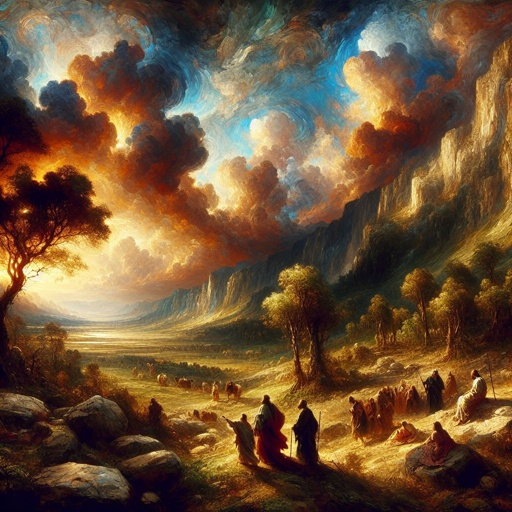
Artwork for John 4:7

John 4:7 - "There cometh a woman of Samaria to draw water: Jesus saith unto her, Give me to drink."

1 John 4:7 - "Beloved, let us love one another: for love is of God; and every one that loveth is born of God, and knoweth God."

"Beloved, let us love one another, for love is from God, and whoever loves has been born of God and knows God. Anyone who does not love does not know God, because God is love." - 1 John 4:7-8

1 John 4:7-8 - "Beloved, let us love one another, for love is from God, and whoever loves has been born of God and knows God. Anyone who does not love does not know God, because God is love."

"There cometh a woman of Samaria to draw water: Jesus saith unto her, Give me to drink." - John 4:7

"Beloved, let us love one another: for love is of God; and every one that loveth is born of God, and knoweth God." - 1 John 4:7

The Source of Our Love New Testament 1 John 4:7: "Dear friends, let us love one another, for love comes from God. Everyone who loves has been born of God and knows God." 1 John 4:19: "We love because he first loved us."

The Source of Our Love New Testament 1 John 4:7: "Dear friends, let us love one another, for love comes from God. Everyone who loves has been born of God and knows God." 1 John 4:19: "We love because he first loved us."

The Source of Our Love HOLY SPIRIT DOVE HEARTS New Testament 1 John 4:7: "Dear friends, let us love one another, for love comes from God. Everyone who loves has been born of God and knows God." 1 John 4:19: "We love because he first loved us."

The Source of Our Love HOLY SPIRIT DOVE HEARTS New Testament 1 John 4:7: "Dear friends, let us love one another, for love comes from God. Everyone who loves has been born of God and knows God." 1 John 4:19: "We love because he first loved us."

The Source of Our Love HOLY SPIRIT DOVE HEARTS New Testament 1 John 4:7: "Dear friends, let us love one another, for love comes from God. Everyone who loves has been born of God and knows God." 1 John 4:19: "We love because he first loved us."

The Source of Our Love HOLY SPIRIT DOVE HEARTS New Testament 1 John 4:7: "Dear friends, let us love one another, for love comes from God. Everyone who loves has been born of God and knows God." 1 John 4:19: "We love because he first loved us."

The Source of Our Love HOLY SPIRIT DOVE New Testament 1 John 4:7: "Dear friends, let us love one another, for love comes from God. Everyone who loves has been born of God and knows God." 1 John 4:19: "We love because he first loved us."

The Source of Our Love HOLY SPIRIT DOVE HEARTS New Testament 1 John 4:7: "Dear friends, let us love one another, for love comes from God. Everyone who loves has been born of God and knows God." 1 John 4:19: "We love because he first loved us."

The Source of Our Love HOLY SPIRIT DOVE HEARTS New Testament 1 John 4:7: "Dear friends, let us love one another, for love comes from God. Everyone who loves has been born of God and knows God." 1 John 4:19: "We love because he first loved us."

"Beloved, let us love one another, for love is from God, and whoever loves has been born of God and knows God. Anyone who does not love does not know God, because God is love." - 1 John 4:7-8

John 4:6-7

John 7:4 - "For there is no man that doeth any thing in secret, and he himself seeketh to be known openly. If thou do these things, shew thyself to the world."
John 7:38

John 15:7

John 7:38

John 7:38

John 15:7

John 7:38

John 7:17-18

John 7:37-39

John 7:17-18

John 7:37-39

John 7:17-18

John 7:17-18