Worship: A Matter of Heart and Place
“Our fathers worshipped in this mountain; and ye say, that in Jerusalem is the place where men ought to worship.” — John 4:20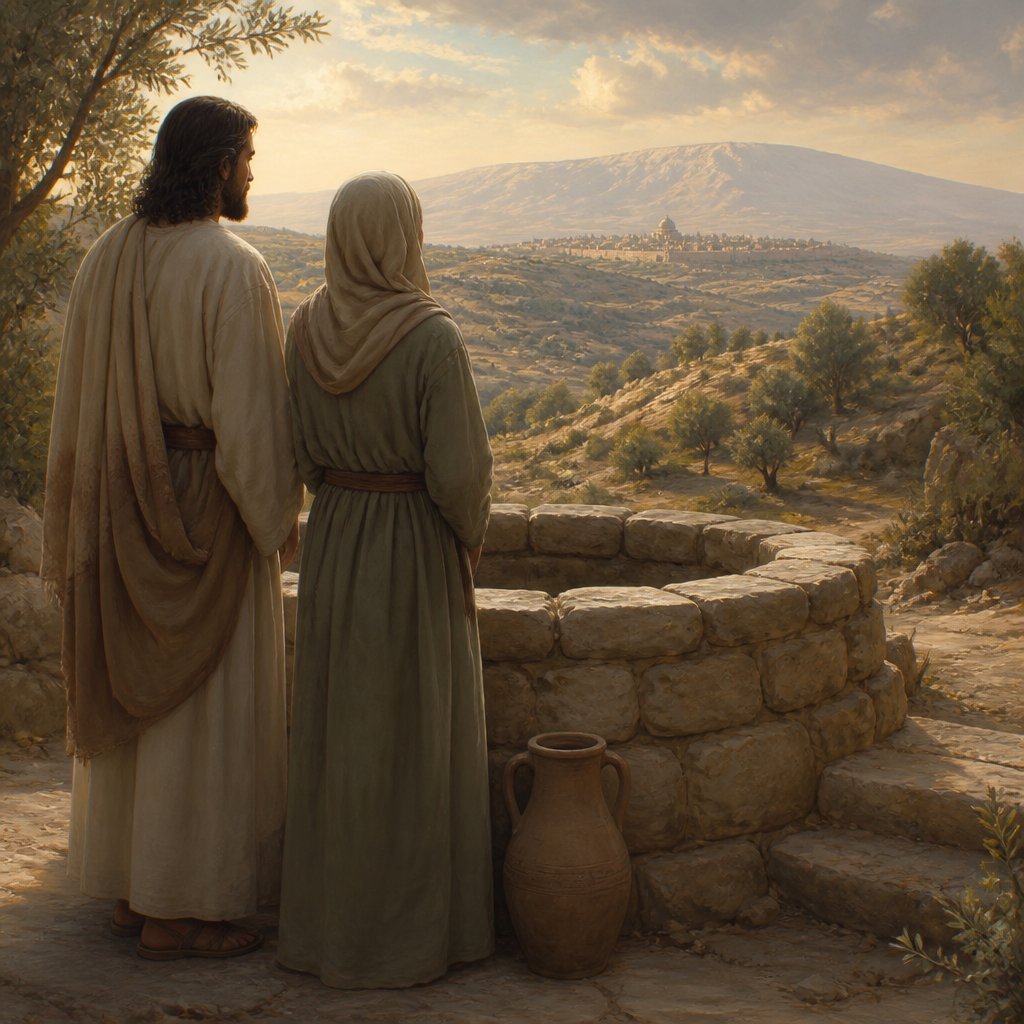
As we delve into the profound dialogue in John 4:20, we encounter a scene rich with historical context and spiritual significance: "Our fathers worshipped in this mountain; and ye say, that in Jerusalem is the place where men ought to worship." These words, spoken by a Samaritan woman to Jesus at Jacob's well, draw our attention not only to the customs of worship but also to the deeper implications of worship itself in the lives of those who seek God.
The backdrop of this statement is essential for our understanding. The Samaritans, descendants of the Israelites who remained in the land after the Assyrian exile, worshipped on Mount Gerizim, believing it to be the true place designated by God for worship. In contrast, the Jews revered Jerusalem as the sacred location ordained by God for their worship practices. This geographical debate forms a critical point of contention that underscores the validity of their respective faiths yet serves a deeper, more universal purpose.
As we consider this dialogue, we are reminded that worship has often been associated with place. Temples, churches, synagogues, and mountains have been designated as holy spaces where humanity reaches out to the Divine. The Samaritan woman highlights a prevalent belief at the time—that the physical location of worship was central to engaging with God. However, Jesus is about to transform this perspective.
In the chapters that follow, Jesus reveals to the woman a radical truth: that true worship is not confined to any location, but rather is an attitude of the heart. In John 4:24, He says, "God is a Spirit: and they that worship him must worship him in spirit and in truth." This crucial statement pivots the discussion from a place on a map to the condition of the heart.
As we reflect on the woman's assertion about where worship should occur, we can parallel her struggle with our own tendency to attach significance to our worship practices based on cultural customs, traditions, and locations. In our own lives, we may find ourselves saying, "I will worship when I’m in church," or "I feel closest to God at a particular retreat center." While certain places can indeed foster a deeper connection to God, they must not become crutches that define our relationship with Him.
Worship, as Jesus illuminates, is inherently relational. It transcends physical boundaries and becomes a heart posture of humility, surrender, and authenticity. It beckons us to lay aside our rituals and preconceived notions. Worship should not be reduced to mere traditions; it requires spirit and truth—an engagement that is not reliant on physical characteristics or location but is instead rooted in our personal relationship with the Almighty.
As we navigate through the book of John, we see that Jesus intentionally breaks down barriers—not only cultural ones between Jews and Samaritans, but also the barriers we erect within our own hearts. He invites us to move beyond the mountains and temples we construct around our worship and to cultivate a worship that is alive in every aspect of our lives, recognizing that all of creation is a canvas for His glory.
In conclusion, John 4:20 compels us to evaluate our worship. Are we allowing our understanding of worship to be limited by location or tradition? Or, are we responding to God’s invitation to worship Him in spirit and in truth? Let us remember that worship is a sacred dialogue with the Creator, accessible no matter where we are—whether in the stillness of the morning, the hustle of our daily routines, or even in moments of sorrow and joy.
Therefore, in our pursuit of authenticity in worship, let us embrace a heart that seeks God wholeheartedly, realizing that His presence transcends the confines of mountain tops and temples. May we strive to create spaces within us for true communion, where worship flows freely, unbound by our perceptions of place.
Get our apps


Artwork for John 4:20
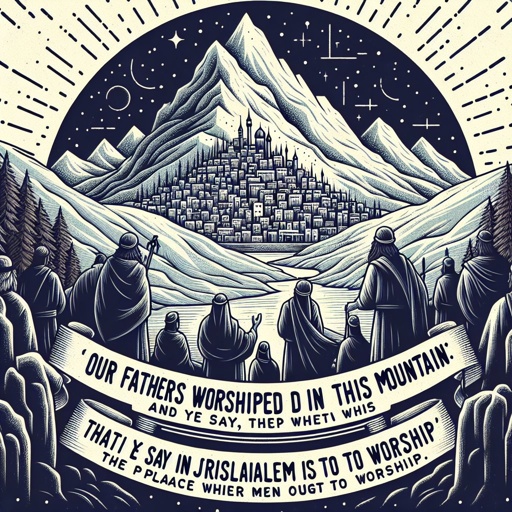
John 4:20 - "Our fathers worshipped in this mountain; and ye say, that in Jerusalem is the place where men ought to worship."

1 John 4:20 - "If a man say, I love God, and hateth his brother, he is a liar: for he that loveth not his brother whom he hath seen, how can he love God whom he hath not seen?"
"Our fathers worshipped in this mountain; and ye say, that in Jerusalem is the place where men ought to worship." - John 4:20

1 John 4:20-21 - "If someone says, “I love God,” and hates his brother, he is a liar; for the one who does not love his brother whom he has seen, cannot love God whom he has not seen. And this commandment we have from Him, that the one who loves God should love his brother also."
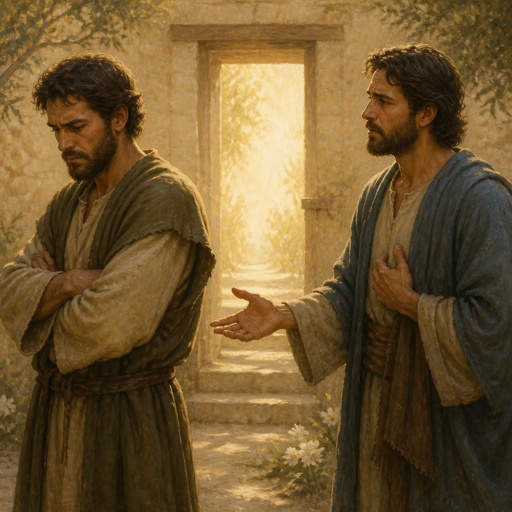
"If a man say, I love God, and hateth his brother, he is a liar: for he that loveth not his brother whom he hath seen, how can he love God whom he hath not seen?" - 1 John 4:20
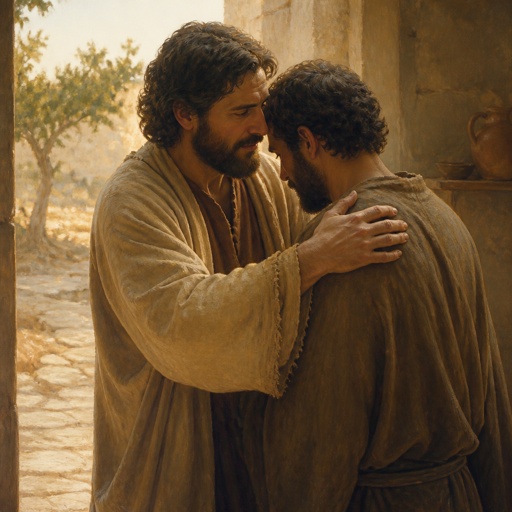
"If someone says, “I love God,” and hates his brother, he is a liar; for the one who does not love his brother whom he has seen, cannot love God whom he has not seen. And this commandment we have from Him, that the one who loves God should love his brother also." - 1 John 4:20-21

Luke 20:4 - "The baptism of John, was it from heaven, or of men?"
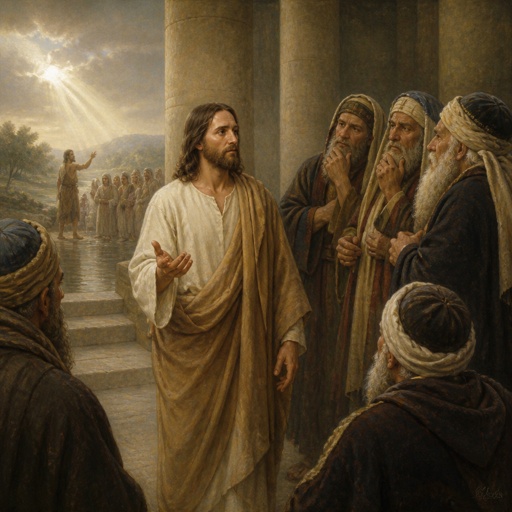
"The baptism of John, was it from heaven, or of men?" - Luke 20:4

John 20:4 - "So they ran both together: and the other disciple did outrun Peter, and came first to the sepulchre."
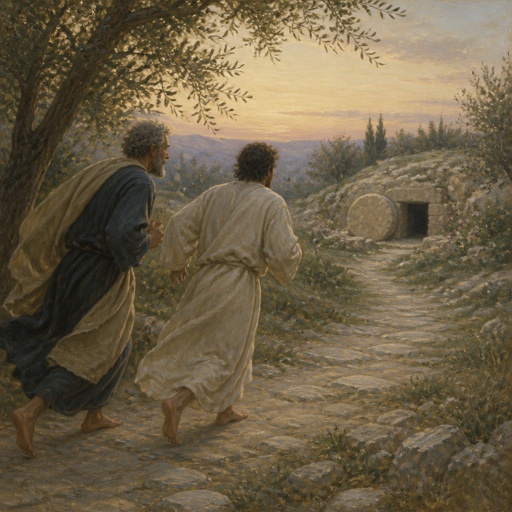
"So they ran both together: and the other disciple did outrun Peter, and came first to the sepulchre." - John 20:4

John 20:21

John 20:27

John 20:14

John 20:27

John 20:11-12

John 20:11-13

John 20:30-31

John 6:20 - "But he saith unto them, It is I; be not afraid."

John 4:4 - "And he must needs go through Samaria."
John 1:20 - "And he confessed, and denied not; but confessed, I am not the Christ."

John 20:10 - "Then the disciples went away again unto their own home."

John 4:16

John 3:4

John 4:16

John 4:16

John 4:16

John 4:16

John 20:20 - "And when he had so said, he shewed unto them his hands and his side. Then were the disciples glad, when they saw the Lord."

John 20:3 - "Peter therefore went forth, and that other disciple, and came to the sepulchre."

1 Corinthians 4:20