The Pool of Bethesda: A Place of Healing and Hope
“Now there is at Jerusalem by the sheep market a pool, which is called in the Hebrew tongue Bethesda, having five porches.” — John 5:2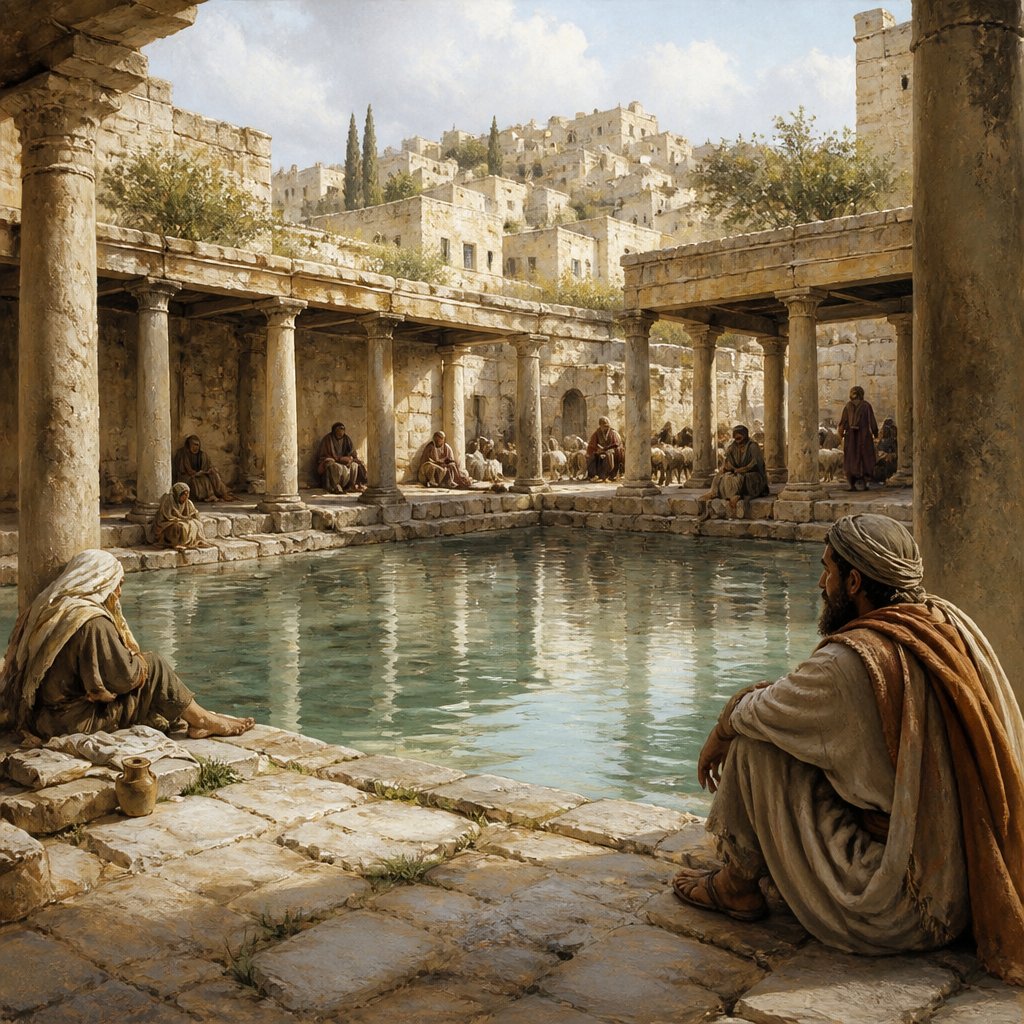
In the Gospel of John, chapter 5 and verse 2, we come across a significant location mentioned in scripture: "Now there is at Jerusalem by the sheep market a pool, which is called in the Hebrew tongue Bethesda, having five porches." This verse transports us to a vivid scene set against the backdrop of ancient Jerusalem, where physical and spiritual narratives converge. As we explore this verse, we uncover deep spiritual truths that resonate with us today.
Bethesda, meaning "house of mercy," is not just an ordinary pool; it is a place brimming with hope and desperation. Imagine the sight: a multitude of invalids, the blind, the lame, and the paralyzed congregating by the waters, waiting for the slightest ripple to signify healing. This vivid picture paints a stark reality—these individuals, physically troubled and socially marginalized, sought a miracle in this seemingly brief moment of divine intervention.
The pool is strategically located by the sheep market, a place associated with the sacrificial system of the Jewish faith, linking the theme of physical healing with spiritual redemption. Just as the sheep were brought to the market for sacrifice, the people gathered around Bethesda placed their hopes in the healing waters, seeking to be cleansed and restored. The symbolism here draws attention to how Jesus, our ultimate sacrifice, would one day prioritize healing not just for the physical body but for our broken spirits and weary souls.
Furthermore, the mention of the five porches is significant. Five, in biblical numerology, often symbolizes grace. As the invalids waited under the porches, each one not fully healed yet remaining in proximity to the pool speaks volumes about grace. There’s an understanding that even in suffering and apparent hopelessness, there’s the possibility of healing and restoration. Jesus's ministry often focused on those at the margins, and His presence in such a setting reminds us that He is drawn to our pain, willing to enter into our places of desperation.
The scene by the pool also reflects our lives today. Many of us may find ourselves longing for healing—healing from physical ailments, emotional wounds, or spiritual struggles. We, too, can identify with the innate longing for wholeness that the crowd at Bethesda represents. This collective yearning symbolizes the broader human experience: we often look in the wrong places for consolation, but God’s invitation remains open. He beckons us to bring our wounds to Him.
As we delve deeper, we see in this narrative that our healing is not just about physical restoration. It represents a holistic transformation that Jesus desires for each of us. When Jesus later encounters one of the invalids at the pool, He asks, "Wilt thou be made whole?" (John 5:6 KJV). This question elicits introspection about our willingness to accept the healing God offers. Sometimes, fear of the unknown or past disappointments might keep us tethered to our pain rather than embracing the potential for change.
Moreover, the setting emphasizes community and the experiences shared among those suffering. The five porches suggest a communal aspect—each porch providing a place of waiting amidst shared hope, yet also highlighting a certain isolation as each invalid waits for their individual miracle. In our walk of faith, we are reminded of the importance of supportive communities. We are called not just to wait for healing personally but also to extend love and compassion to those around us who are hurting, reinforcing the communal aspect of our faith.
As we reflect on John 5:2, let us take a moment to ask ourselves this essential question: what are the pools in our lives where we gather our hopes? Where do we wait for restoration? And more importantly, are we willing to answer Christ's call to be made whole? In the stillness of our hearts, may we acknowledge our need for healing, draw near to the source of our rejuvenation, and find both courage and grace in His presence. Bethesda is not just a place; it represents the heart of God—a compassionate sanctuary for our deepest longings and our transformative healing.
Get our apps


Artwork for John 5:2

John 5:2

John 5:2 - "Now there is at Jerusalem by the sheep market a pool, which is called in the Hebrew tongue Bethesda, having five porches."

1 John 5:2 - "By this we know that we love the children of God, when we love God, and keep his commandments."
"Now there is at Jerusalem by the sheep market a pool, which is called in the Hebrew tongue Bethesda, having five porches." - John 5:2
"By this we know that we love the children of God, when we love God, and keep his commandments." - 1 John 5:2

"An image inspired by John 5:2 from the New Testament. Depict the Pool of Bethesda in Jerusalem, surrounded by five grand, classical columned porticos. The atmosphere is serene yet filled with anticipation. People with various disabilities—some lying on mats, others leaning on crutches—gather around the pool with hopeful expressions, gazing toward the water. The architecture is reminiscent of the Renaissance era, richly detailed with stone textures, arches, and soft natural lighting filtering through the columns. Each figure should have expressive, emotionally rich faces, capturing moments of longing, faith, and quiet reverence. Use dramatic light and shadow to heighten the spiritual and sacred atmosphere. The entire composition should feel deeply rooted in Christian devotion, exuding a timeless, holy presence."

John 2:5 - "His mother saith unto the servants, Whatsoever he saith unto you, do it."

1 John 2:5 - "But whoso keepeth his word, in him verily is the love of God perfected: hereby know we that we are in him."

"But whoso keepeth his word, in him verily is the love of God perfected: hereby know we that we are in him." - 1 John 2:5

2 John 1:5 - "And now I beseech thee, lady, not as though I wrote a new commandment unto thee, but that which we had from the beginning, that we love one another."

John 15:5

John 15:5

John 5:33 - "Ye sent unto John, and he bare witness unto the truth."

John 5:5 - "And a certain man was there, which had an infirmity thirty and eight years."

John 5:28

John 5:28

John 5:28

1 John 5:5 - "Who is he that overcometh the world, but he that believeth that Jesus is the Son of God?"

"His mother saith unto the servants, Whatsoever he saith unto you, do it." - John 2:5
John 3:5-8

John 1:1-5

John 1:1-5

John 3:5-8

1 John 5:18

John 3:5-8

John 1:5 - "And the light shineth in darkness; and the darkness comprehended it not."

John 5:41 - "I receive not honour from men."

John 5:40 - "And ye will not come to me, that ye might have life."

1 John 5:17 - "All unrighteousness is sin: and there is a sin not unto death."

John 5:1 - "After this there was a feast of the Jews; and Jesus went up to Jerusalem."