The Master’s Call: Finding Provision in the Midst of Need
“When Jesus then lifted up his eyes, and saw a great company come unto him, he saith unto Philip, Whence shall we buy bread, that these may eat?” — John 6:5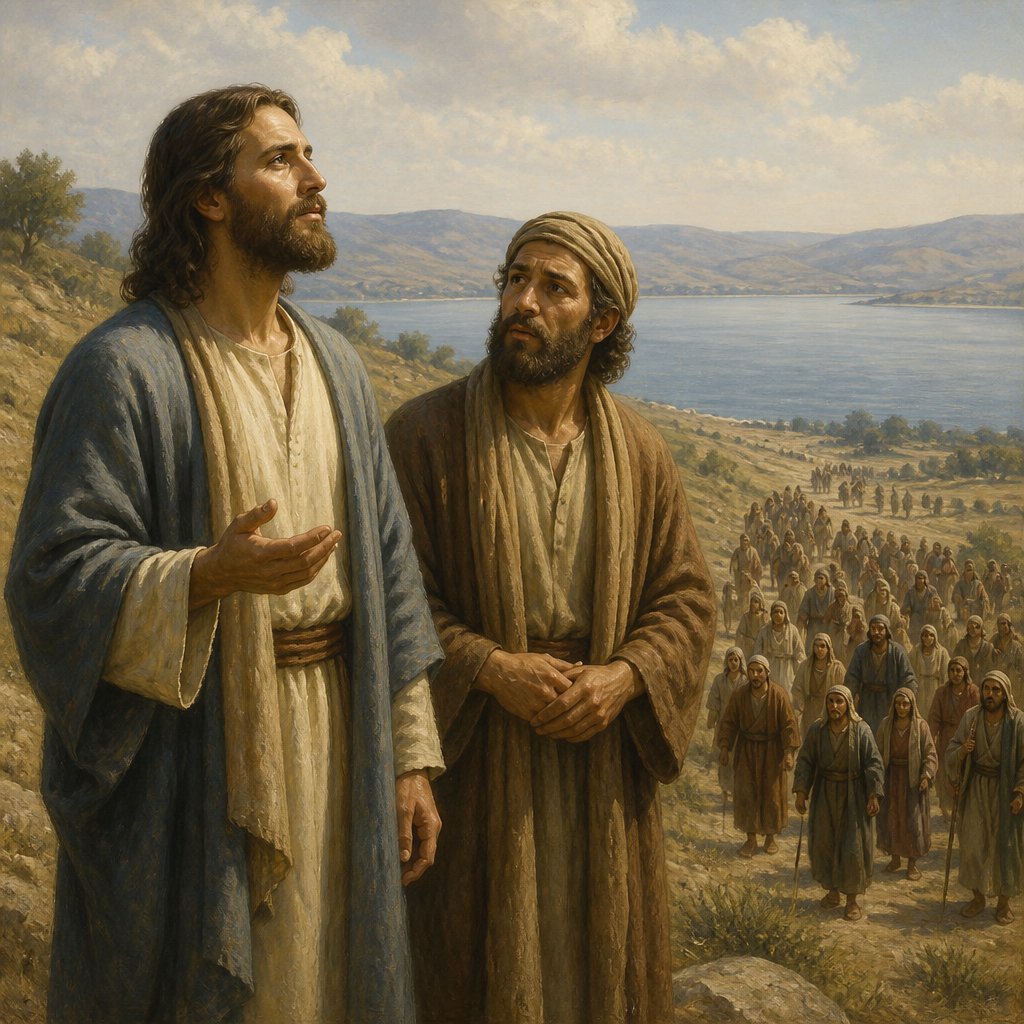
The scene unfolds in John 6, where Jesus is met with a vast crowd, longing for His teaching and miraculous signs. In verse 5, it states, "When Jesus then lifted up his eyes, and saw a great company come unto him, he saith unto Philip, Whence shall we buy bread, that these may eat?" This inquiry is much more than a logistical question; it is a profound moment brimming with theological implications and spiritual lessons.
Here we find ourselves among the multitude, a crowd that reflects our spiritual hunger and need for sustenance. Just as the people were unsure of how they could be fed, we often stand in the face of overwhelming challenges—be it in our families, our health, our finances, or our spiritual lives. In these moments, our eyes may be fixed on the scarcity surrounding us rather than on the sufficiency of Christ.
In the context of this passage, Jesus’ question to Philip serves two purposes. First, it highlights the physical need of the people: they were hungry. Jesus sees their need not just as a mere physical state but as an opportunity for a deeper revelation of His character. It reminds us that Jesus cares deeply about our needs. He acknowledges them without ignoring the spiritual implications they hold.
Philip’s response is revealing. The Gospel of John tells us that he replies, "Two hundred pennyworth of bread is not sufficient for them, that every one of them may take a little" (John 6:7). Here, we see Philip’s initial response rooted in human logic and limited resources. He evaluates the situation based on what he sees, which often leads to doubt and despair. Many of us have echoed Philip’s sentiments in our lives when faced with dire circumstances. We assess our resources and quickly come to the conclusion that we do not have enough to meet our needs or the needs of others.
But the beauty of this moment lies not in the ability to provide but in Jesus’ masterful reminder of who He is. He is not bound by our calculations or limitations. Instead, He invites us to look beyond our understanding and trust in His divine provision. As we lift our eyes away from our doubts and uncertainties, we can begin to perceive the infinite possibilities that lie within faith in Christ.
Furthermore, this scenario serves to teach us about participation in God’s work. Jesus' question to Philip was not to elicit an answer based on empirical evidence, but to involve him in the miracle that would follow. When faced with overwhelming needs, we are often invited into partnership with Christ, who desires to use us as instruments of His provision. This moment asks us: Will we trust and act on what little we have, rather than bemoaning our lack?
In our journey of faith, how often do we see the multitude of needs and get overwhelmed rather than seeking God’s insight and guidance? It’s in these crucial moments that we need to pray, much like Philip, but to pray with expectation, looking to Christ for sufficiency. The miracle of feeding the five thousand that follows demonstrates that when we place what little we have into the hands of Jesus, He can multiply it far beyond our comprehension.
As Christians, we must remind ourselves that Christ sees our needs, not just for bread but for all areas where we feel depletion. He calls us to respond with faith rather than fear. When Jesus asks us, "Whence shall we buy bread?" it not only positions us to recognize our shortcomings but also to see His omnipotence. Let us therefore lift our eyes to Him, believe in His provision, trust in His timing, and participate in His divine abundance.
In conclusion, let the words of Jesus echo in your heart: He sees the great company and knows our needs even before we ask. As we move through our lives, may we remember the lesson from John 6:5—there is always bread in Christ, enough to feed not just our hunger but the hunger of those around us. The more we share, the more we discover His grace multiplied in our lives. Trust in Him today, for He is able to do exceedingly abundantly above all that we ask or think (Ephesians 3:20), often using the very things we deem insufficient.
Get our apps


Artwork for John 6:5
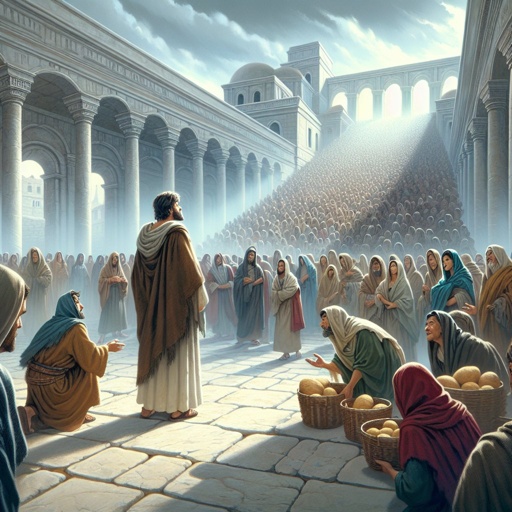
John 6:5 - "¶ When Jesus then lifted up his eyes, and saw a great company come unto him, he saith unto Philip, Whence shall we buy bread, that these may eat?"
"¶ When Jesus then lifted up his eyes, and saw a great company come unto him, he saith unto Philip, Whence shall we buy bread, that these may eat?" - John 6:5

1 John 5:6 - "This is he that came by water and blood, even Jesus Christ; not by water only, but by water and blood. And it is the Spirit that beareth witness, because the Spirit is truth."

John 5:6 - "When Jesus saw him lie, and knew that he had been now a long time in that case, he saith unto him, Wilt thou be made whole?"

John 1:6 - "¶ There was a man sent from God, whose name was John."

John 6:63

John 6:63

John 6:63

John 6:63

John 15:5

John 5:2

John 15:5

John 5:33 - "Ye sent unto John, and he bare witness unto the truth."
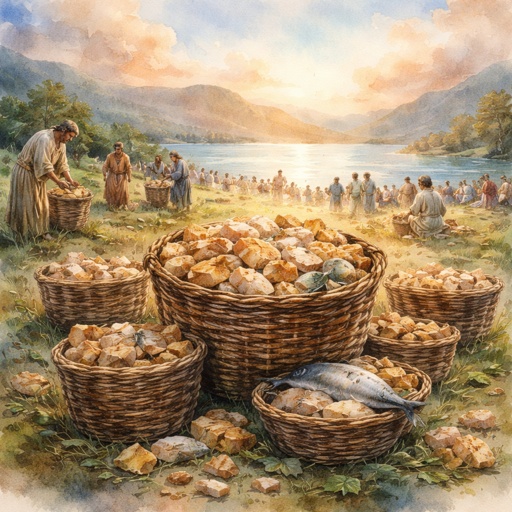
John 6:12

John 6:40

John 21:6

John 14:6

John 5:5 - "And a certain man was there, which had an infirmity thirty and eight years."

John 6:16

John 21:6

John 6:37

John 21:6

John 21:6

John 6:40

John 5:28

John 5:28

John 5:28

1 John 5:5 - "Who is he that overcometh the world, but he that believeth that Jesus is the Son of God?"

John 3:5-8

John 1:1-5