The Divine Authority of Judgment
“And yet if I judge, my judgment is true: for I am not alone, but I and the Father that sent me.” — John 8:16
In John 8:16 (KJV), we find a profound declaration from Jesus that resonates with both His divine nature and His mission on earth: "And yet if I judge, my judgment is true: for I am not alone, but I and the Father that sent me." This statement demands our attention as it encapsulates the essence of Christ's authority, His unity with the Father, and the nature of divine judgment.
To comprehend the weight of Jesus' words, we must first recognize the context in which they are spoken. In John chapter 8, the backdrop is one of contention and scrutiny. Jesus is speaking to the Pharisees, who are quick to challenge His claims and authority. They question His right to judge, arguing that He alone cannot bear witness to Himself. However, Jesus counters this with the assertion that His judgment is not merely subjective; it is rooted in the truth that comes from His unique relationship with the Father.
This relationship is foundational. Jesus declares that He does not act independently; rather, He is in perfect alignment with the will of the Father. This unity is significant because it emphasizes that Christ's judgment transcends human understanding and is anchored in divine wisdom. When He says, "my judgment is true," it underscores that His insights and decisions are not flawed; they are righteous and holy. In a world where judgment often reflects personal biases, misunderstandings, or even prejudice, Jesus offers a judgment that is perfectly just.
Let us reflect on what it means to judge rightly. In our daily lives, we often encounter situations demanding discernment. We must decide what is right and wrong, just and unjust. This verse reminds us that human judgment can be fallible, but the judgment of the One who is not alone—who is in perfect harmony with the Father—is always true. Therefore, we are invited to seek His wisdom vehemently in our decision-making processes. By aligning our thoughts and actions with those of Christ, we can lead lives guided by divine wisdom rather than our flawed perspectives.
Moreover, Jesus' statement, "for I am not alone," speaks to the divine companionship that underscores His ministry and ours. As believers, we are never isolated in our judgment or our endeavors. Just as Jesus walked in unity with the Father, we too have the Holy Spirit dwelling within us, granting us insight, comfort, and guidance. This means we can approach our judgments—whether in matters of morality, personal relationships, or societal issues—with the assurance that we are accompanied by the very essence of truth.
Additionally, this verse challenges us to examine the nature of our judgments towards others. In a world filled with division and hostility, we are reminded of the call to reflect Christ's nature in our interactions. The truth of our judgments should stem from love and compassion, understanding that we do not stand in a position above others but beside them in need of grace. As Christ exemplified a perfect balance of truth and grace, so too are we called to embody these characteristics.
Jesus continues to judge the world, not as a condemnatory figure but as a Savior inviting us into relationship. His judgment points to a reality greater than the human experience—a call to redemption. When we long for justice and yearning hearts seek truth, let us remember that in Christ's judgment, there lies the promise of hope and restoration.
In conclusion, John 8:16 is a powerful reminder of the nature of true judgment, the assurance of divine companionship, and the call for us to emulate this divine standard in our lives. We are encouraged to engage with our world through the lens of divine truth, realizing that our judgments must reflect love, mercy, and ultimately a reflection of Christ Himself. May we continually seek the Father in our judgments and strive toward a truth that is rooted in the heart of our Savior.
Get our apps


Artwork for John 8:16

John 8:16 - "And yet if I judge, my judgment is true: for I am not alone, but I and the Father that sent me."

"And yet if I judge, my judgment is true: for I am not alone, but I and the Father that sent me." - John 8:16
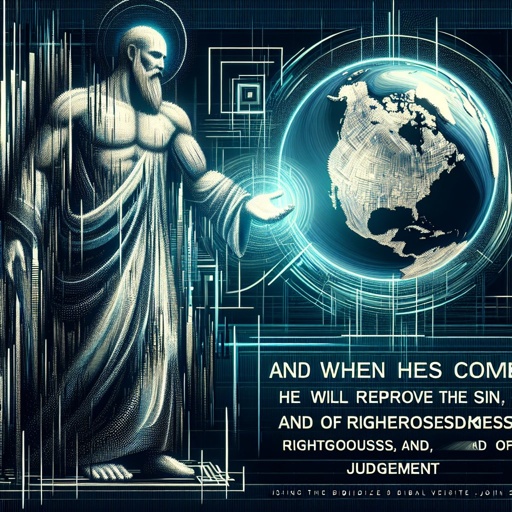
John 16:8 - "And when he is come, he will reprove the world of sin, and of righteousness, and of judgment:"

"And when he is come, he will reprove the world of sin, and of righteousness, and of judgment:" - John 16:8

John 16:33

John 16:33

John 16:33

John 16:33
John 16:33

John 16:33

John 3:16

John 3:16

John 4:16

John 3:16

john 3:16

John 3:16

John 3:16

John 4:16

John 4:16

John 4:16

John 14:16

John 3:16

John 3:16

John 3:16

John 16 : 33

John 3:16

John 3:16

john 3:16

John 3:16

John 4:16