Conviction in His Presence: Finding Grace Amidst Judgment
“And they which heard it, being convicted by their own conscience, went out one by one, beginning at the eldest, even unto the last: and Jesus was left alone, and the woman standing in the midst.” — John 8:9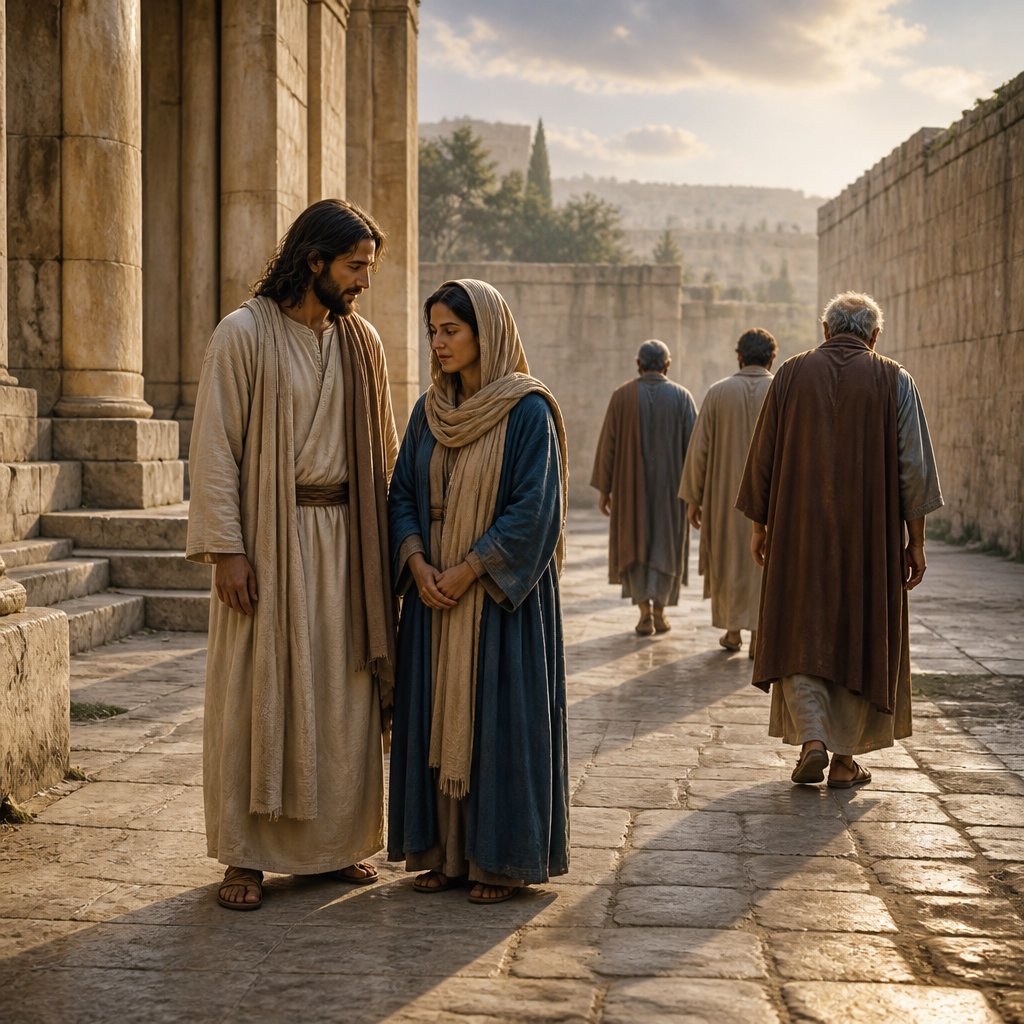
In the book of John, we encounter one of the most profound displays of compassion and truth as Jesus responds to the scribes and Pharisees who bring before Him a woman caught in the act of adultery. In John 8:9 (KJV), we read, "And they which heard it, being convicted by their own conscience, went out one by one, beginning at the eldest, even unto the last: and Jesus was left alone, and the woman standing in the midst." This moment captured in scripture is intricately woven with themes of conscience, judgment, and grace, encouraging us to reflect on our own lives before the presence of Christ.
The scene begins with Jesus teaching in the temple, a place where truth is to be revered and celebrated. Suddenly, the tranquility of His teaching is interrupted by the chaos of accusation, as the religious elite bring forth a woman whose actions stand in stark contrast to their moral law. The law of Moses demanded that such a woman be stoned, creating a scenario ripe for entrapment—not only for the woman, but for Jesus Himself. The scribes and Pharisees, sharp in their interpretation of the law, seek to challenge the Savior, testing whether He would uphold justice or extend mercy.
In their fervent zeal for the law, they fail to see their own humanity. Their intent is clear; they wish to condemn the woman while simultaneously undermining Jesus’ authority. However, the narrative shifts dramatically when Jesus stoops down and begins to write on the ground. His response is profoundly personal yet universally applicable. He turns the spotlight away from the sinner and onto the hearts of the accusers. His words \
Get our apps


Artwork for John 8:9

John 8:9 - "And they which heard it, being convicted by their own conscience, went out one by one, beginning at the eldest, even unto the last: and Jesus was left alone, and the woman standing in the midst."
"And they which heard it, being convicted by their own conscience, went out one by one, beginning at the eldest, even unto the last: and Jesus was left alone, and the woman standing in the midst." - John 8:9

John 6:8-9

numbers 21:8-9 & John 3:14

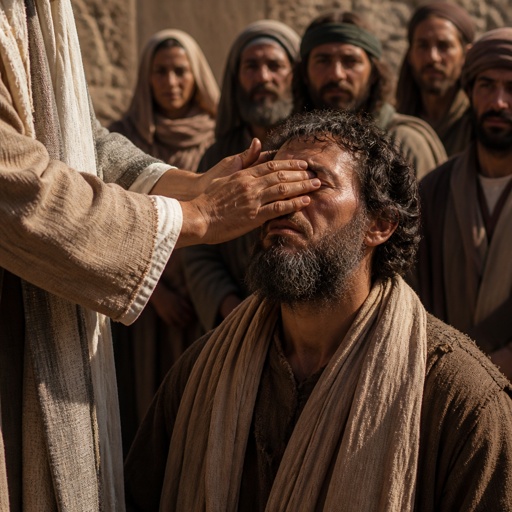
John 9:8 - "¶ The neighbours therefore, and they which before had seen him that he was blind, said, Is not this he that sat and begged?"

John 5:8-9 - "Jesus said to him, “Get up; take up your bed, and walk.” And at once the man was healed, and he took up his bed and walked. Now that day was the Sabbath."
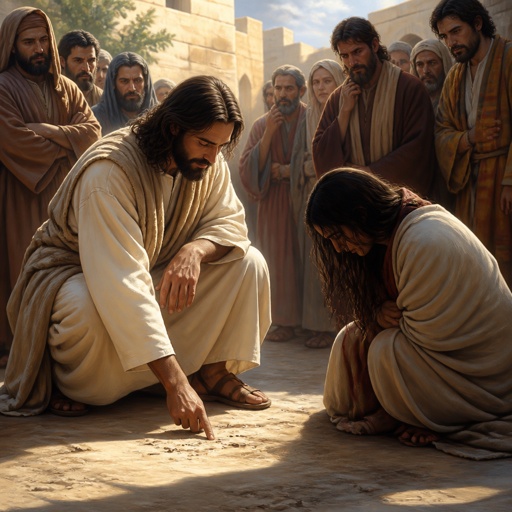
John 8

John 8

John 8:44
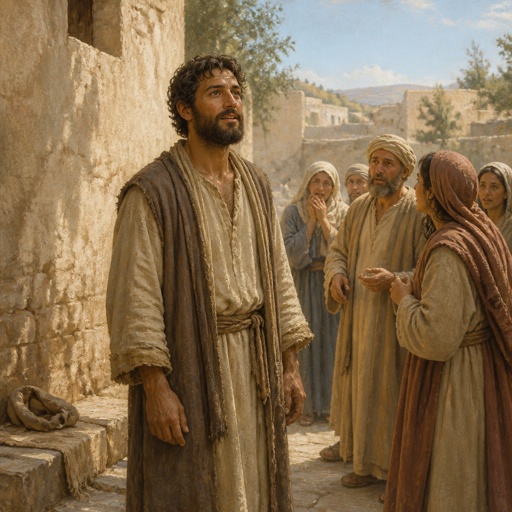
"¶ The neighbours therefore, and they which before had seen him that he was blind, said, Is not this he that sat and begged?" - John 9:8

John 8:44

John 8:44

1 John 4:8-9 - "Whoever does not love does not know God, because God is love. This is how God showed his love among us: He sent his one and only Son into the world that we might live through him."

John 8:8 - "And again he stooped down, and wrote on the ground."

john 21:9

John 8:12
John 9:10

John 10:9

John 10:9

John 10:9

John 8:12

John 8:12

John 8:12

John 8:12

John 9:1-3

John 13:4-9

John 9:1-41

1 John 1:9

John 3:5-8

John 15:1-8