What does John 8:9 mean?
“And they which heard it, being convicted by their own conscience, went out one by one, beginning at the eldest, even unto the last: and Jesus was left alone, and the woman standing in the midst.” — John 8:9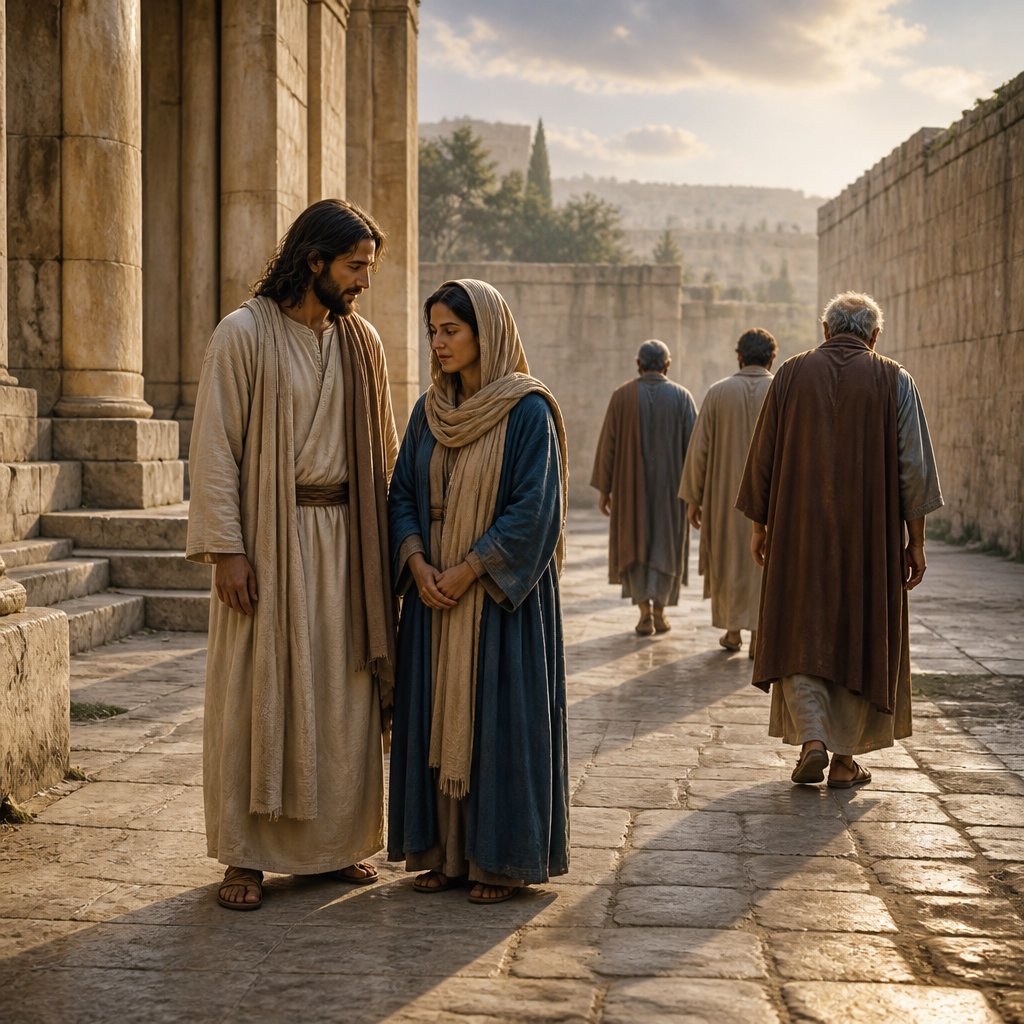
The Bible verse John 8:9 is a powerful and thought-provoking passage that reveals important truths about human nature, righteousness, and the grace of God. This verse is found within the larger context of the story of Jesus and the adulterous woman, which is one of the most well-known and impactful stories in the New Testament.
The verse reads: "And they which heard it, being convicted by their own conscience, went out one by one, beginning at the eldest, even unto the last: and Jesus was left alone, and the woman standing in the midst." This passage occurs within a larger narrative in which a group of religious leaders brought to Jesus a woman caught in the act of adultery, attempting to trap Him in a dilemma. They demanded that Jesus pronounce judgment upon her, in accordance with the Mosaic Law which prescribed death by stoning for such an offense.
Instead of immediately responding to the demands of the religious leaders, Jesus calmly and wisely challenged them by saying: "He that is without sin among you, let him first cast a stone at her." This bold statement by Jesus exposed the hypocrisy of the accusers and caused them to reflect on their own lives and actions. The verse at hand, John 8:9, describes the powerful impact of Jesus' words on the accusers, each one being convicted by their own conscience, leading to their gradual departure from the scene. This leaves Jesus alone with the woman, who had been left standing in the midst of them.
The themes woven throughout this verse are rich and profound. The first theme is that of hypocrisy and judgment. The religious leaders in this story were quick to condemn the woman and demand justice according to the Law, but they failed to acknowledge their own sins and hypocrisy. Jesus' challenge to them serves as a reminder that all people are sinners in need of grace and mercy, and that we should be cautious in passing judgment on others.
Another theme in this verse is that of the transformative power of grace. Jesus' response to the woman, after the accusers had departed, was one of compassion and forgiveness. He did not condemn her, but instead offered her a new beginning, free from the weight of her past sins. This demonstrates the profound and transformative impact of God's grace, which has the power to change hearts and lives, and offer hope to those who are broken and in need of redemption.
Additionally, the concept of conscience and self-awareness is highlighted in this verse. The accusers were convicted by their own conscience, which led them to confront their own sinfulness and depart from the scene. This underscores the importance of self-examination and the recognition of our own shortcomings and need for forgiveness.
Symbolically, the woman in this story represents all of humanity, sinful and in need of redemption. Jesus, in turn, represents God's grace and mercy, offering forgiveness and a new beginning to all who come to Him in repentance. The departure of the accusers represents the transformative power of grace in convicting and changing hearts.
The context of this verse within the larger story of Jesus and the adulterous woman serves to reinforce its message and significance. This story is a powerful reminder of our need for grace and the transformative power of Jesus' love. It challenges us to examine our own hearts and actions, to show compassion and grace to others, and to seek forgiveness and redemption through Christ.
In conclusion, John 8:9 is a rich and thought-provoking verse that speaks to the universal themes of sin, judgment, grace, and redemption. Its message is timeless and relevant, offering hope and encouragement to all who read it. As we contemplate this passage, may we be reminded of the boundless love and mercy of God, and the transformative power of His grace in our lives.
Get our apps


Artwork for John 8:9

John 8:9 - "And they which heard it, being convicted by their own conscience, went out one by one, beginning at the eldest, even unto the last: and Jesus was left alone, and the woman standing in the midst."
"And they which heard it, being convicted by their own conscience, went out one by one, beginning at the eldest, even unto the last: and Jesus was left alone, and the woman standing in the midst." - John 8:9

John 6:8-9

numbers 21:8-9 & John 3:14

John 9:8 - "¶ The neighbours therefore, and they which before had seen him that he was blind, said, Is not this he that sat and begged?"

John 5:8-9 - "Jesus said to him, “Get up; take up your bed, and walk.” And at once the man was healed, and he took up his bed and walked. Now that day was the Sabbath."
John 8

John 8

John 8:44
"¶ The neighbours therefore, and they which before had seen him that he was blind, said, Is not this he that sat and begged?" - John 9:8

John 8:44

John 8:44

1 John 4:8-9 - "Whoever does not love does not know God, because God is love. This is how God showed his love among us: He sent his one and only Son into the world that we might live through him."

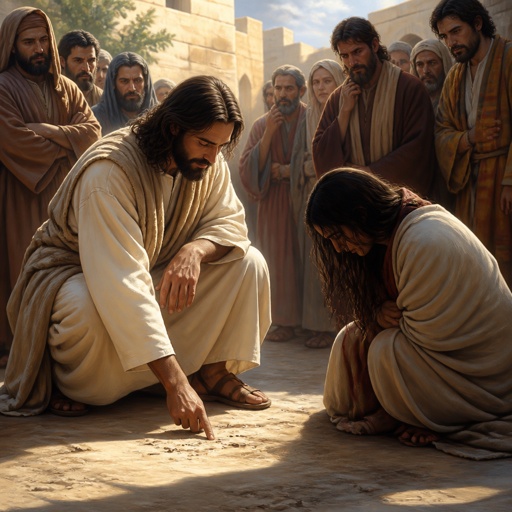
John 8:8 - "And again he stooped down, and wrote on the ground."

john 21:9

John 8:12

John 9:10

John 10:9

John 10:9

John 10:9

John 8:12

John 8:12

John 8:12

John 8:12

John 9:1-3

John 13:4-9

John 9:1-41

1 John 1:9

John 3:5-8

John 15:1-8