God’s Compassion for the Lost: A Reflection on Jonah 4:11
“And should not I spare Nineveh, that great city, wherein are more than sixscore thousand persons that cannot discern between their right hand and their left hand; and also much cattle?” — Jonah 4:11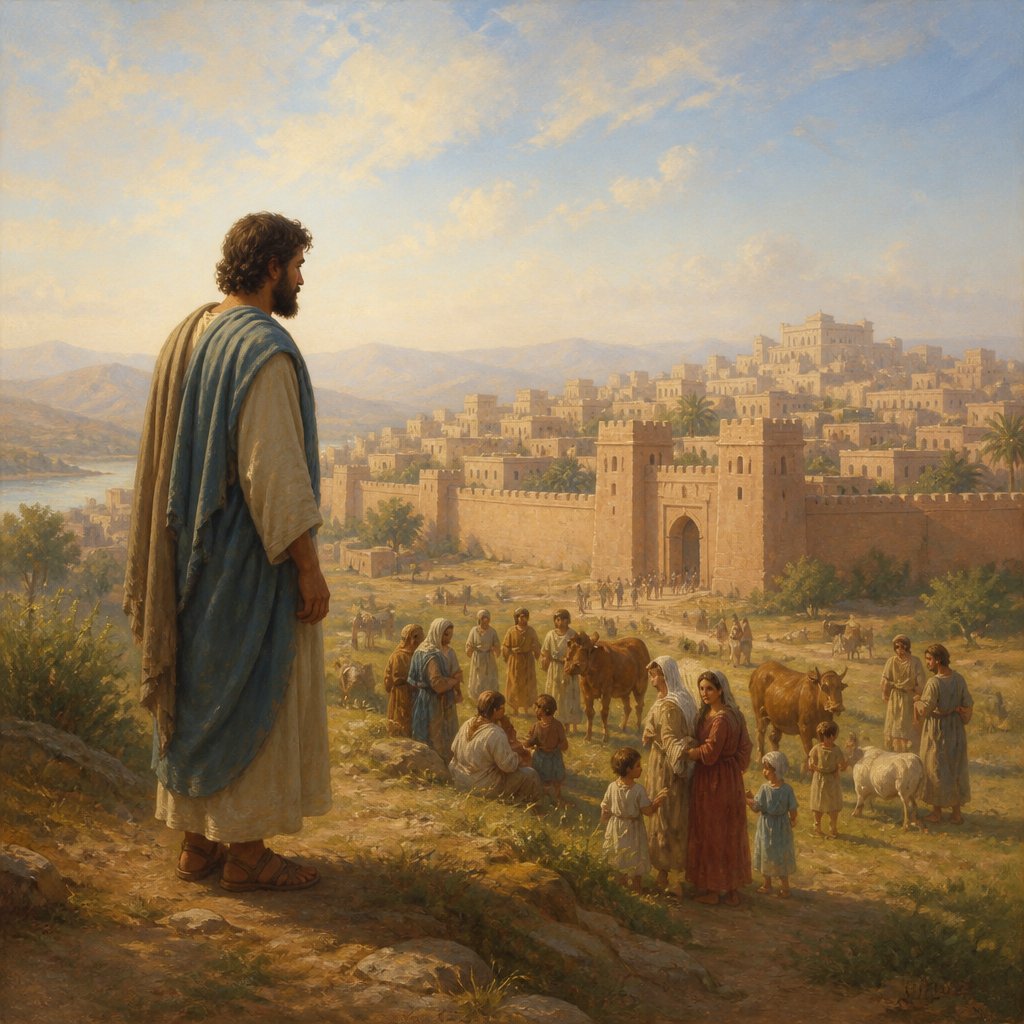
The story of Jonah is one that carries profound lessons on God’s mercy, love, and concern for His creation. The poignant verse from Jonah 4:11 in the King James Version reads: "And should not I spare Nineveh, that great city, wherein are more than sixscore thousand persons that cannot discern between their right hand and their left hand; and also much cattle?" This verse is a challenging reminder of the compassion God holds for those whom we may deem unworthy of His love and forgiveness.
At the heart of Jonah's reluctance to go to Nineveh was his perception of the city's wickedness. Nineveh, a great city of the Assyrian Empire, was notorious for its brutality and sinfulness. Jonah, as a prophet of God, was certainly aware of God's nature and how He could extend grace and mercy, yet he struggled with the idea that such a vile place could receive salvation. In his mind, judgment was due, and he felt anger towards God for offering a chance of repentance to a people he believed deserved condemnation.
Jonah's reaction serves as a mirror reflecting our attitudes towards others. How often do we find ourselves in similar circumstances, looking upon a 'Nineveh' in our lives—persons or groups we regard as beyond the reach of God’s love because of their actions, beliefs, or lifestyles? This mentality is not only contrary to God’s nature but limits our understanding of His grace. We must remember that God is actively seeking to draw all men to Himself, regardless of past sins.
The Lord’s rhetorical question in Jonah 4:11 challenges us effectively: If God can see past sin and cruelty to recognize humanity in each soul, should we not also do the same? With 'sixscore thousand persons' (that is, 120,000 people) living in Nineveh—individuals incapable of discerning between their right hand and their left—it indicates not just physical ignorance but moral and spiritual blindness. God’s concern extends even to those relying on their instincts rather than His guidance.
This brings us to the core of God’s nature—His longing to redeem and restore. The reference to cattle, along with the mention of people, highlights an important aspect of God’s care for all creation. The message is clear: God’s compassion knows no bounds. He cherishes every living creature, and His heart breaks for those who do not know Him.
As we reflect on this verse, it invites us to consider our responses to people around us who may be without hope or understanding of right and wrong in a biblical sense. Do we exhibit an attitude of indifference or disdain, or do we embody the heart of God and intercede for them? Jesus exemplified this compassion throughout His ministry. He dined with sinners, healed the marginalized, and extended grace generously, reminding us that no one is beyond redemption.
In the wake of our own trials, our understanding of God’s mercy for others can often falter, especially when faced with those whose choices lead to harm—both to themselves and to others. However, the narrative shows us that God desires to reach every heart. He sought to save the Ninevites, and we are called to reflect that same desire for our communities, for the nations, and for those who have yet to feel the embrace of grace.
Jonah's lesson is best expressed not through his reluctance to obey God but through God’s relentless pursuit of lost souls. Therefore, let us align our hearts with His, recognizing the inherent value of every person and crying out for their deliverance. As we do, we echo the heart of our Father, who spares, forgives, and saves—a testimony we are all called to share.
Get our apps


Artwork for Jonah 4:11

Jonah 4:11 - "And should not I spare Nineveh, that great city, wherein are more than sixscore thousand persons that cannot discern between their right hand and their left hand; and also much cattle?"
"And should not I spare Nineveh, that great city, wherein are more than sixscore thousand persons that cannot discern between their right hand and their left hand; and also much cattle?" - Jonah 4:11

Jonah 4:1 - "But it displeased Jonah exceedingly, and he was very angry."

JONAH 4, NINEVAH REPENTING, JONAH BITTER

"But it displeased Jonah exceedingly, and he was very angry." - Jonah 4:1

Jonah 4:6 - "And the LORD God prepared a gourd, and made it to come up over Jonah, that it might be a shadow over his head, to deliver him from his grief. So Jonah was exceeding glad of the gourd."

Jonah 4:4 - "¶ Then said the LORD, Doest thou well to be angry?"

Jonah 3:4 - "And Jonah began to enter into the city a day's journey, and he cried, and said, Yet forty days, and Nineveh shall be overthrown."

Jonah walking through the ancient city of Nineveh, preaching to the Assyrians. Jonah 3:4

Jonah 4:9 - "And God said to Jonah, Doest thou well to be angry for the gourd? And he said, I do well to be angry, even unto death."

Jonah 4:5-6 Jonah sitting in the desert under a shelter with a plant over the shelter overlooking the city of Nineveh.

Jonah 2:4 Ship fit for the period in which Jonah lived. In daytime, great tempest, big waves, strong winds

Jonah 4:6-7 - "And the LORD God prepared a plant and made it come up over Jonah, that it might be shade for his head to deliver him from his misery. So Jonah was very grateful for the plant. But as morning dawned the next day God prepared a worm, and it so damaged the plant that it withered."

Jonah 4:5 - "So Jonah went out of the city, and sat on the east side of the city, and there made him a booth, and sat under it in the shadow, till he might see what would become of the city."

Jonah 1:4-5 ancient sail ship appropriate for time of Jonah, in the mids of a great tempest, dark waters, big waves, strong winds

"¶ Then said the LORD, Doest thou well to be angry?" - Jonah 4:4

Jonah 4:8 - "And it came to pass, when the sun did arise, that God prepared a vehement east wind; and the sun beat upon the head of Jonah, that he fainted, and wished in himself to die, and said, It is better for me to die than to live."

"And the LORD God prepared a gourd, and made it to come up over Jonah, that it might be a shadow over his head, to deliver him from his grief. So Jonah was exceeding glad of the gourd." - Jonah 4:6

Jonah 4:7 - "But God prepared a worm when the morning rose the next day, and it smote the gourd that it withered."

Jonah 1:4 - "¶ But the LORD sent out a great wind into the sea, and there was a mighty tempest in the sea, so that the ship was like to be broken."

"And Jonah began to enter into the city a day's journey, and he cried, and said, Yet forty days, and Nineveh shall be overthrown." - Jonah 3:4

"And the LORD God prepared a gourd, and made it to come up over Jonah, that it might be a shadow over his head, to deliver him from his grief. So Jonah was exceeding glad of the gourd." - Jonah 4:6

Jonah 4:8 - "And it came to pass, when the sun did arise, that God prepared a vehement east wind; and the sun beat upon the head of Jonah, that he fainted, and wished in himself to die, and said, It is better for me to die than to live."

Jonah 1:11 - "¶ Then said they unto him, What shall we do unto thee, that the sea may be calm unto us? for the sea wrought, and was tempestuous."

"¶ Then said they unto him, What shall we do unto thee, that the sea may be calm unto us? for the sea wrought, and was tempestuous." - Jonah 1:11

"And God said to Jonah, Doest thou well to be angry for the gourd? And he said, I do well to be angry, even unto death." - Jonah 4:9

Jonah 2:4 - "Then I said, I am cast out of thy sight; yet I will look again toward thy holy temple."

Jonah 4:3 - "Therefore now, O LORD, take, I beseech thee, my life from me; for it is better for me to die than to live."

Jonah 4:10 - "Then said the LORD, Thou hast had pity on the gourd, for the which thou hast not laboured, neither madest it grow; which came up in a night, and perished in a night:"

"So Jonah went out of the city, and sat on the east side of the city, and there made him a booth, and sat under it in the shadow, till he might see what would become of the city." - Jonah 4:5