What does Jonah 4:11 mean?
“And should not I spare Nineveh, that great city, wherein are more than sixscore thousand persons that cannot discern between their right hand and their left hand; and also much cattle?” — Jonah 4:11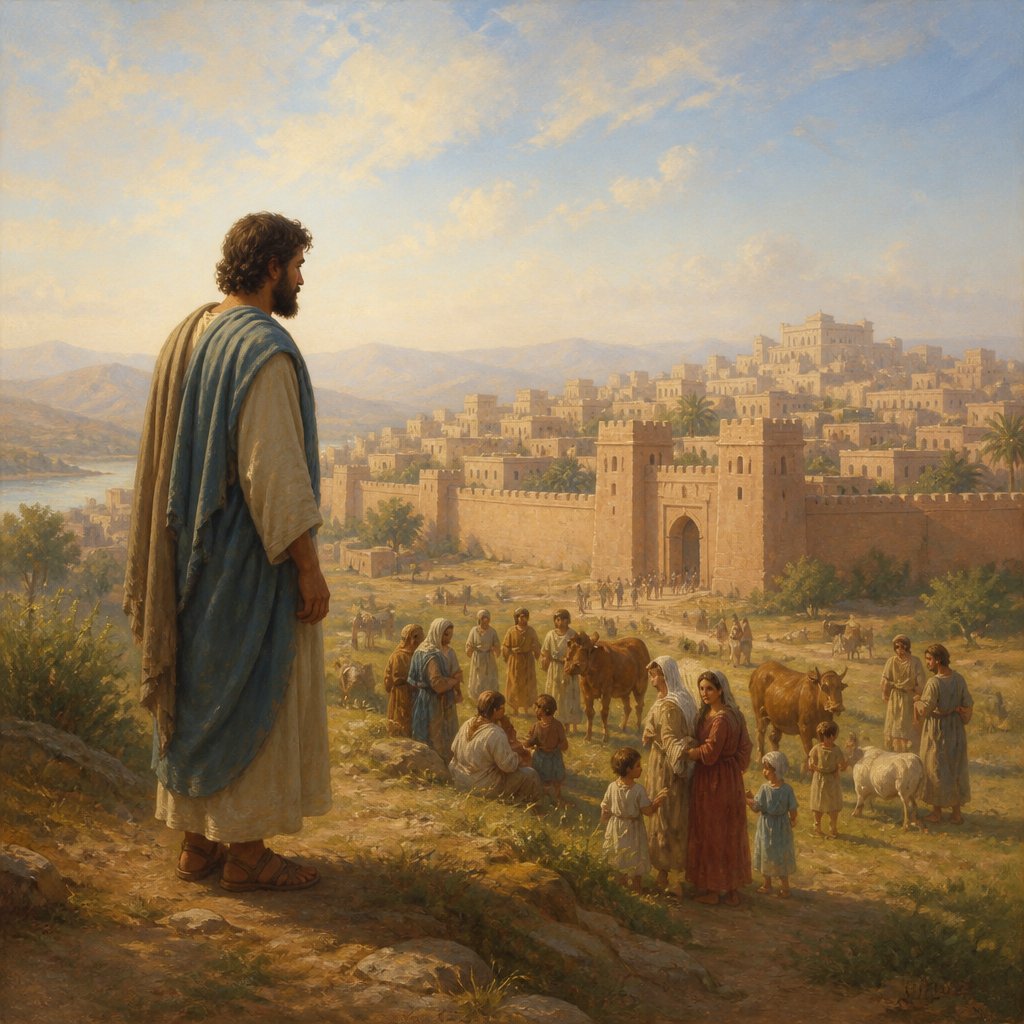
The book of Jonah is a short but powerful narrative found in the Old Testament of the Bible. It tells the story of a prophet named Jonah who is called by God to go to the city of Nineveh and deliver a message of repentance to its people. However, Jonah initially refuses to obey God's command and instead tries to flee from his presence by boarding a ship to Tarshish. After a series of events, including being thrown overboard and swallowed by a great fish, Jonah finally fulfills his mission and delivers God's message to the people of Nineveh.
The verse Jonah 4:11 in the King James Version reads, "And should not I spare Nineveh, that great city, wherein are more than sixscore thousand persons that cannot discern between their right hand and their left hand; and also much cattle?" This verse is spoken by God in response to Jonah's frustration and anger over the mercy that God extends to the people of Nineveh. The verse serves as a powerful reminder of God's compassion and concern for all people, regardless of their background or actions.
One of the key themes of this verse is the concept of God's mercy and compassion. Throughout the book of Jonah, we see God's unwavering love for even the most disobedient and sinful people. Despite their wickedness, God desires to extend His mercy and offer them a chance to repent and turn from their ways. This message is especially relevant in the context of the ancient city of Nineveh, which was known for its extreme wickedness and cruelty. The fact that God is willing to spare the city and its inhabitants demonstrates the depth of His love and desire for reconciliation with His creation.
Additionally, the verse emphasizes the idea of God's concern for all people, regardless of their age or understanding. The mention of "sixscore thousand persons that cannot discern between their right hand and their left hand" is a symbolic way of referring to the innocence and vulnerability of the children and other individuals who may be unaware of the consequences of their actions. This further underscores God's desire to extend His mercy and compassion to all, including the most vulnerable members of society.
Furthermore, the mention of "much cattle" in the verse also serves as a reminder of God's care for all of His creation. In biblical times, cattle were a valuable and essential part of daily life, providing food, clothing, and labor for the people. By including this reference, God is highlighting His concern for not just the people of Nineveh, but also the animals and the wider ecosystem of the city.
In a broader context, the verse Jonah 4:11 serves as a powerful reminder of God's character and His desire for reconciliation with humanity. It challenges the narrow mindset of Jonah and encourages readers to embrace a broader perspective of God's love and compassion for all people. This verse also prompts reflection on our own attitudes and prejudices towards those we may view as undeserving of God's mercy, reminding us of the inclusivity of God's grace.
In conclusion, Jonah 4:11 in the King James Version of the Bible is a profound and thought-provoking verse that encapsulates the themes of God's mercy, compassion, and concern for all people. It serves as a powerful reminder of the depth of God's love and challenges readers to examine their own attitudes towards others. The symbolism of innocence, vulnerability, and care for all of God's creation further emphasizes the universal nature of God's grace. This verse continues to inspire and encourage believers to embrace a broader perspective of God's love and compassion for all.
Get our apps


Artwork for Jonah 4:11

Jonah 4:11 - "And should not I spare Nineveh, that great city, wherein are more than sixscore thousand persons that cannot discern between their right hand and their left hand; and also much cattle?"
"And should not I spare Nineveh, that great city, wherein are more than sixscore thousand persons that cannot discern between their right hand and their left hand; and also much cattle?" - Jonah 4:11

Jonah 4:1 - "But it displeased Jonah exceedingly, and he was very angry."

JONAH 4, NINEVAH REPENTING, JONAH BITTER

"But it displeased Jonah exceedingly, and he was very angry." - Jonah 4:1

Jonah 4:6 - "And the LORD God prepared a gourd, and made it to come up over Jonah, that it might be a shadow over his head, to deliver him from his grief. So Jonah was exceeding glad of the gourd."

Jonah 4:4 - "¶ Then said the LORD, Doest thou well to be angry?"

Jonah 3:4 - "And Jonah began to enter into the city a day's journey, and he cried, and said, Yet forty days, and Nineveh shall be overthrown."

Jonah walking through the ancient city of Nineveh, preaching to the Assyrians. Jonah 3:4

Jonah 4:9 - "And God said to Jonah, Doest thou well to be angry for the gourd? And he said, I do well to be angry, even unto death."

Jonah 4:5-6 Jonah sitting in the desert under a shelter with a plant over the shelter overlooking the city of Nineveh.

Jonah 2:4 Ship fit for the period in which Jonah lived. In daytime, great tempest, big waves, strong winds

Jonah 4:6-7 - "And the LORD God prepared a plant and made it come up over Jonah, that it might be shade for his head to deliver him from his misery. So Jonah was very grateful for the plant. But as morning dawned the next day God prepared a worm, and it so damaged the plant that it withered."

Jonah 4:5 - "So Jonah went out of the city, and sat on the east side of the city, and there made him a booth, and sat under it in the shadow, till he might see what would become of the city."

Jonah 1:4-5 ancient sail ship appropriate for time of Jonah, in the mids of a great tempest, dark waters, big waves, strong winds

"¶ Then said the LORD, Doest thou well to be angry?" - Jonah 4:4

Jonah 4:8 - "And it came to pass, when the sun did arise, that God prepared a vehement east wind; and the sun beat upon the head of Jonah, that he fainted, and wished in himself to die, and said, It is better for me to die than to live."

"And the LORD God prepared a gourd, and made it to come up over Jonah, that it might be a shadow over his head, to deliver him from his grief. So Jonah was exceeding glad of the gourd." - Jonah 4:6

Jonah 4:7 - "But God prepared a worm when the morning rose the next day, and it smote the gourd that it withered."

Jonah 1:4 - "¶ But the LORD sent out a great wind into the sea, and there was a mighty tempest in the sea, so that the ship was like to be broken."

"And Jonah began to enter into the city a day's journey, and he cried, and said, Yet forty days, and Nineveh shall be overthrown." - Jonah 3:4

"And the LORD God prepared a gourd, and made it to come up over Jonah, that it might be a shadow over his head, to deliver him from his grief. So Jonah was exceeding glad of the gourd." - Jonah 4:6

Jonah 4:8 - "And it came to pass, when the sun did arise, that God prepared a vehement east wind; and the sun beat upon the head of Jonah, that he fainted, and wished in himself to die, and said, It is better for me to die than to live."

Jonah 1:11 - "¶ Then said they unto him, What shall we do unto thee, that the sea may be calm unto us? for the sea wrought, and was tempestuous."

"¶ Then said they unto him, What shall we do unto thee, that the sea may be calm unto us? for the sea wrought, and was tempestuous." - Jonah 1:11

"And God said to Jonah, Doest thou well to be angry for the gourd? And he said, I do well to be angry, even unto death." - Jonah 4:9

Jonah 2:4 - "Then I said, I am cast out of thy sight; yet I will look again toward thy holy temple."

Jonah 4:3 - "Therefore now, O LORD, take, I beseech thee, my life from me; for it is better for me to die than to live."

Jonah 4:10 - "Then said the LORD, Thou hast had pity on the gourd, for the which thou hast not laboured, neither madest it grow; which came up in a night, and perished in a night:"

"So Jonah went out of the city, and sat on the east side of the city, and there made him a booth, and sat under it in the shadow, till he might see what would become of the city." - Jonah 4:5