Strength Within the Ruins: Lessons from Joshua 11:13
“But as for the cities that stood still in their strength, Israel burned none of them, save Hazor only; that did Joshua burn.” — Joshua 11:13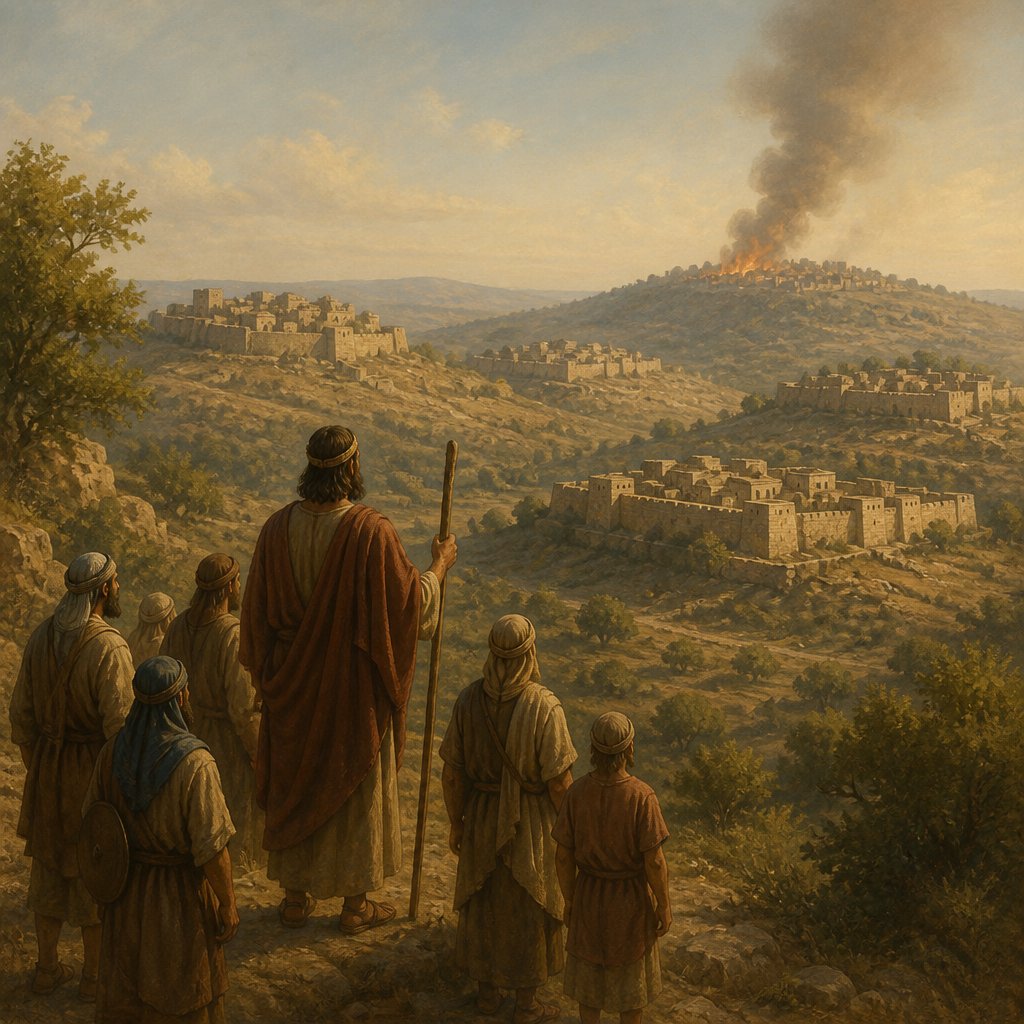
In the book of Joshua, we witness the Israelites as they claim the Promised Land, fulfilling the covenant made by God with their forefathers. The verse before us, Joshua 11:13, presents a pivotal moment in this conquest: "But as for the cities that stood still in their strength, Israel burned none of them, save Hazor only; that did Joshua burn" (KJV). This verse offers a profound insight not just into the military strategies of ancient Israel, but also into the spiritual implications of strength, destruction, and divine purpose.
To fully appreciate this passage, we must consider the context in which it is set. The land of Canaan was not simply a geographical territory; it was a land filled with cultures that heavily relied on their fortified cities for strength, security, and worship of their gods. These cities, rich in resources and power, represented more than just stones and fortifications; they embodied the identity of their inhabitants. However, despite their stronghold, these cities could not withstand the plans that God had for His people. God had promised Israel victory over these cities as part of their inheritance, yet in His divine wisdom, He instructed Joshua to burn only one city—Hazor.
Why Hazor? The answer unfolds throughout the narrative of the Israelites’ journey. Hazor was not just another city; it was the head of all those kingdoms (Joshua 11:10). It was the central hub of Canaanite power and opposition to God’s people. To burn Hazor was to signify the complete vanquishing of opposition. It served as a point of demarcation, illustrating God’s ultimate authority over the strongholds that stood against His people. The destruction of Hazor hence becomes a prophetic illustration of how God deals with sin and rebellion—not merely through partial wins, but through total victory.
In reflecting on this verse, we can draw important lessons for our spiritual lives today. First, we must evaluate our own strongholds. The metaphorical “cities that stood still in their strength” can represent areas in our lives where we may feel strong or secure—our careers, our reputations, or even our self-sufficiency. While these strengths may not inherently be sinful, when they become sources of pride or autonomy from God, they can lead us into spiritual complacency or even rebellion. Just as God instructed Joshua in dealing with Hazor, He calls us to evaluate what we allow to remain in our lives without surrendering to Him.
Secondly, we must reflect on God’s sovereignty in our struggles. The act of burning Hazor teaches us that God is not only capable of tearing down our strongholds but that He often uses destruction as a means of purification. It encourages us to trust Him in the seasons of our lives when He appears to be tearing down the very things we hold dear. When old patterns of sin or unholy attachments are stripped away, it may feel painful, but it allows God to build something new in us—something that reflects His glory rather than our strength.
Furthermore, the burning of Hazor serves as a reminder that God's plans are always for our good and His glory. He desires to transform our weak points into testimonies of His grace and might. In a culture that often prizes strength, the message of the gospel turns that notion upside down; it is through our weaknesses that God’s power is made perfect (2 Corinthians 12:9).
As we meditate on Joshua 11:13, let us bring to God the "cities" in our lives that seem invincible. Let us surrender them fully, trusting that He knows what needs to be burned down and what can remain standing. May we embrace His guidance, recognizing that divine victory often begins with the destruction of earthly strongholds. Let us align our lives with His purpose, knowing that no matter how strong something appears, it pales in comparison to the power of our God.
In conclusion, Joshua 11:13 reminds us that even in conquest, God teaches us profound lessons about surrender, trust, and renewal. Let every area we hold tightly to be brought to the light of His love, allowing Him to take the lead in our lives, burning away all that stands in opposition to His divine will.
Get our apps


Artwork for Joshua 11:13

Joshua 11:13 - "But as for the cities that stood still in their strength, Israel burned none of them, save Hazor only; that did Joshua burn."
"But as for the cities that stood still in their strength, Israel burned none of them, save Hazor only; that did Joshua burn." - Joshua 11:13

Joshua 13:11 - "And Gilead, and the border of the Geshurites and Maachathites, and all mount Hermon, and all Bashan unto Salcah;"
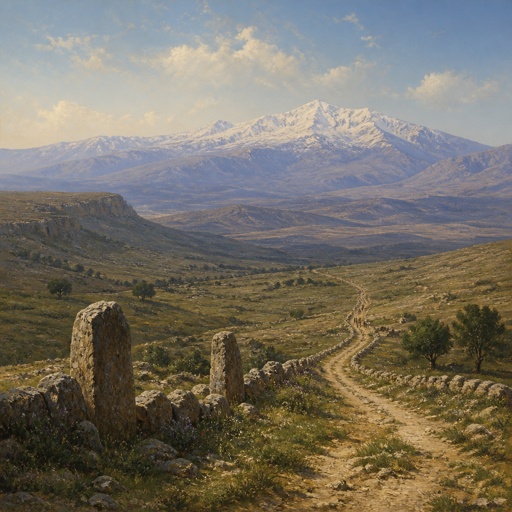
"And Gilead, and the border of the Geshurites and Maachathites, and all mount Hermon, and all Bashan unto Salcah;" - Joshua 13:11

Joshua 11:18 - "Joshua made war a long time with all those kings."

Joshua 14:13 - "And Joshua blessed him, and gave unto Caleb the son of Jephunneh Hebron for an inheritance."

Joshua 5:13

Joshua 11:9 - "And Joshua did unto them as the LORD bade him: he houghed their horses, and burnt their chariots with fire."

Joshua 13:18 - "And Jahazah, and Kedemoth, and Mephaath,"

Joshua 11:15 - "¶ As the LORD commanded Moses his servant, so did Moses command Joshua, and so did Joshua; he left nothing undone of all that the LORD commanded Moses."
Psalm 1:1-3
Pain 1:1-3

Joshua 11:23 - "So Joshua took the whole land, according to all that the LORD said unto Moses; and Joshua gave it for an inheritance unto Israel according to their divisions by their tribes. And the land rested from war."

Joshua 11:7 - "So Joshua came, and all the people of war with him, against them by the waters of Merom suddenly; and they fell upon them."

Joshua 11:10 - "¶ And Joshua at that time turned back, and took Hazor, and smote the king thereof with the sword: for Hazor beforetime was the head of all those kingdoms."

Joshua 5:13 (KJVA) 13 And it came to pass, when Joshua was by Jericho, that he lifted up his eyes and looked, and, behold, there stood a man over against him with his sword drawn in his hand: and Joshua went unto him, and said unto him, Art thou for us, or for our adversaries?

Joshua 8:13 - "And when they had set the people, even all the host that was on the north of the city, and their liers in wait on the west of the city, Joshua went that night into the midst of the valley."

Joshua 13:13 - "Nevertheless the children of Israel expelled not the Geshurites, nor the Maachathites: but the Geshurites and the Maachathites dwell among the Israelites until this day."

Joshua 13:20 - "And Beth-peor, and Ashdoth-pisgah, and Beth-jeshimoth,"

Joshua 12:13 - "The king of Debir, one; the king of Geder, one;"

Joshua 13:19 - "And Kirjathaim, and Sibmah, and Zareth-shahar in the mount of the valley,"

Joshua 11:16 - "So Joshua took all that land, the hills, and all the south country, and all the land of Goshen, and the valley, and the plain, and the mountain of Israel, and the valley of the same;"

Joshua 11:21 - "¶ And at that time came Joshua, and cut off the Anakims from the mountains, from Hebron, from Debir, from Anab, and from all the mountains of Judah, and from all the mountains of Israel: Joshua destroyed them utterly with their cities."

Joshua 12:11 - "The king of Jarmuth, one; the king of Lachish, one;"

Exodus 17:13 - "And Joshua discomfited Amalek and his people with the edge of the sword."

"Joshua made war a long time with all those kings." - Joshua 11:18

Joshua 13:28 - "This is the inheritance of the children of Gad after their families, the cities, and their villages."

Joshua 13:1 - "Now Joshua was old and stricken in years; and the LORD said unto him, Thou art old and stricken in years, and there remaineth yet very much land to be possessed."

"And Jahazah, and Kedemoth, and Mephaath," - Joshua 13:18

Joshua 13:2 - "This is the land that yet remaineth: all the borders of the Philistines, and all Geshuri,"