The Captain of the Lord's Host: A Call to Humble Worship
“And he said, Nay; but as captain of the host of the LORD am I now come. And Joshua fell on his face to the earth, and did worship, and said unto him, What saith my lord unto his servant?” — Joshua 5:14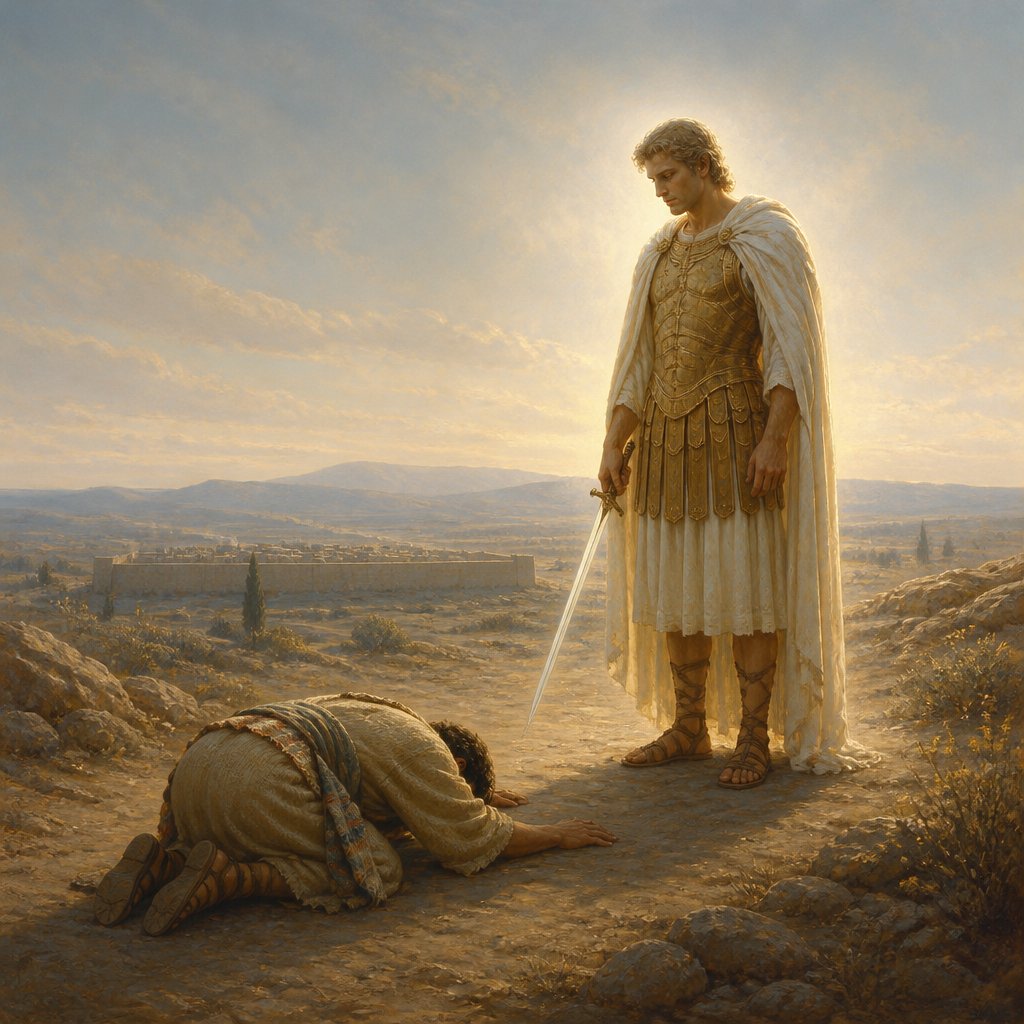
In Joshua 5:14, we encounter a profound moment of divine revelation that not only shapes the course of Israel’s journey into the Promised Land but also provides us a rich lesson in humility and worship. The verse states: "And he said, Nay; but as captain of the host of the LORD am I now come. And Joshua fell on his face to the earth, and did worship, and said unto him, What saith my lord unto his servant?"
As we delve into this verse, it’s important to set the scene. Joshua and the Israelites are on the brink of entering Canaan, a land long promised to them. They have faced formidable challenges, including the mighty city of Jericho, standing in their way. The weight of leadership rests heavily on Joshua’s shoulders, and it’s in this moment of uncertainty that he encounters a figure whose presence commands reverence.
This figure identifies himself as the "Captain of the host of the LORD." Let us pause and reflect on the implications of this title. "Captain" signifies authority and leadership, yet it is also a term filled with valiance and purpose, resonating the military might and divine strategy of God for His people. The phrase "host of the LORD" refers to God's army, encompassing both angelic beings and the divine authority available to those who follow Him. Here, we see a divine leader, not merely guiding Joshua but preparing to engage in battle with him.
Joshua’s immediate response is profound: he falls on his face and worships. In this act, we see the essence of humility—a recognition of one’s position in the presence of the divine. As Joshua lays prostrate, he acknowledges not only the power of this captain but also his own need for guidance and empowerment. In our own lives, how often do we come before God with our concerns, only to forget to express the humility that acknowledges His sovereignty?
The phrase, "What saith my Lord unto his servant?" echoes the heart of a servant ready to obey. After an encounter with the divine, Joshua's first inclination is to seek instruction. He understood that his role as a leader was not to march ahead on his own wisdom, but to align with the will and purpose of God. This posture of inquiry is critical for us as well. Are we inquiring of the Lord in our decisions? Do we approach Him with a heart willing to listen?
The significance of Joshua’s worship is paramount. Worship is an act of surrender, an acknowledgment that we are not in control, and that our victories are rooted not in our strength but in God’s strength at work within us. In the battles of life—whether they be personal struggles, relational conflicts, or uncertainties about the future—God desires for us to approach Him with the same humility and readiness to receive His directives.
Additionally, consider the repeated theme in Scripture of divine victories coming through humility. David, before facing Goliath, sought God. Gideon, called to lead, stripped away his earthly resources to demonstrate reliance on God alone. In each instance, victory was secured not through human effort but through divine intervention, birthed from a heart of worship and surrender.
As followers of Christ today, we are reminded that we too have access to the Captain of the host of the LORD. Jesus Christ, the leader of our faith, goes before us, even into the battles we face. In Him, we find our strength and our anchor. When challenges arise, let us be quick to bow in worship, to seek His counsel, and to embrace the path He lays before us.
In conclusion, Joshua’s encounter with the Captain of the host serves as a testament to the power of humility and worship. As we reflect on this verse, let us ask ourselves: Are we fully surrendered to His leading? Are we listening for His voice amid the noise of our lives? May we fall on our faces in worship, ready to respond, "What saith my Lord unto His servant?" This should be our daily pursuit, ensuring that we not only march forward in life’s battles but do so with the victorious Captain at the helm.
Get our apps


Artwork for Joshua 5:14

Joshua 5:14 - "And he said, Nay; but as captain of the host of the LORD am I now come. And Joshua fell on his face to the earth, and did worship, and said unto him, What saith my lord unto his servant?"
"And he said, Nay; but as captain of the host of the LORD am I now come. And Joshua fell on his face to the earth, and did worship, and said unto him, What saith my lord unto his servant?" - Joshua 5:14

Joshua 14:5 - "As the LORD commanded Moses, so the children of Israel did, and they divided the land."
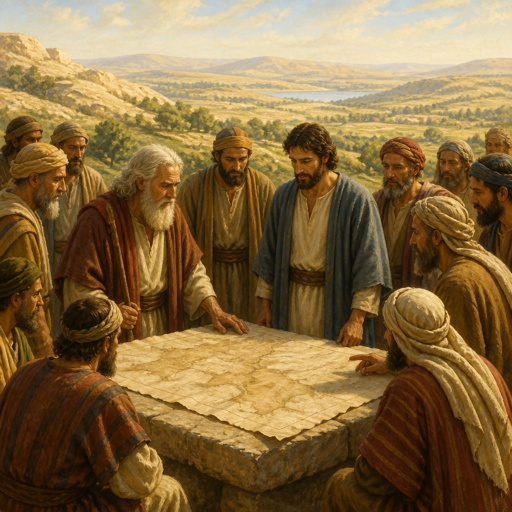
"As the LORD commanded Moses, so the children of Israel did, and they divided the land." - Joshua 14:5

Joshua 14:13 - "And Joshua blessed him, and gave unto Caleb the son of Jephunneh Hebron for an inheritance."

Joshua 3:14

Joshua 3:14

Joshua 3:14

Joshua 3:14

Joshua 5:3 - "And Joshua made him sharp knives, and circumcised the children of Israel at the hill of the foreskins."

Joshua 5:13

Joshua 3:5 - "And Joshua said unto the people, Sanctify yourselves: for to morrow the LORD will do wonders among you."

Joshua 4:14 - "¶ On that day the LORD magnified Joshua in the sight of all Israel; and they feared him, as they feared Moses, all the days of his life."

Joshua 5:15 - "And the captain of the LORD'S host said unto Joshua, Loose thy shoe from off thy foot; for the place whereon thou standest is holy. And Joshua did so."

Joshua 5:2 - "¶ At that time the LORD said unto Joshua, Make thee sharp knives, and circumcise again the children of Israel the second time."

Joshua 21:14 - "And Jattir with her suburbs, and Eshtemoa with her suburbs,"

Joshua 12:14 - "The king of Hormah, one; the king of Arad, one;"

Joshua 5:7 - "And their children, whom he raised up in their stead, them Joshua circumcised: for they were uncircumcised, because they had not circumcised them by the way."

Joshua 19:5 - "And Ziklag, and Beth-marcaboth, and Hazar-susah,"

Joshua 9:14 - "And the men took of their victuals, and asked not counsel at the mouth of the LORD."

Joshua 14:1 - "And these are the countries which the children of Israel inherited in the land of Canaan, which Eleazar the priest, and Joshua the son of Nun, and the heads of the fathers of the tribes of the children of Israel, distributed for inheritance to them."

Joshua 14:14 - "Hebron therefore became the inheritance of Caleb the son of Jephunneh the Kenezite unto this day, because that he wholly followed the LORD God of Israel."

"And Joshua blessed him, and gave unto Caleb the son of Jephunneh Hebron for an inheritance." - Joshua 14:13

Joshua 5:9 - "And the LORD said unto Joshua, This day have I rolled away the reproach of Egypt from off you. Wherefore the name of the place is called Gilgal unto this day."

Joshua 19:14 - "And the border compasseth it on the north side to Hannathon: and the outgoings thereof are in the valley of Jiphthah-el:"

Joshua 14:2 - "By lot was their inheritance, as the LORD commanded by the hand of Moses, for the nine tribes, and for the half tribe."

"And Joshua made him sharp knives, and circumcised the children of Israel at the hill of the foreskins." - Joshua 5:3

Joshua 14:6 - "¶ Then the children of Judah came unto Joshua in Gilgal: and Caleb the son of Jephunneh the Kenezite said unto him, Thou knowest the thing that the LORD said unto Moses the man of God concerning me and thee in Kadesh-barnea."

Joshua 6:14 - "And the second day they compassed the city once, and returned into the camp: so they did six days."

Joshua 15:14 - "And Caleb drove thence the three sons of Anak, Sheshai, and Ahiman, and Talmai, the children of Anak."