Cherishing the Season of Mourning: A Reflection on Judges 11:37
“And she said unto her father, Let this thing be done for me: let me alone two months, that I may go up and down upon the mountains, and bewail my virginity, I and my fellows.” — Judges 11:37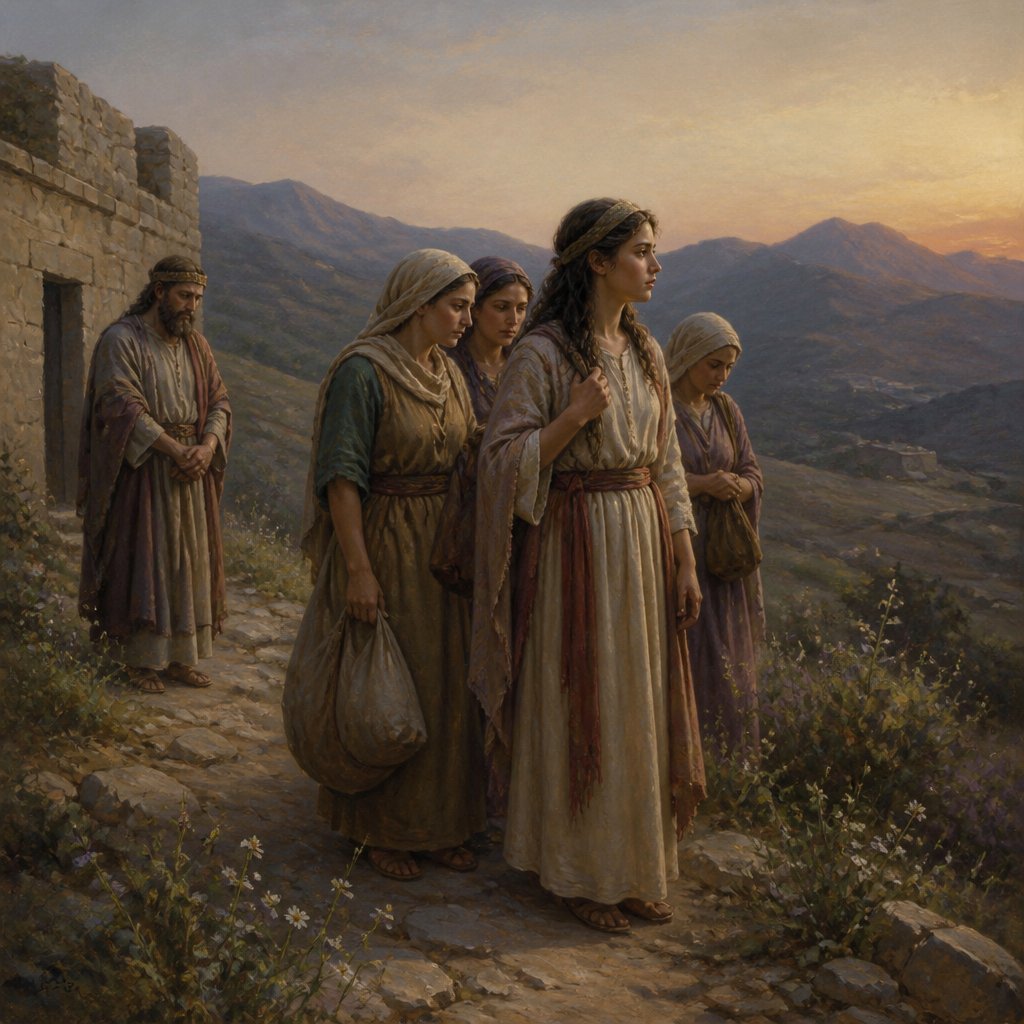
In the Old Testament, the story of Jephthah and his daughter encapsulates profound themes of promise, loss, and the weight of choices. Within Judges 11:37, we encounter these heartfelt words spoken by Jephthah's daughter: "And she said unto her father, Let this thing be done for me: let me alone two months, that I may go up and down upon the mountains, and bewail my virginity, I and my fellows" (KJV). This poignant moment challenges us to reflect not only on the circumstances surrounding it but also on its implications for our own spiritual journeys.
To comprehend the impact of this verse, we must first acknowledge the context of Jephthah’s vow. Driven by desperation and a desire for victory in battle, Jephthah made a rash promise to offer whatever came out from his house to greet him upon his return if God granted him success. Tragically, he could not have anticipated that his beloved daughter would be that greeting. The moment when she emerges, joyous and celebrating his victory, quickly metamorphoses into a scene of despair as she learns of her father’s vow.
Jephthah's daughter embodies grace amidst sorrow. Instead of expressing anger or despair, she accepts her fate with dignity, asking for two months to mourn her virginity—the symbol of her unfulfilled life, a loss of potential and lineage. Her request is one of profound sadness, as she understands the implications of her father's words and the cultural significance of virginity in Israelite society.
The mountains she seeks to ascend represent both a physical journey and a metaphorical one. They symbolize maturity, reflection, and the acknowledgment of her circumstances. When she says, "let me alone for two months," it invites us to consider our own moments of solitude and reflection. There are times in life when we must pause to grieve—the loss of dreams, opportunities, or even people we love. In our fast-paced lives, society often dismisses the necessity of mourning, urging us to move on quickly. Yet, the act of recognizing and expressing grief is essential to our spiritual and emotional well-being.
As she and her fellows bewail their virginity, we are reminded of our vulnerabilities and the reality of unattainable desires. Each of us carries unfulfilled dreams, aspirations that seem just out of reach, or roads not taken. Jephthah's daughter teaches us the importance of giving ourselves permission to mourn those losses. It is in this mourning that we find clarity and connection to God’s plans for us—a chance to process our experiences, learn from them, and grow.
As believers, we must recognize that grief does not signify a lack of faith; rather, it can be a pathway to deeper trust and understanding of God’s will. Jesus invites us to bring our burdens to Him (Matthew 11:28), and in doing so, we often find healing and hope. Whether through prayer, community support, or time spent in nature like Jephthah’s daughter, we engage in an act of devotion by allowing ourselves to feel and process our emotions.
Furthermore, the interaction between Jephthah and his daughter challenges us to reflect on the consequences of our promises. It compels us to reconsider the weight of our words and the impact they have on others. In our lives, we often make commitments that can lead us or others down difficult paths. It is a sobering reminder to tread carefully in our declarations.
In conclusion, Judges 11:37 serves as a powerful reminder to embrace our losses, allowing grief to flourish in a healthy space. Let us mirror the honor and dignity of Jephthah’s daughter as we navigate our struggles, advocating for a time of mourning when necessary. In those moments of introspection, we may discover not only the weight of our human experiences but also the steadfast love and redemptive power of God who is always present in our grief.
Get our apps


Artwork for Judges 11:37
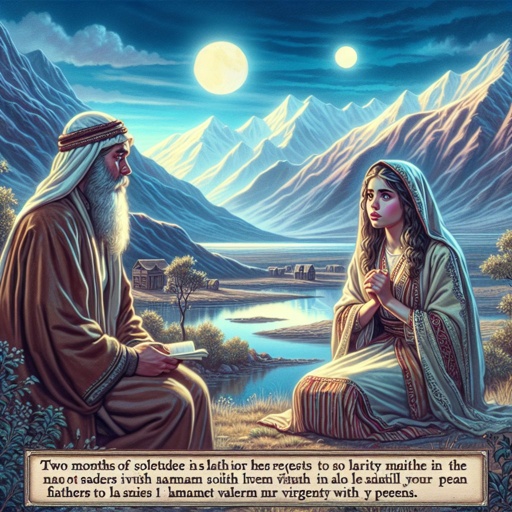
Judges 11:37 - "And she said unto her father, Let this thing be done for me: let me alone two months, that I may go up and down upon the mountains, and bewail my virginity, I and my fellows."
"And she said unto her father, Let this thing be done for me: let me alone two months, that I may go up and down upon the mountains, and bewail my virginity, I and my fellows." - Judges 11:37

Luke 6:37 - "Judge not, and ye shall not be judged: condemn not, and ye shall not be condemned: forgive, and ye shall be forgiven:"

Luke 6:37 “Judge not, and you shall not be judged. Condemn not, and you shall not be condemned. Forgive, and you will be forgiven.
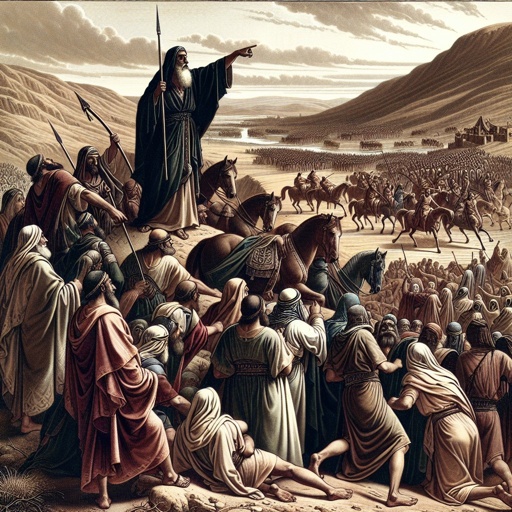
Judges 9:37 - "And Gaal spake again and said, See there come people down by the middle of the land, and another company come along by the plain of Meonenim."

Judges 20:37 - "And the liers in wait hasted, and rushed upon Gibeah; and the liers in wait drew themselves along, and smote all the city with the edge of the sword."

Psalms 37:33 - "The LORD will not leave him in his hand, nor condemn him when he is judged."

1 Chronicles 11:37 - "Hezro the Carmelite, Naarai the son of Ezbai,"

Judges 12:11 - "¶ And after him Elon, a Zebulonite, judged Israel; and he judged Israel ten years."

Genesis 37:11 - "And his brethren envied him; but his father observed the saying."
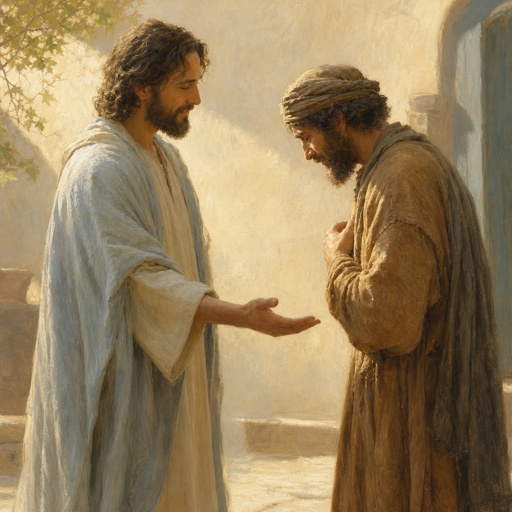
"Judge not, and ye shall not be judged: condemn not, and ye shall not be condemned: forgive, and ye shall be forgiven:" - Luke 6:37

1 Corinthians 11:31 - "For if we would judge ourselves, we should not be judged."

Job 31:11 - "For this is an heinous crime; yea, it is an iniquity to be punished by the judges."

Psalms 37:11 - "But the meek shall inherit the earth; and shall delight themselves in the abundance of peace."

Exodus 37:11 - "And he overlaid it with pure gold, and made thereunto a crown of gold round about."

Job 37:11 - "Also by watering he wearieth the thick cloud: he scattereth his bright cloud:"

Psalms 148:11 - "Kings of the earth, and all people; princes, and all judges of the earth:"

Judges 11:14 - "And Jephthah sent messengers again unto the king of the children of Ammon:"

Judges 2:11 - "¶ And the children of Israel did evil in the sight of the LORD, and served Baalim:"

Judges 3:11 - "And the land had rest forty years. And Othniel the son of Kenaz died."

Judges 14:11 - "And it came to pass, when they saw him, that they brought thirty companions to be with him."

Leviticus 11:37 - "And if any part of their carcase fall upon any sowing seed which is to be sown, it shall be clean."

Jeremiah 37:11 - "¶ And it came to pass, that when the army of the Chaldeans was broken up from Jerusalem for fear of Pharaoh's army,"

Judges 6:37 - "Behold, I will put a fleece of wool in the floor; and if the dew be on the fleece only, and it be dry upon all the earth beside, then shall I know that thou wilt save Israel by mine hand, as thou hast said."

Luke 11:37 - "¶ And as he spake, a certain Pharisee besought him to dine with him: and he went in, and sat down to meat."

Judges 11:11 - "Then Jephthah went with the elders of Gilead, and the people made him head and captain over them: and Jephthah uttered all his words before the LORD in Mizpeh."

Judges 11:4 - "¶ And it came to pass in process of time, that the children of Ammon made war against Israel."

Judges 11:27 - "Wherefore I have not sinned against thee, but thou doest me wrong to war against me: the LORD the Judge be judge this day between the children of Israel and the children of Ammon."

Judges 17:11 - "And the Levite was content to dwell with the man; and the young man was unto him as one of his sons."

"Hezro the Carmelite, Naarai the son of Ezbai," - 1 Chronicles 11:37