The Consequences of Vows: A Reflective Journey Through Judges 11:39
“And it came to pass at the end of two months, that she returned unto her father, who did with her according to his vow which he had vowed: and she knew no man. And it was a custom in Israel,” — Judges 11:39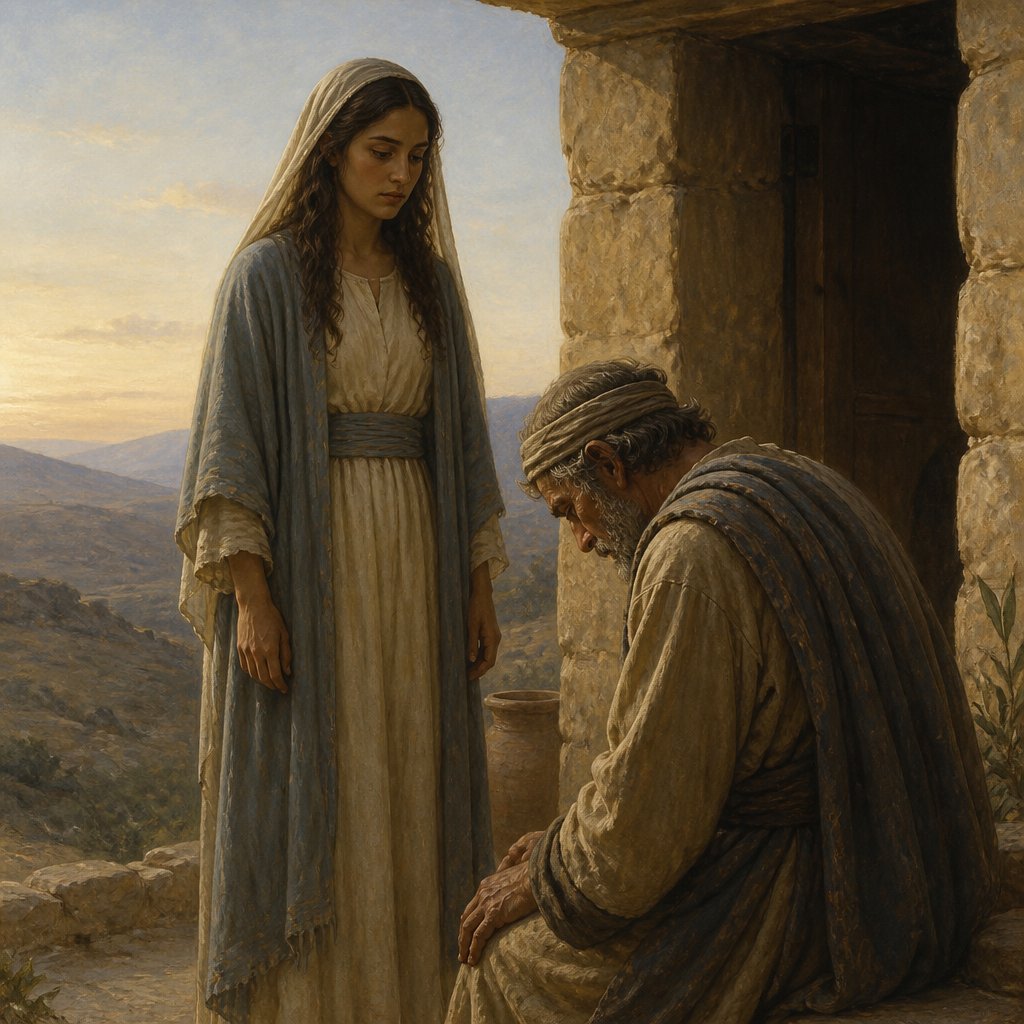
Judges 11:39 records a poignant moment in the story of Jephthah, a judge of Israel. The verse states, "And it came to pass at the end of two months, that she returned unto her father, who did with her according to his vow which he had vowed: and she knew no man. And it was a custom in Israel." In this narrative, we encounter a deeply moving yet distressing account that forces us to confront the weight of our promises and vows before God.
To understand the emotional gravity of Judges 11:39, it’s crucial to revisit the context surrounding this passage. Jephthah was a celebrated warrior who faced the Ammonites, and in his desperation for victory, he made a vow to God, promising that if granted success in battle, he would offer whatever came out of his house to greet him upon his return as a burnt offering. When he returned victorious, it was his only daughter who emerged first to greet him.
This heart-wrenching episode prompts a myriad of reflections. First, we see the stark reality of the consequences of rash vows. Jephthah’s promise—a reflection of the cultural practice of making vows to secure divine favor—reveals how quickly we can find ourselves ensnared by our words. Although vows can signify deep commitment and devotion, not all vows made in the heat of the moment reflect the wisdom of God. Jephthah’s predicament serves as a sobering reminder that our promises to God—made in times of desperation—require careful deliberation. The impact of our words can extend far beyond our immediate understanding, reaching into the lives of others, much like the fate of Jephthah’s daughter.
Secondly, we must probe the deeper theological implications of this passage. The daughter’s resignation to her fate, as she laments her virginity and impending sacrifice, challenges our perceptions of God’s justice and mercy. In an era saturated with divine requirements, how does one reconcile such devastating consequences with a loving God? This is not simply a tale of loss; it is a rugged illustration of the demands of holiness and the perpetual call to obedience. In the face of Jephthah’s vow, we can see echoes of God’s call to surrender ourselves—albeit in a much more wholesome and life-affirming way than that displayed by Jephthah. As Christians, we are called to live in obedience to God’s will, surrendering our lives to Him, which ultimately leads to true fulfillment and purpose.
Moreover, this narrative has a universal relevance in the lives we live today. Many of us find ourselves in situations where we too may hastily make commitments in emotional moments: promises we may unintentionally neglect, assumptions that may lead others to disappointment, and resolutions that may come to haunt us as they manifest in unforeseen ways. It beckons us to explore the depth of our commitments, reflect on our motivations, and consider the consequences of our words.
Finally, Judges 11:39 also illustrates the theme of female agency and sacrifice. The daughter’s strength in the face of her fate serves as a testament to the fortitude that can be found even in tragic circumstances. In her story, we find a message of grace and dignity, even amidst despair. Her story reminds us of the often unseen sacrifices women make in the wake of circumstances beyond their control.
In conclusion, Jephthah’s vow resulted in heart-wrenching sacrifice, ultimately motivating us to ponder the significance of our words and the commitment we make before God. As we reflect on Judges 11:39, let it serve as both a caution and a clarion call for every believer to exercise humility and wisdom in our promises. Choosing to walk in the light of God’s truth requires us to think carefully about the vows we make, always aligning with His will and purpose, and trusting that His plans ultimately bring hope and restoration.
Get our apps


Artwork for Judges 11:39

Judges 11:39 - "And it came to pass at the end of two months, that she returned unto her father, who did with her according to his vow which he had vowed: and she knew no man. And it was a custom in Israel,"
"And it came to pass at the end of two months, that she returned unto her father, who did with her according to his vow which he had vowed: and she knew no man. And it was a custom in Israel," - Judges 11:39

Judges 9:39 - "And Gaal went out before the men of Shechem, and fought with Abimelech."

Ezekiel 39:11

Ezekiel 39:11

Exodus 39:11 - "And the second row, an emerald, a sapphire, and a diamond."

"And Gaal went out before the men of Shechem, and fought with Abimelech." - Judges 9:39

1 Kings 11:39 - "And I will for this afflict the seed of David, but not for ever."

1 Chronicles 11:39 - "Zelek the Ammonite, Naharai the Berothite, the armourbearer of Joab the son of Zeruiah,"

Hebrews 11:39 - "And these all, having obtained a good report through faith, received not the promise:"

Judges 20:39 - "And when the men of Israel retired in the battle, Benjamin began to smite and kill of the men of Israel about thirty persons: for they said, Surely they are smitten down before us, as in the first battle."

Judges 12:11 - "¶ And after him Elon, a Zebulonite, judged Israel; and he judged Israel ten years."

1 Corinthians 11:31 - "For if we would judge ourselves, we should not be judged."

"And the second row, an emerald, a sapphire, and a diamond." - Exodus 39:11

Job 31:11 - "For this is an heinous crime; yea, it is an iniquity to be punished by the judges."

Jeremiah 39:11 - "¶ Now Nebuchadrezzar king of Babylon gave charge concerning Jeremiah to Nebuzar-adan the captain of the guard, saying,"

Revelation 12:3-9

Ezekiel 39:11 Valley of Hamongog east of the dead sea in Israel

Job 39:11 - "Wilt thou trust him, because his strength is great? or wilt thou leave thy labour to him?"

Genesis 39:11 - "And it came to pass about this time, that Joseph went into the house to do his business; and there was none of the men of the house there within."

"And I will for this afflict the seed of David, but not for ever." - 1 Kings 11:39

Psalms 148:11 - "Kings of the earth, and all people; princes, and all judges of the earth:"

Judges 11:14 - "And Jephthah sent messengers again unto the king of the children of Ammon:"

Judges 2:11 - "¶ And the children of Israel did evil in the sight of the LORD, and served Baalim:"

Leviticus 11:39 - "And if any beast, of which ye may eat, die; he that toucheth the carcase thereof shall be unclean until the even."

Judges 3:11 - "And the land had rest forty years. And Othniel the son of Kenaz died."

Judges 14:11 - "And it came to pass, when they saw him, that they brought thirty companions to be with him."

Judges 11:11 - "Then Jephthah went with the elders of Gilead, and the people made him head and captain over them: and Jephthah uttered all his words before the LORD in Mizpeh."

Judges 11:4 - "¶ And it came to pass in process of time, that the children of Ammon made war against Israel."

Judges 11:27 - "Wherefore I have not sinned against thee, but thou doest me wrong to war against me: the LORD the Judge be judge this day between the children of Israel and the children of Ammon."