The Power of the Jawbone: A Symbol of Deliverance and Divine Purpose
“And it came to pass, when he had made an end of speaking, that he cast away the jawbone out of his hand, and called that place Ramath-lehi.” — Judges 15:17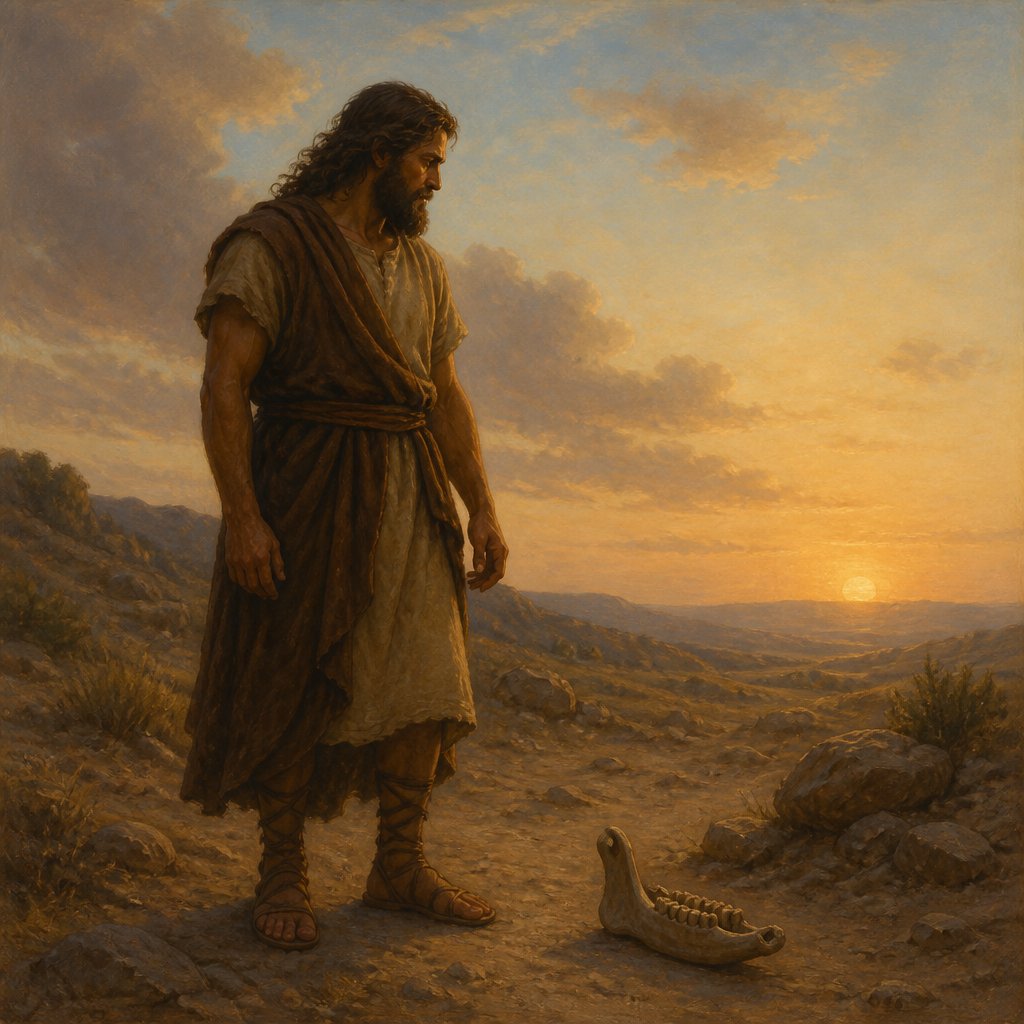
In the world around us, the jawbone serves a simple yet profound purpose; it forms the framework for speech, enabling communication that can heal or hurt, uplift or condemn. In Judges 15:17, we find a biblical account that encapsulates the essence of using what we have in our hands to fulfill the divine plan of God. The King James Version states, "And it came to pass, when he had made an end of speaking, that he cast away the jawbone out of his hand, and called that place Ramath-lehi."
To fully appreciate the depth of this passage, we must consider the circumstances leading to these words. Here, we witness the life of Samson—a man endowed with extraordinary strength, yet incredibly flawed. The jawbone was not merely a weapon of choice; it became an extension of Samson’s resolve amid a hostile and oppressive environment. When he faced the Philistines, he took up the jawbone of a donkey and wielded it with divinely empowered strength. With it, he achieved a significant victory, slaying a thousand men (Judges 15:15).
Samson's narrative teaches us about the necessity of using our resources—however seemingly insignificant they may be. The jawbone, an ordinary object, became an instrument of deliverance. When we think about the challenges we face, we often focus on the limitations and the inadequate tools at our disposal. Yet, God’s power is perfected in our weaknesses (2 Corinthians 12:9). When we surrender our inadequacies to Him, He can use us to accomplish His purpose in ways we could never imagine.
After the battle was won, Samson did not cling to the jawbone. Instead, it seems he understood that the victory was not about the weapon he had wielded but the God who had empowered him to use it. His act of casting away the jawbone symbolizes a crucial spiritual principle—that victory should not produce pride or a sense of ownership over the tools we utilize. Rather, we must recognize that it is God who provides both the strength and the resources needed to overcome our adversaries. In naming the place Ramath-lehi, Samson acknowledged his experience of victory as a culmination of faith and divine intervention.
The name Ramath-lehi translates to "the height of the jawbone," which can symbolize the elevation of our struggles when faced with God’s help. How often do we find ourselves still clinging to the 'jawbones' of our victories—attachments to methods and tools that God used in former battles? Our tendency to anchor our identities and futures on past victories can prevent us from moving forward in faith.
God might be calling us to a Ramath-lehi experience—an elevation beyond the tools we possess and a challenge to rely purely upon Him. Our resilience in faith must be founded in seeking God rather than the potency of our experiences or the strength of our weaponry. In casting away the jawbone, Samson declared a significant truth: the Lord is our source of strength, and our victory should lead us to worship rather than self-congratulation.
As we engage in our daily lives, may we be inspired to take inventory of our jawbones—those tools, experiences, and victories we have relied on. Are we willing to surrender them to God, acknowledging that every significant victory is due to His grace? May we walk into this week with the knowledge that we do not fight alone, but with the divine capabilities entrusted to us by a loving Father who designs our victories. Remember, it is not our might, but His power that leads us to triumph.
Let us pray:
Lord, thank You for the victories in our lives, the moments when we witness Your hand at work. Help us to remember that it is not in our tools, but in You, that we find our strength. As we let go of the 'jawbones' that bind us to our past victories, may we find ourselves elevated in faith and ready for the next battle ahead. In the name of Jesus, we pray. Amen.
Get our apps


Artwork for Judges 15:17
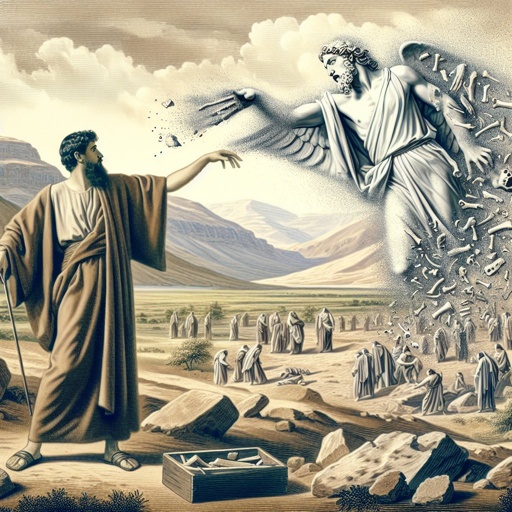
Judges 15:17 - "And it came to pass, when he had made an end of speaking, that he cast away the jawbone out of his hand, and called that place Ramath-lehi."
"And it came to pass, when he had made an end of speaking, that he cast away the jawbone out of his hand, and called that place Ramath-lehi." - Judges 15:17

Judges 15:15

Judges 9:8-15

John 8:15 - "Ye judge after the flesh; I judge no man."

Judges 15:20 - "And he judged Israel in the days of the Philistines twenty years."

Judges 17:1 - "And there was a man of mount Ephraim, whose name was Micah."

Judges 15:15 - "And he found a new jawbone of an ass, and put forth his hand, and took it, and slew a thousand men therewith."

Job 12:17 - "He leadeth counsellors away spoiled, and maketh the judges fools."

Judges 8:17 - "And he beat down the tower of Penuel, and slew the men of the city."

Judges 4:15 – "The Lord routed Sisera and all his chariots and army by the sword."

Judges 15:9 - "¶ Then the Philistines went up, and pitched in Judah, and spread themselves in Lehi."

Judges 21:17 - "And they said, There must be an inheritance for them that be escaped of Benjamin, that a tribe be not destroyed out of Israel."

Judges 17:12 - "And Micah consecrated the Levite; and the young man became his priest, and was in the house of Micah."

Judges 3:17 - "And he brought the present unto Eglon king of Moab: and Eglon was a very fat man."

Judges 17:11 - "And the Levite was content to dwell with the man; and the young man was unto him as one of his sons."

Judges 2:17 - "And yet they would not hearken unto their judges, but they went a whoring after other gods, and bowed themselves unto them: they turned quickly out of the way which their fathers walked in, obeying the commandments of the LORD; but they did not so."

Judges 17:7 - "¶ And there was a young man out of Beth-lehem-judah of the family of Judah, who was a Levite, and he sojourned there."

Judges 21:15 - "And the people repented them for Benjamin, because that the LORD had made a breach in the tribes of Israel."

Judges 17:6 - "In those days there was no king in Israel, but every man did that which was right in his own eyes."

Judges 12:15 - "And Abdon the son of Hillel the Pirathonite died, and was buried in Pirathon in the land of Ephraim, in the mount of the Amalekites."

Genesis 17-15

Provers 15:17

Acts 17:15

Judges 9:17 - "(For my father fought for you, and adventured his life far, and delivered you out of the hand of Midian:"

"And he judged Israel in the days of the Philistines twenty years." - Judges 15:20

Judges 10:17 - "Then the children of Ammon were gathered together, and encamped in Gilead. And the children of Israel assembled themselves together, and encamped in Mizpeh."
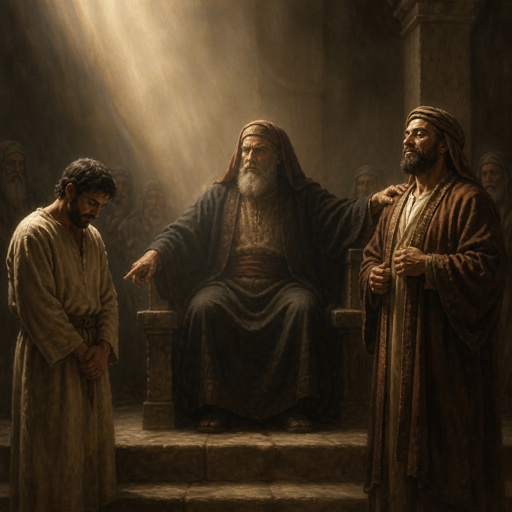
"He that justifieth the wicked, and he that condemneth the just, even they both are abomination to the LORD." - Proverbs 17:15

"Ye judge after the flesh; I judge no man." - John 8:15

"And there was a man of mount Ephraim, whose name was Micah." - Judges 17:1