The Burden of Blamelessness: Samson's Struggle
“And Samson said concerning them, Now shall I be more blameless than the Philistines, though I do them a displeasure.” — Judges 15:3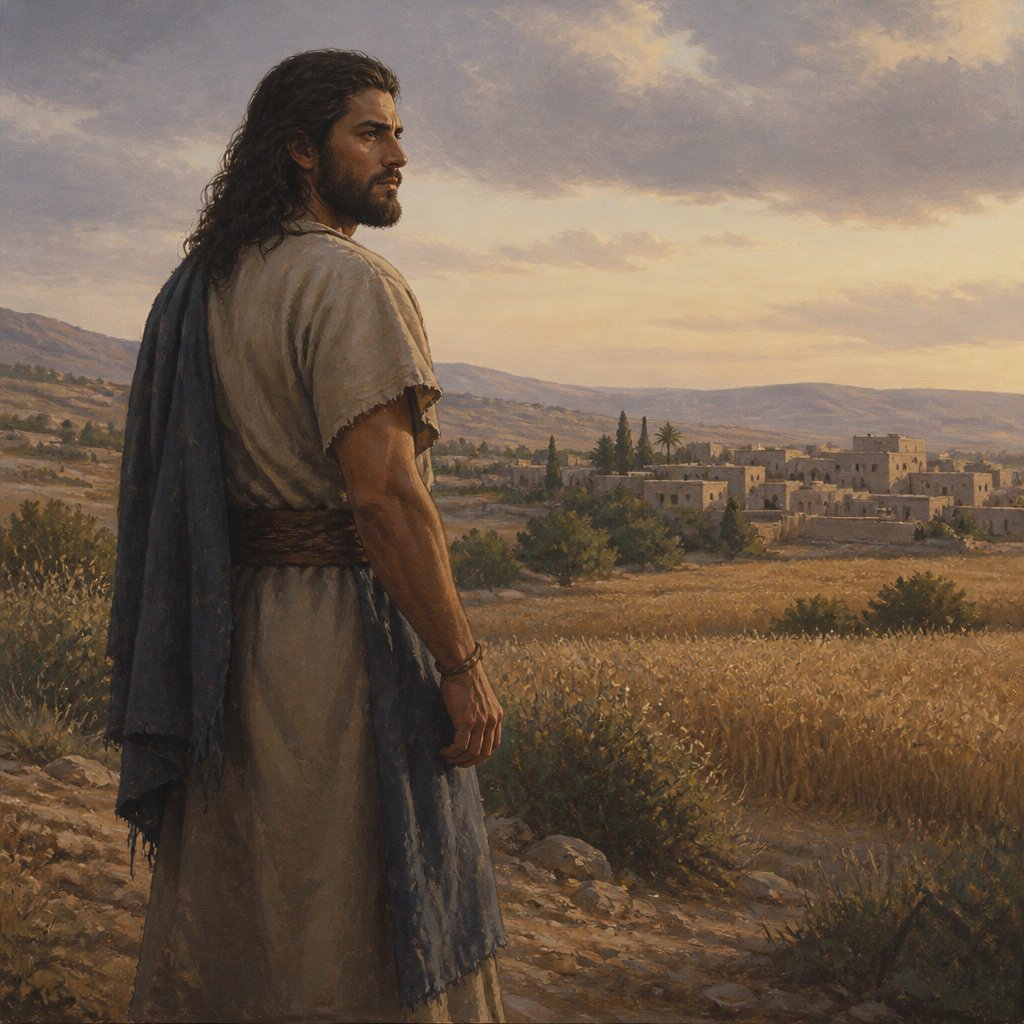
The narrative of Samson is one that speaks of strength, sacrifice, and ultimately, the moral complexities of human choices. Judges 15:3 presents a striking assertion made by Samson: "And Samson said concerning them, Now shall I be more blameless than the Philistines, though I do them a displeasure." This statement invites us to reflect deeply on the nature of moral accountability, the expectations placed upon individuals in positions of strength, and the often conflicting motivations of our actions.
Samson, a man endowed with extraordinary strength, was not only a Nazirite dedicated to the service of the Lord but also a figure who confronted the Philistines, the enemies of Israel. His life was marked by divine purpose, yet it was intricately tied to human frailty. When Samson spoke these words, he was justifying his actions against the Philistines — a people who had wronged him. At this juncture, he felt he was positioned rightly to seek revenge. Yet, in his declaration, “Now shall I be more blameless than the Philistines,” Samson is wrestling with the very nature of blame and righteousness.
This verse highlights a critical point of reflection: the concept of blamelessness is often entangled within the complexities of our circumstances. Samson’s justification for his actions points to a common human tendency to rationalize our behavior by evaluating it against the moral failings of others. He believed that his grievances against the Philistines rendered him justified, perhaps thinking that his anger made him more righteous than those who had wronged him. However, that very mindset can lead us into a perilous pit of moral blindness.
As we navigate our own lives, we must recognize the temptation to measure our sense of righteousness against the failures of others. Are we sometimes guilty of thinking that our wrong actions are justified based on the faults of those around us? Samson’s reasoning unveils a deeper struggle within us all: the challenge of adhering to our convictions while living amidst a world that often operates on a different moral compass. Christ calls us to a higher standard, one rooted in self-control, love, and unwavering righteousness, rather than reacting out of hurt or anger.
Moreover, Samson's challenge is compounded by the consequences of his actions. He acknowledges that his response would cause displeasure, reinforcing that even in our justification, we must consider the wider impact of our actions. When we choose to act, even out of rightful indignation, we must hold ourselves accountable for the ripple effects on ourselves, our relationships, and our communities.
In practice, let us ask ourselves, how can we pursue blamelessness in our lives? First, we must cultivate a spirit of humility, recognizing that, like Samson, we are flawed beings seeking God’s grace. When we’re tempted to act in anger, we should pause and discern our motivations. Are we responding to a wound, or are we addressing injustice with love? Second, we ought to seek reconciliation rather than revenge. The wounds inflicted by others can so easily lead us into cycles of retribution. Instead, Christ calls us to forgive, emulating the grace we receive from Him.
Ultimately, blamelessness is about aligning our hearts with God’s character. As we meditate on Samson’s words—balancing our justified feelings with the higher call of righteousness—we are drawn nearer to the heart of God, who in His holiness calls us to be agents of peace and mercy.
In conclusion, let us strive to reflect on how we embody the truth of being more blameless than those around us by seeking to do good, even when confronted by real injustices. May we lean into the transformative power of God’s grace, which empowers us not only to refrain from acting on impulse but to choose paths of righteousness that glorify Him.
Get our apps


Artwork for Judges 15:3

Judges 15:3 - "¶ And Samson said concerning them, Now shall I be more blameless than the Philistines, though I do them a displeasure."
"¶ And Samson said concerning them, Now shall I be more blameless than the Philistines, though I do them a displeasure." - Judges 15:3

Judges 15:15

Judges 3:15 - "But when the children of Israel cried unto the LORD, the LORD raised them up a deliverer, Ehud the son of Gera, a Benjamite, a man lefthanded: and by him the children of Israel sent a present unto Eglon the king of Moab."

Judges 9:8-15

John 8:15 - "Ye judge after the flesh; I judge no man."

Judges 15:20 - "And he judged Israel in the days of the Philistines twenty years."

Judges 15:15 - "And he found a new jawbone of an ass, and put forth his hand, and took it, and slew a thousand men therewith."

Judges 3:31

Judges 4:15 – "The Lord routed Sisera and all his chariots and army by the sword."

Judges 15:9 - "¶ Then the Philistines went up, and pitched in Judah, and spread themselves in Lehi."

Judges 21:15 - "And the people repented them for Benjamin, because that the LORD had made a breach in the tribes of Israel."

Judges 12:15 - "And Abdon the son of Hillel the Pirathonite died, and was buried in Pirathon in the land of Ephraim, in the mount of the Amalekites."

Zephaniah 3:3 - "Her princes within her are roaring lions; her judges are evening wolves; they gnaw not the bones till the morrow."

Judges 10:3 - "¶ And after him arose Jair, a Gileadite, and judged Israel twenty and two years."

"And he judged Israel in the days of the Philistines twenty years." - Judges 15:20

"Ye judge after the flesh; I judge no man." - John 8:15

1 Samuel 24:15 - "The LORD therefore be judge, and judge between me and thee, and see, and plead my cause, and deliver me out of thine hand."

Judges 18:15 - "And they turned thitherward, and came to the house of the young man the Levite, even unto the house of Micah, and saluted him."

Judges 3:6 - "And they took their daughters to be their wives, and gave their daughters to their sons, and served their gods."

3:15 The Lord has taken away those who were judging you, he has sent your haters far away: the King of Israel, even the Lord, is among you: you will have no more fear of evil.

Judges 15:8 - "And he smote them hip and thigh with a great slaughter: and he went down and dwelt in the top of the rock Etam."

Judges 15:16 - "And Samson said, With the jawbone of an ass, heaps upon heaps, with the jaw of an ass have I slain a thousand men."

Judges 3:11 - "And the land had rest forty years. And Othniel the son of Kenaz died."

Judges 3:14 - "So the children of Israel served Eglon the king of Moab eighteen years."

Judges 13:3 make the Angel of the Lord male

Judges 3:3 - "Namely, five lords of the Philistines, and all the Canaanites, and the Sidonians, and the Hivites that dwelt in mount Lebanon, from mount Baal-hermon unto the entering in of Hamath."

Judges 11:15 - "And said unto him, Thus saith Jephthah, Israel took not away the land of Moab, nor the land of the children of Ammon:"

Judges 15:7 - "¶ And Samson said unto them, Though ye have done this, yet will I be avenged of you, and after that I will cease."

1 Samuel 7:15 - "And Samuel judged Israel all the days of his life."