A Cry for Justice: Reflections on Judges 20:4
“And the Levite, the husband of the woman that was slain, answered and said, I came into Gibeah that belongeth to Benjamin, I and my concubine, to lodge.” — Judges 20:4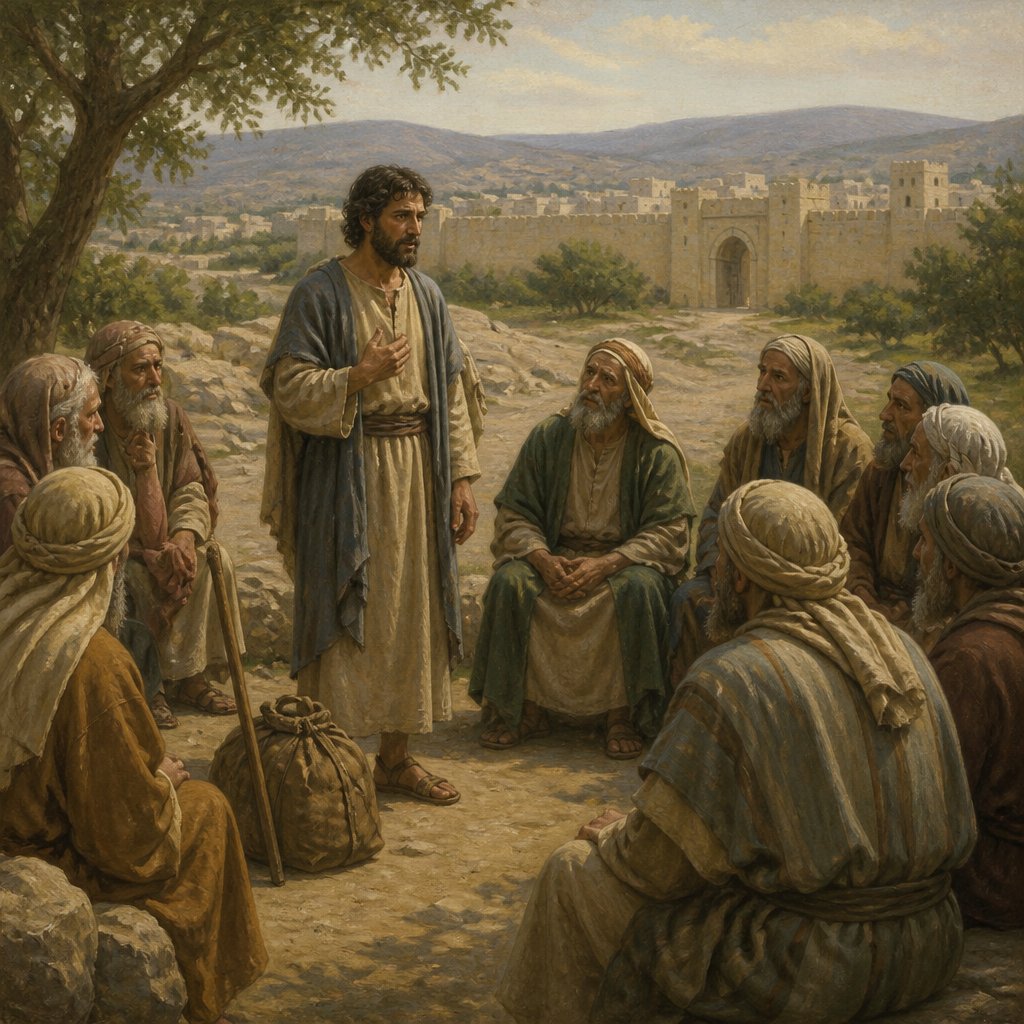
The verse we contemplate today is found in Judges 20:4, which reads, "And the Levite, the husband of the woman that was slain, answered and said, I came into Gibeah that belongeth to Benjamin, I and my concubine, to lodge." This moment in scripture sheds light on a horrifying event that challenges our understanding of justice, community, and the weight of our actions in the eyes of God.
At first glance, this verse presents us with a narrative filled with pain and tragic consequences. The Levite speaks of his journey to Gibeah, a town situated within the territory of Benjamin, accompanied only by his concubine. We must recognize the context: the Levite’s concubine, who presumably holds a lesser status than a wife, meets a brutal end at the hands of the townsmen in Gibeah, sparking a series of catastrophic events leading to civil war among the tribes of Israel.
Consider the role of the Levite in this narrative. He arrives in Gibeah, seeking hospitality—a basic expectation in the ancient Near East. Hospitality was not merely social etiquette; it was a sacred duty. To be denied refuge not only indicated a failing of communal spirit but also set into motion the grave tragedy that would follow. The Levite’s statement, therefore, serves as a lament—a reminder of the communal bonds that broke down, leading to violence and death. It’s a call to examine our own lives and communities: Do we welcome the stranger? Are we nurturing compassion or stoking division?
As readers, we must also reflect on the nature of the relationship between the Levite and his concubine. She is referred to merely as "the woman that was slain," stripping her of identity and personhood. This portrayal compels us to think deeply about how we value and treat individuals in our lives. Are we guilty of reducing people to mere roles or labels, ignoring their dignity and worth as God’s creations? The Levite, while a priest, is not presented as a figure of moral authority in this story but rather as a tragic participant in the unraveling of community morals. He represents all of us who have fallen short of the glory of God.
The ensuing events that unfold from this tragedy culminate in the tribes of Israel coming together to seek justice against Gibeah. But often, in seeking justice, we must tread carefully, ensuring our motivations align with godly principles. The desire for retribution can evolve into cycles of violence, leading to further destruction. Throughout the story of Judges, we see cycles of sin and redemption, demonstrating the importance of seeking divine guidance to resolve conflict.
Moreover, the role of the Levite in this narrative raises poignant questions about leadership and accountability. It challenges us to consider the leaders in our lives—be they spiritual, political, or social. Are they fostering a culture of reconciliation, or are they sowing seeds of division and strife? As people who are called to lead in our own spheres, whether as parents, friends, or ministers, we bear the responsibility of upholding justice with compassion and wisdom.
Ultimately, Judges 20:4 invites us to reflect on the themes of justice, community, and human dignity. It is vital to remember that each individual is created in the image of God. Therefore, when someone suffers or is marginalized, it is a call to action—a rallying cry for the Imago Dei within us to rise, speak out, and restore what has been broken. The Levite's sorrowful admission serves to remind us that we live within God's greater narrative, a narrative where every voice matters, every life counts, and justice must be pursued in love.
In our daily lives, let us strive to be agents of peace and reconciliation, ever mindful of how quickly community can fracture when we neglect the vulnerable among us. Let us pray for the strength to uphold justice, for wisdom in our decisions, and for love to govern our interactions.
Get our apps


Artwork for Judges 20:4

Judges 20:4 - "And the Levite, the husband of the woman that was slain, answered and said, I came into Gibeah that belongeth to Benjamin, I and my concubine, to lodge."
"And the Levite, the husband of the woman that was slain, answered and said, I came into Gibeah that belongeth to Benjamin, I and my concubine, to lodge." - Judges 20:4

Ezekiel 20:4 - "Wilt thou judge them, son of man, wilt thou judge them? cause them to know the abominations of their fathers:"

Judges 4:20 - "Again he said unto her, Stand in the door of the tent, and it shall be, when any man doth come and enquire of thee, and say, Is there any man here? that thou shalt say, No."

Judges 4:4
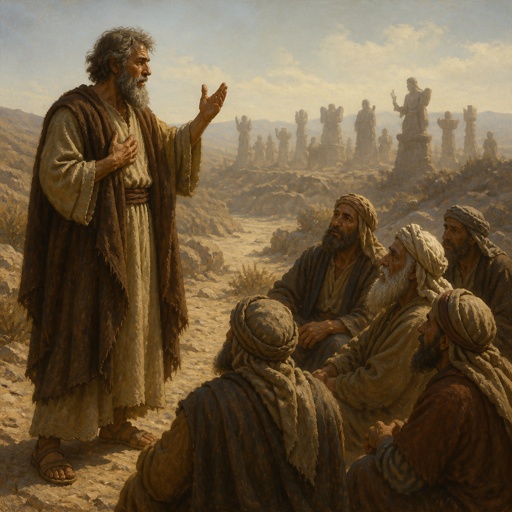
"Wilt thou judge them, son of man, wilt thou judge them? cause them to know the abominations of their fathers:" - Ezekiel 20:4

Revelation 20:4

Judges 15:20 - "And he judged Israel in the days of the Philistines twenty years."

Judges 4:4 - "¶ And Deborah, a prophetess, the wife of Lapidoth, she judged Israel at that time."

Judges 20:29 - "And Israel set liers in wait round about Gibeah."

Judges 20:20 - "And the men of Israel went out to battle against Benjamin; and the men of Israel put themselves in array to fight against them at Gibeah."

Judges 20:19 - "And the children of Israel rose up in the morning, and encamped against Gibeah."

Judges 5:20 - "They fought from heaven; the stars in their courses fought against Sisera."

Judges 21:20 - "Therefore they commanded the children of Benjamin, saying, Go and lie in wait in the vineyards;"

Judges 20:27 - "And the children of Israel enquired of the LORD, (for the ark of the covenant of God was there in those days,"

Judges 20:44 - "And there fell of Benjamin eighteen thousand men; all these were men of valour."

Judges 20:24 - "And the children of Israel came near against the children of Benjamin the second day."

Judges 20:7 - "Behold, ye are all children of Israel; give here your advice and counsel."

Judges 14:20 - "But Samson's wife was given to his companion, whom he had used as his friend."

Judges 1:20 - "And they gave Hebron unto Caleb, as Moses said: and he expelled thence the three sons of Anak."

Judges 4:4 - "¶ And Deborah, a prophetess, the wife of Lapidoth, she judged Israel at that time."

"And he judged Israel in the days of the Philistines twenty years." - Judges 15:20

Judges 18:20 - "And the priest's heart was glad, and he took the ephod, and the teraphim, and the graven image, and went in the midst of the people."

Judges 20:9 - "But now this shall be the thing which we will do to Gibeah; we will go up by lot against it;"

Judges 20:11 - "So all the men of Israel were gathered against the city, knit together as one man."

"¶ And Deborah, a prophetess, the wife of Lapidoth, she judged Israel at that time." - Judges 4:4

Judges 20:47 - "But six hundred men turned and fled to the wilderness unto the rock Rimmon, and abode in the rock Rimmon four months."

Judges 20:41 - "And when the men of Israel turned again, the men of Benjamin were amazed: for they saw that evil was come upon them."

Judges 20:12 - "¶ And the tribes of Israel sent men through all the tribe of Benjamin, saying, What wickedness is this that is done among you?"

James 2:4 - "Are ye not then partial in yourselves, and are become judges of evil thoughts?"