From Destruction to Divine Instruction: Lessons from Abimelech's Siege
“And Abimelech fought against the city all that day; and he took the city, and slew the people that was therein, and beat down the city, and sowed it with salt.” — Judges 9:45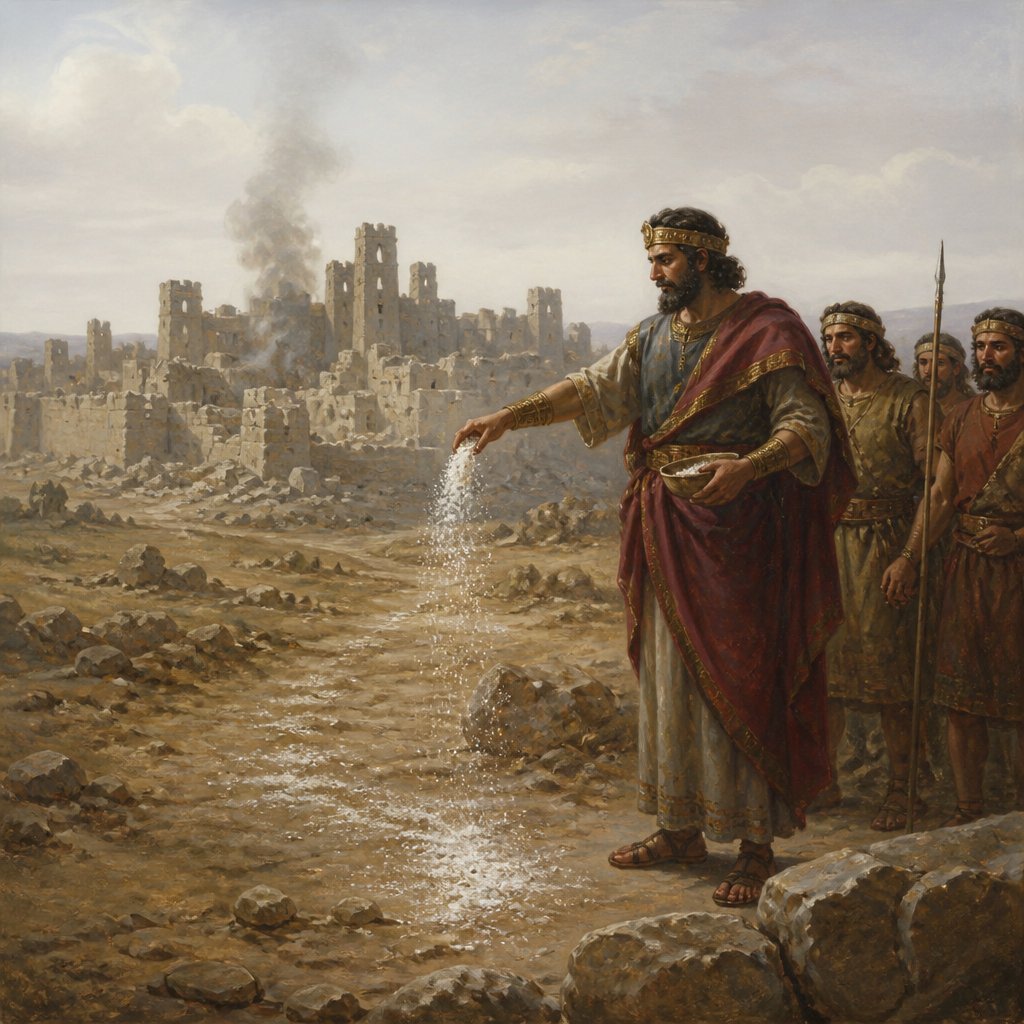
The biblical account of Abimelech in Judges 9:45 indeed presents a stark image of destruction: "And Abimelech fought against the city all that day; and he took the city, and slew the people that was therein, and beat down the city, and sowed it with salt." At first glance, this narrative seems to offer little in the way of spiritual comfort or wisdom. However, upon deeper reflection, it confronts us with profound lessons about leadership, the consequences of our choices, and the nature of God's justice and mercy.
To understand the gravity of this passage, we must consider the backdrop of Abimelech’s actions. He was the son of Gideon, a judge who had led Israel to victory. Yet, in his quest for power and recognition, Abimelech embodied traits that led to his tyranny. He manipulated his half-brothers and the people, favoring force over faith. His actions in laying siege to the city reveal not just physical devastation, but also an emotional and spiritual desolation.
Abimelech’s siege teaches us about the dark side of ambition and authority. It serves as a warning about the destructive paths we can choose when we prioritize personal gain over communal good. The violence wrought in the city reflects a heart devoid of compassion, illustrating that when leaders operate out of selfishness or pride, devastation is unavoidable. In our lives, whether as parents, mentors, or even friends, we must ask ourselves: Are we wielding our influence with wisdom that seeks the welfare of others? Or are we acting out of misguided ambition, risking harm to those around us?
Moreover, the manner in which Abimelech sowed salt into the ruins of the city is also significant. Sowing salt was a symbolic act intended to ensure that nothing would grow there again. It was a definitive marker of defeat—a brutal end to any hope of regeneration. In this act, we not only see a manifestation of Abimelech's rage and vengeance but also a revelation of his inability to recognize the possibility of restoration. How often do we, in our own anger or hurt, throw salt in the wounds of our relationships? We allow past grievances to prevent healing and future growth, defeating any chance of reconciliation.
Conversely, God is a God of restoration. Jesus beckons us to cultivate a spirit of forgiveness and reconciliation. In contrast, Abimelech's choice to destroy and leave nothing behind serves as a challenge to our understanding of grace. We must strive to leave room for new life, even in the aftermath of personal or communal failures. This verse beckons us to ask: What endings are we creating in our lives? Are we prematurely ending possibilities because of hurt, miscommunication, or failure?
Finally, the passage underscored the reality of divine justice. Though Abimelech may have triumphed temporarily, his reign was short-lived, and his actions eventually led to his own downfall. It is crucial for us to remember that neither injustice nor the arrogance of leadership goes unnoticed by God. He sees every misdeed and has promised to enact justice in His time. This is a source of both warning and comfort.
We, therefore, must lean into truth: divine justice may not align with our immediate understanding or expectations, but it is certain and sure. Our role is to pursue integrity, even when circumstances are challenging. As we reflect on Abimelech’s story, may we commit ourselves to live by the spirit of love, compassion, and service. Let us seek to rebuild, regenerate, and sow seeds of kindness rather than salt. Through our actions, may we recognize the profound impact we have on others; after all, we are called to be instruments of God’s grace in a world that desperately needs healing.
Get our apps


Artwork for Judges 9:45

Judges 9:45 - "And Abimelech fought against the city all that day; and he took the city, and slew the people that was therein, and beat down the city, and sowed it with salt."
"And Abimelech fought against the city all that day; and he took the city, and slew the people that was therein, and beat down the city, and sowed it with salt." - Judges 9:45

Luke 9:28-45

Luke 9:45 - "But they understood not this saying, and it was hid from them, that they perceived it not: and they feared to ask him of that saying."

Ezekiel 23:45 - "¶ And the righteous men, they shall judge them after the manner of adulteresses, and after the manner of women that shed blood; because they are adulteresses, and blood is in their hands."

Judges 20:45 - "And they turned and fled toward the wilderness unto the rock of Rimmon: and they gleaned of them in the highways five thousand men; and pursued hard after them unto Gidom, and slew two thousand men of them."

Salmo 45, 2-3. 5-6. 8-9

Judges 9:8-15

Psalms 45:9 Please include a blood moon as a heavenly sign for the timing.

Psalms 45:9 - "Kings' daughters were among thy honourable women: upon thy right hand did stand the queen in gold of Ophir."

Judges 9:50 - "¶ Then went Abimelech to Thebez, and encamped against Thebez, and took it."

Judges 9:22 - "¶ When Abimelech had reigned three years over Israel,"

Judges 15:9 - "¶ Then the Philistines went up, and pitched in Judah, and spread themselves in Lehi."

Judges 9:39 - "And Gaal went out before the men of Shechem, and fought with Abimelech."

Judges 21:9 - "For the people were numbered, and, behold, there were none of the inhabitants of Jabesh-gilead there."

Judges 9:10 - "And the trees said to the fig tree, Come thou, and reign over us."

Judges 9:42 - "And it came to pass on the morrow, that the people went out into the field; and they told Abimelech."

Judges 9:12 - "Then said the trees unto the vine, Come thou, and reign over us."

Judges 9:47 - "And it was told Abimelech, that all the men of the tower of Shechem were gathered together."

Psalms 98:9 - "Before the LORD; for he cometh to judge the earth: with righteousness shall he judge the world, and the people with equity."

Judges 9:9 - "But the olive tree said unto them, Should I leave my fatness, wherewith by me they honour God and man, and go to be promoted over the trees?"

Judges 9:32 - "Now therefore up by night, thou and the people that is with thee, and lie in wait in the field:"

Judges 9:14 - "Then said all the trees unto the bramble, Come thou, and reign over us."

Mark 9:45 - "And if thy foot offend thee, cut it off: it is better for thee to enter halt into life, than having two feet to be cast into hell, into the fire that never shall be quenched:"

"But they understood not this saying, and it was hid from them, that they perceived it not: and they feared to ask him of that saying." - Luke 9:45

Judges 9:46 - "¶ And when all the men of the tower of Shechem heard that, they entered into an hold of the house of the god Berith."

Judges 9:21 - "And Jotham ran away, and fled, and went to Beer, and dwelt there, for fear of Abimelech his brother."

Isaiah 45:9 - "Woe unto him that striveth with his Maker! Let the potsherd strive with the potsherds of the earth. Shall the clay say to him that fashioneth it, What makest thou? or thy work, He hath no hands?"

Judges 9:30 - "¶ And when Zebul the ruler of the city heard the words of Gaal the son of Ebed, his anger was kindled."

Job 9:24 - "The earth is given into the hand of the wicked: he covereth the faces of the judges thereof; if not, where, and who is he?"