The Reckoning of Abimelech: A Devotional Reflection on Justice and Retribution
“Thus God rendered the wickedness of Abimelech, which he did unto his father, in slaying his seventy brethren:” — Judges 9:56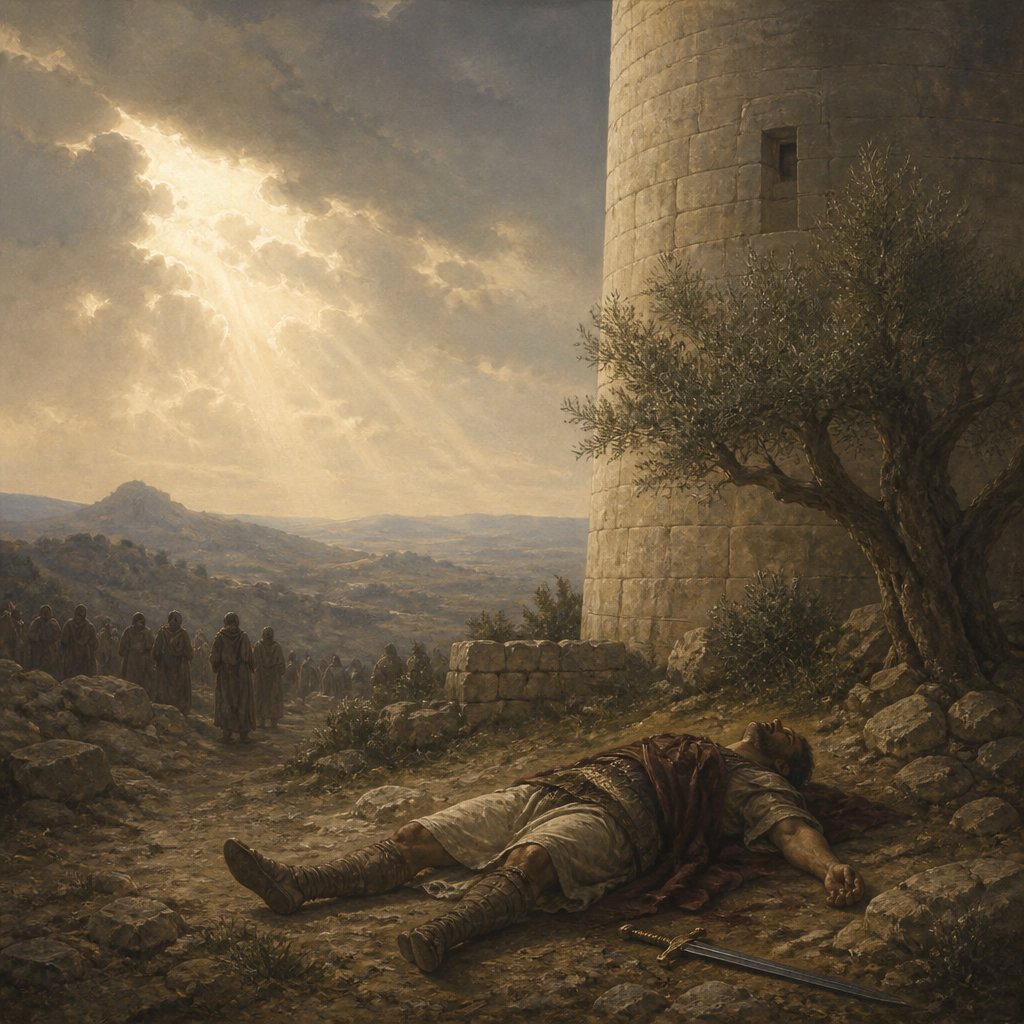
Judges 9:56 states, "Thus God rendered the wickedness of Abimelech, which he did unto his father, in slaying his seventy brethren." This profound verse encapsulates the themes of justice, retribution, and the far-reaching consequences of evil deeds. As we unpack the verse, we must first remember the context of Abimelech's actions and the devastating impact they had on his family and ultimately on himself.
Abimelech, the son of Gideon, aspired to power and fame, but in doing so, he committed heinous acts against his own kin. By murdering his seventy brothers, he sought to eliminate any competition for the throne. This brutal ambition reveals a heart hardened by pride and devoid of compassion. When we study Abimelech’s life, we see not just a tale of betrayal but a reminder of God’s unwavering justice.
In our modern society, we often cast aside the notion of retribution, favoring mercy and forgiveness over accountability. However, God’s character embodies both justice and mercy. His understanding of retribution is not punitive for the sake of punishment alone. Rather, it serves as a necessary correction in the face of wickedness. God rendered Abimelech’s wickedness not merely to avenge the deaths of the innocent but to uphold divine justice that those who commit evil acts would face the consequences of their choices.
When we consider the implications of Abimelech’s actions, we must also reflect on our own lives. A question that challenges every believer is: How do our daily choices and actions reflect our relationship with God? The gravity of Abimelech’s sins may be extreme, but the principles of accountability apply universally. Each choice we make, whether significant or seemingly trivial, shapes our character and, oftentimes, impacts those around us. Just as Abimelech could not escape the ramifications of his actions, neither can we evade how our decisions resonate in the world.
Abimelech’s downfall was orchestrated by God’s judgment, demonstrating that He will not allow wickedness to go unpunished. It serves as a warning that what we sow, we will inevitably reap. The law of sowing and reaping is intricately woven into the fabric of God’s creation. In Galatians 6:7, the Apostle Paul reminds us, "Be not deceived; God is not mocked: for whatsoever a man soweth, that shall he also reap.”
As believers, we should commit to a life emblematic of righteousness—avoiding the pathway that leads to sin. Abimelech’s ambition cost him not only his peace but ultimately his life. His ends were marked by needless violence and betrayal. However, the Creator does not leave us without guidance. The life of Christ, so starkly different from Abimelech’s, illustrates how power can be wielded through love, humility, and self-sacrifice. Where Abimelech pursued power through cruelty, Christ demonstrated that true strength lies in servitude and love.
Let us then examine our ambitions and desires. Are we pursuing them with an unwavering sense of justice, integrity, and love? Or are we treading the path of self-centered ambition, akin to Abimelech? As we reflect on this verse, let us pray for God's mercy upon our hearts, that we may understand the value of life and the sanctity of relationships. Every choice must be guided by righteousness, as we strive to mirror Christ in a world filled with Abimelech-like ambitions.
In conclusion, the narrative of Abimelech is not just a historical account; it is a resonance of truth for us today. God is observant of our wickedness, and His renditions are just. May this verse challenge us to seek righteousness, holding steadfast to God’s grace as we chart our course through life. We are reminded to walk in His ways, avoiding the pitfalls of pride and ambition that led Abimelech to his tragic end.
Get our apps


Artwork for Judges 9:56
Judges 9:56 - "¶ Thus God rendered the wickedness of Abimelech, which he did unto his father, in slaying his seventy brethren:"
"¶ Thus God rendered the wickedness of Abimelech, which he did unto his father, in slaying his seventy brethren:" - Judges 9:56

Luke 9:56 - "For the Son of man is not come to destroy men's lives, but to save them. And they went to another village."

Isaiah 56:9 - "¶ All ye beasts of the field, come to devour, yea, all ye beasts in the forest."

Psalms 56:9 - "When I cry unto thee, then shall mine enemies turn back: this I know; for God is for me."

Isaiah 56:9 All you beasts of the field, come to devour, All you beasts in the forest.
"For the Son of man is not come to destroy men's lives, but to save them. And they went to another village." - Luke 9:56

Judges 9:8-15

"¶ All ye beasts of the field, come to devour, yea, all ye beasts in the forest." - Isaiah 56:9

Judges 9:50 - "¶ Then went Abimelech to Thebez, and encamped against Thebez, and took it."

Judges 9:22 - "¶ When Abimelech had reigned three years over Israel,"

Judges 15:9 - "¶ Then the Philistines went up, and pitched in Judah, and spread themselves in Lehi."

Judges 9:39 - "And Gaal went out before the men of Shechem, and fought with Abimelech."

Judges 21:9 - "For the people were numbered, and, behold, there were none of the inhabitants of Jabesh-gilead there."

"When I cry unto thee, then shall mine enemies turn back: this I know; for God is for me." - Psalms 56:9

Judges 9:10 - "And the trees said to the fig tree, Come thou, and reign over us."

Judges 9:42 - "And it came to pass on the morrow, that the people went out into the field; and they told Abimelech."

Judges 9:12 - "Then said the trees unto the vine, Come thou, and reign over us."

Judges 9:47 - "And it was told Abimelech, that all the men of the tower of Shechem were gathered together."

Psalms 98:9 - "Before the LORD; for he cometh to judge the earth: with righteousness shall he judge the world, and the people with equity."

Judges 9:9 - "But the olive tree said unto them, Should I leave my fatness, wherewith by me they honour God and man, and go to be promoted over the trees?"

Judges 9:32 - "Now therefore up by night, thou and the people that is with thee, and lie in wait in the field:"

Judges 9:14 - "Then said all the trees unto the bramble, Come thou, and reign over us."

Judges 9:46 - "¶ And when all the men of the tower of Shechem heard that, they entered into an hold of the house of the god Berith."

Judges 9:21 - "And Jotham ran away, and fled, and went to Beer, and dwelt there, for fear of Abimelech his brother."

Judges 9:30 - "¶ And when Zebul the ruler of the city heard the words of Gaal the son of Ebed, his anger was kindled."

Job 9:24 - "The earth is given into the hand of the wicked: he covereth the faces of the judges thereof; if not, where, and who is he?"

Judges 1:9 - "¶ And afterward the children of Judah went down to fight against the Canaanites, that dwelt in the mountain, and in the south, and in the valley."

Judges 9:41 - "And Abimelech dwelt at Arumah: and Zebul thrust out Gaal and his brethren, that they should not dwell in Shechem."

Judges 9:53 - "And a certain woman cast a piece of a millstone upon Abimelech's head, and all to brake his skull."