The Heart's Mourning: Reflecting on Lamentations 1:7
“Jerusalem remembered in the days of her affliction and of her miseries all her pleasant things that she had in the days of old, when her people fell into the hand of the enemy, and none did help her: the adversaries saw her, and did mock at her sabbaths.” — Lamentations 1:7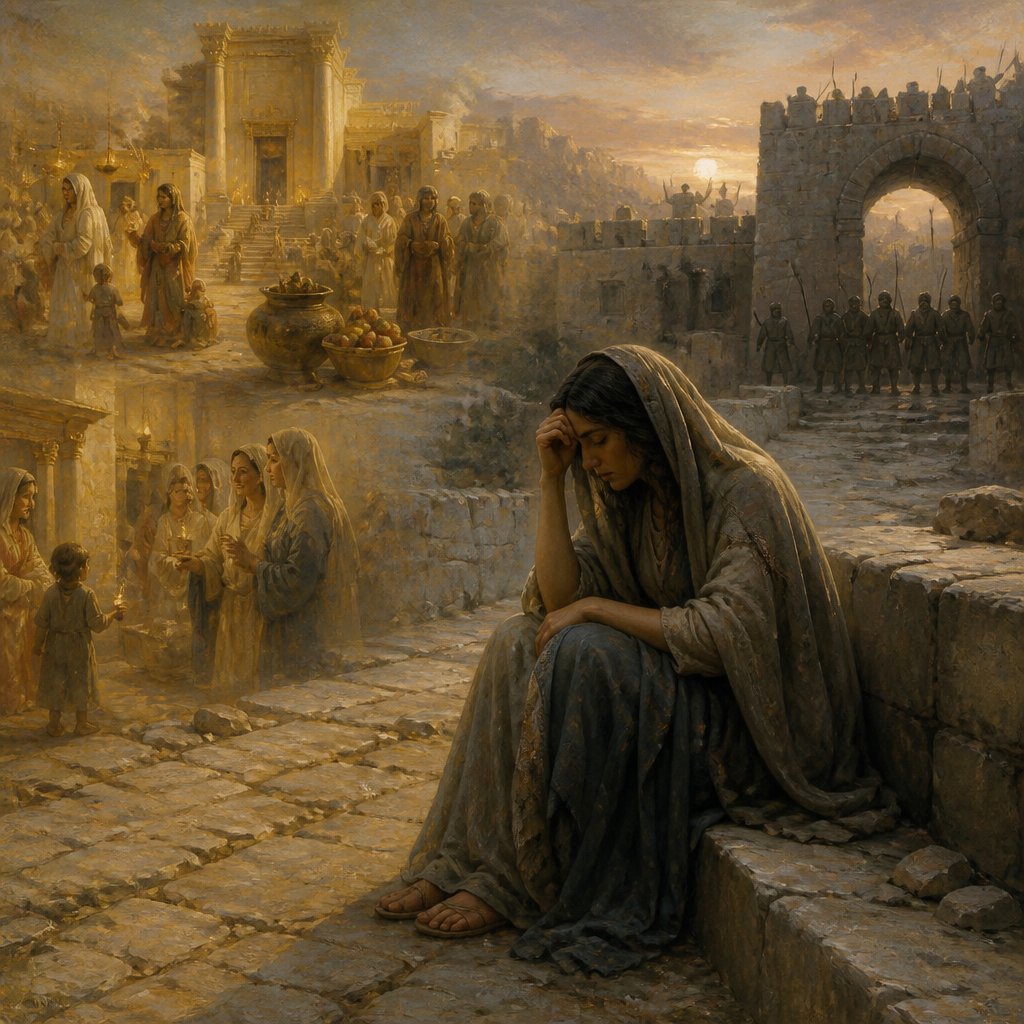
The book of Lamentations is a poignant collection of poetic reflections that document the deep sorrow and despair felt by the people of Jerusalem after the fall of the city to Babylon. In Lamentations 1:7, the verse captures a moment of profound grief: "Jerusalem remembered in the days of her affliction and of her miseries all her pleasant things that she had in the days of old, when her people fell into the hand of the enemy, and none did help her: the adversaries saw her, and did mock at her sabbaths."
As we delve into this verse, we must recognize that it speaks not only of a city's ruin but of the feelings and emotions that accompany loss. It starts with the word "remembered," suggesting a reflective nostalgia that can often be bittersweet. It paints a picture of a people facing the harsh reality of their circumstances, an unearthing of memory that is particularly poignant in times of suffering.
The phrase "in the days of her affliction and of her miseries" draws us into the raw depths of sorrow. The people of Jerusalem are not merely recounting their past glories; they are grappling with the pain of their present state. This acknowledgment of suffering is a necessary step in healing. Often, we find ourselves in places similar to Jerusalem's. We might be living through personal afflictions—loss, betrayal, disappointment—that lead us to long for the days when life felt more pleasant and secure.
"All her pleasant things that she had in the days of old" reflects a longing for a lost state of peace and prosperity. It does not deny the past nor dismiss the good times but instead brings to the forefront what has been lost. Herein lies a truth we must confront: to heal from our afflictions, we may need to confront what we grieve. In our modern context, it might call us to reflect on the relationships, dreams, and opportunities that once filled our lives with joy but have since been overshadowed by strife.
The recognition of falling "into the hand of the enemy" is also significant. Throughout history, adversities can take many forms—addictions, financial hardships, broken relationships, health issues—each detrimental to the heart. These adversities can mock our attempts to find peace and joy, mocking our efforts even on sacred days, represented here by the "sabbaths." The sabbath is a time of rest and worship; it signifies our communion with God. When adversities invade our lives, they can permeate our sacred spaces, making them feel like occasions of torment rather than communion.
Yet, as we reflect on God's silent presence in our struggles, as painful as they may be, we must also remember that He is ever near, even when we feel distant. The people of Jerusalem were not left without a promise of redemption, and neither are we. When we dive deeply into our remembering and acknowledge the depths of our losses, we begin to probe the way towards revival. God’s Word teaches that while His children may face trials, His faithfulness will emerge, renewing our strength and hope.
Consider the words of Psalm 30:5, "Weeping may endure for a night, but joy cometh in the morning." In our collective exodus of mourning, let us yearn for God’s comfort amidst our sorrows. Let us draw out from our overflows of grief, all we have lost, and offer them to the Lord. It is in this journey of excavation, we allow God to transform our rubble into resurrection.
Today, as you reflect on Lamentations 1:7, take a moment to also reflect on what you might be holding onto from your past. Instead of shying away from your memories, bring them to God in prayer. Let Him be your comfort, your shield, and your healing balm. Remember, the path of healing may be paved with tears, but joy is always on the horizon, waiting for those ready to follow Him out of their graves of despair.
In turning our remembrance towards God, He invites us not just to mourn but also to hope.
Get our apps


Artwork for Lamentations 1:7

Lamentations 1:7 In the days of her affliction and wandering Jerusalem remembers all the treasures that were hers in days of old.

Lamentations 1:7 In the days of her affliction and wandering Jerusalem remembers all the treasures that were hers in days of old.

Lamentations 1:7 In the days of her affliction and wandering Jerusalem remembers all the treasures that were hers in days of old.

Lamentations 1:7 In the days of her affliction and wandering Jerusalem remembers all the treasures that were hers in days of old.

Lamentations 1:7 In the days of her affliction and wandering Jerusalem remembers all the treasures that were hers in days of old.

Lamentations 1:7 In the days of her affliction and wandering Jerusalem remembers all the treasures that were hers in days of old.

Lamentations 1:7 In the days of her affliction and wandering Jerusalem remembers all the treasures that were hers in days of old.

Lamentations 1:7 In the days of her affliction and wandering Jerusalem remembers all the treasures that were hers in days of old.

Lamentations 1:7 - "Jerusalem remembered in the days of her affliction and of her miseries all her pleasant things that she had in the days of old, when her people fell into the hand of the enemy, and none did help her: the adversaries saw her, and did mock at her sabbaths."
"Jerusalem remembered in the days of her affliction and of her miseries all her pleasant things that she had in the days of old, when her people fell into the hand of the enemy, and none did help her: the adversaries saw her, and did mock at her sabbaths." - Lamentations 1:7

Lamentations 5:7 - "Our fathers have sinned, and are not; and we have borne their iniquities."

Lamentations 2:1

Lamentations 2:1

Lamentations 2:1

Lamentations 3:1-18

Lamentations 3:13

Lamentations 3:7 - "He hath hedged me about, that I cannot get out: he hath made my chain heavy."
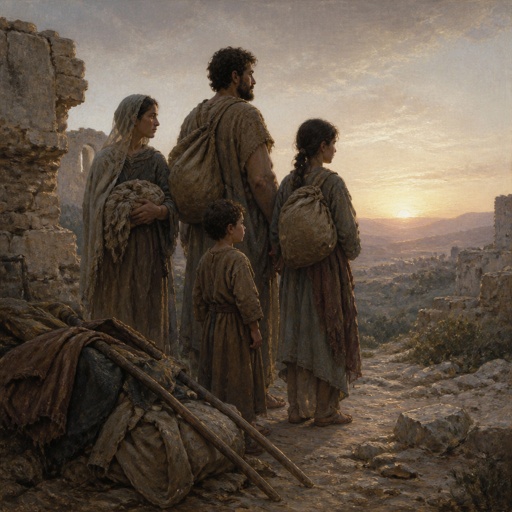
"Our fathers have sinned, and are not; and we have borne their iniquities." - Lamentations 5:7

Lamentations 4:7 - "Her Nazarites were purer than snow, they were whiter than milk, they were more ruddy in body than rubies, their polishing was of sapphire:"

Lamentations 3:1 - "I am the man that hath seen affliction by the rod of his wrath."

Lamentations 5:1 - "Remember, O LORD, what is come upon us: consider, and behold our reproach."

Lamentations 1:1 How deserted lies the city, once so full of people!

Lamentations 1:1 How deserted lies the city, once so full of people!

Lamentations 1:1 How deserted lies the city, once so full of people!

Lamentations 1:1 How deserted lies the city, once so full of people!

Ezekiel 19:1 - "Moreover take thou up a lamentation for the princes of Israel,"

Lamentations 1:1 How deserted lies the city, once so full of people!

Lamentations 1:1 How deserted lies the city, once so full of people!

Jeremiah 7:29 - "¶ Cut off thine hair, O Jerusalem, and cast it away, and take up a lamentation on high places; for the LORD hath rejected and forsaken the generation of his wrath."

2 Samuel 1:17 - "¶ And David lamented with this lamentation over Saul and over Jonathan his son:"