Teaching the Generations: A Sacred Responsibility
“And that ye may teach the children of Israel all the statutes which the LORD hath spoken unto them by the hand of Moses.” — Leviticus 10:11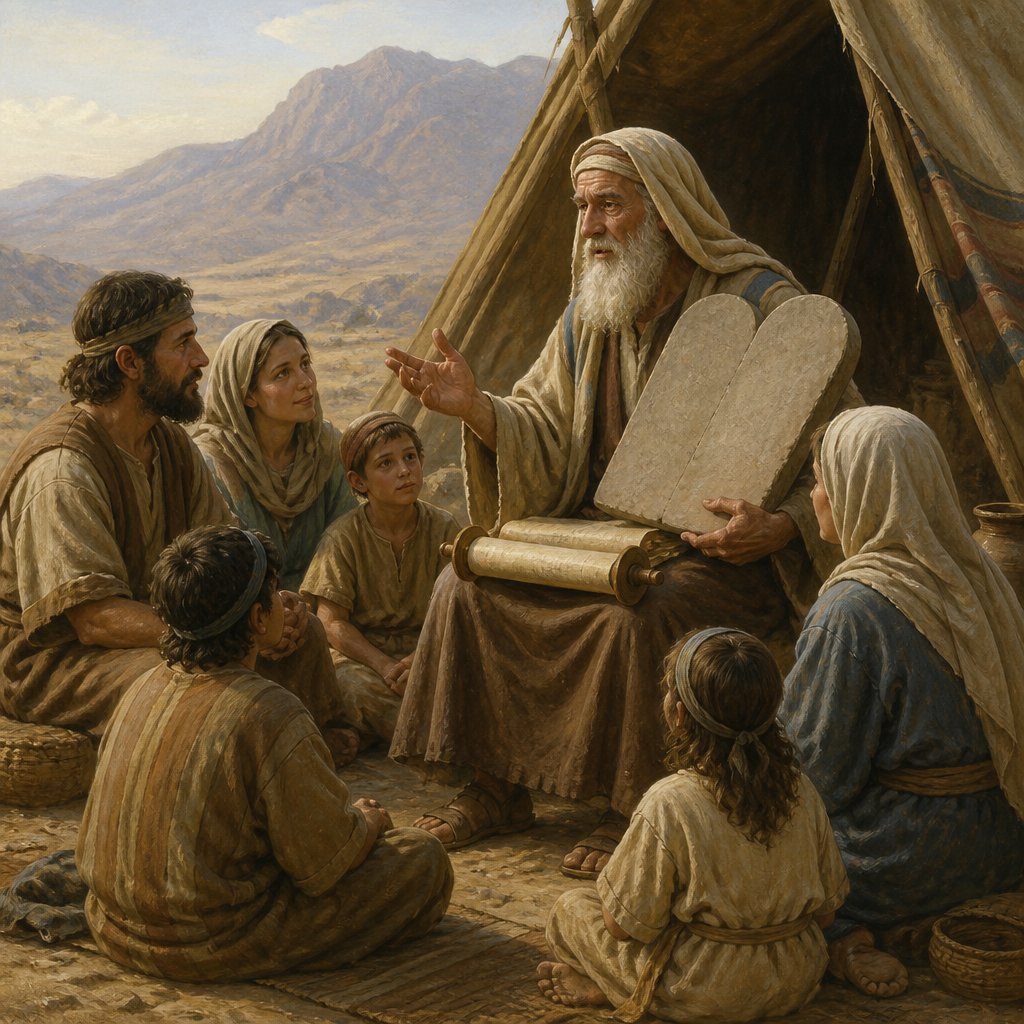
The book of Leviticus invites us into a sacred space, rich with ritual and worship, emphasizing the importance of holiness, adherence to God's statutes, and the communal responsibility of guiding the next generation in faith. Leviticus 10:11 reads, "And that ye may teach the children of Israel all the statutes which the LORD hath spoken unto them by the hand of Moses." This simple yet profound verse underscores a critical aspect of our spiritual journey: the obligation to pass down God's commandments and teachings.
The context of this verse provides valuable insight into its significance. The preceding chapter details the tragic deaths of Nadab and Abihu, sons of Aaron, who offered strange fire before the Lord, leading to their immediate and shocking demise. Following this sobering event, the Lord emphasizes through Moses that proper worship and adherence to divine instruction are non-negotiable. In the wake of such a grave situation, the call to teach becomes a clarion call—a reminder that knowledge and understanding of God’s laws are pivotal in maintaining a covenant relationship with Him.
Teaching is as much about instilling knowledge as it is about demonstrating character. The command to teach the children of Israel encapsulates a life of discipline, instruction, and example. As parents, mentors, or spiritual leaders, we are entrusted with the immense task of guiding others in God's ways. This command resonates deeply with the New Testament mandate to make disciples of all nations (Matthew 28:19). The core principle remains: to teach the statutes and commandments of God is to engage actively in the transformation of lives.
In our contemporary context, we might find ourselves wrestling with the means and methods of imparting such teachings. In an age defined by information overload and rapidly shifting cultural norms, we must ground our instruction in Scripture—ensuring that our teachings reflect not only the letter but also the spirit of God’s word. The challenge lies in translating ancient statutes into relevant principles for our modern lives while staying true to their intended meaning.
Furthermore, the efficacy of our teaching greatly hinges on our example. As leaders in faith, we must embody the very principles we endeavor to impart. Nothing speaks louder than a consistent testimony of faith lived out daily. Children and peers are astutely observant; they glean lessons from our actions, attitudes, and responses. Are we demonstrating the love, grace, and truth of God in our lives? In this respect, teaching becomes not merely verbal instruction but a lifestyle that mirrors God’s character.
Moreover, the communal nature of the instruction suggests that teaching is not intended to be solitary. It’s a corporate responsibility among God’s people. As we come together in fellowship, we share insights, wisdom, and lessons learned through our experiences with God. This shared journey reinforces the soul and strengthens the fabric of faith within the community.
As we reflect on Leviticus 10:11, let’s examine who we are teaching. Is it just our children? Undoubtedly, they hold a prime place. Yet, our influence extends beyond them to everyone we encounter—family, friends, co-workers. Each moment presents a new opportunity to speak life into others, to guide them toward understanding the nature of God’s love and the richness of His statutes.
Embrace the call to teach. Equip yourself with knowledge, dwell deeply in the Word, and allow the Holy Spirit to guide your heart and mind. Engage in meaningful dialogue with those you influence, sharing personal testimonies of God’s faithfulness, love, and justice. In so doing, you become a conduit of His truth, helping to raise a generation grounded in the rich heritage of God’s promises.
As we embark on this holy responsibility, let us remember that teaching isn’t merely a task but a sacred act of worship, one that has eternal implications for those we lead in faith. May our commitment to teach all the statutes of the Lord be unwavering, illuminating the path for those who follow.
Get our apps


Artwork for Leviticus 10:11

Leviticus 10:11 - "And that ye may teach the children of Israel all the statutes which the LORD hath spoken unto them by the hand of Moses."
"And that ye may teach the children of Israel all the statutes which the LORD hath spoken unto them by the hand of Moses." - Leviticus 10:11

Leviticus 11:10 - "And all that have not fins and scales in the seas, and in the rivers, of all that move in the waters, and of any living thing which is in the waters, they shall be an abomination unto you:"
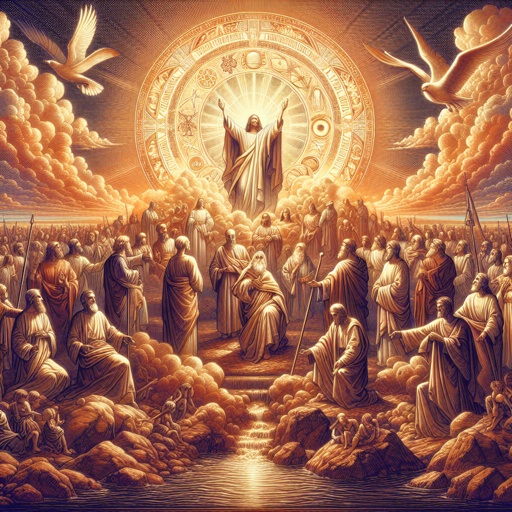
Leviticus 11:22

Leviticus 10:10 - "And that ye may put difference between holy and unholy, and between unclean and clean;"
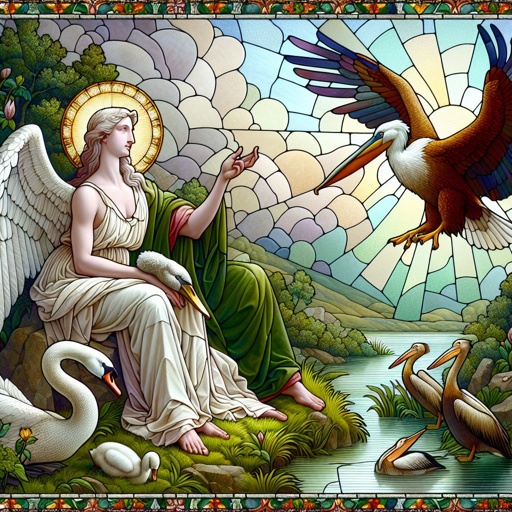
Leviticus 11:18 - "And the swan, and the pelican, and the gier eagle,"

leviticus 16:7-10

Leviticus 11:17 - "And the little owl, and the cormorant, and the great owl,"

Leviticus 11:14 - "And the vulture, and the kite after his kind;"

Leviticus 11:15 - "Every raven after his kind;"

Leviticus 10:20 - "And when Moses heard that, he was content."

Leviticus 10:8 - "¶ And the LORD spake unto Aaron, saying,"

Leviticus 11:30 - "And the ferret, and the chameleon, and the lizard, and the snail, and the mole."

Leviticus 11:19 - "And the stork, the heron after her kind, and the lapwing, and the bat."

Leviticus 9:11 - "And the flesh and the hide he burnt with fire without the camp."

Leviticus 11:1 - "And the LORD spake unto Moses and to Aaron, saying unto them,"

Leviticus 11:16 - "And the owl, and the night hawk, and the cuckow, and the hawk after his kind,"
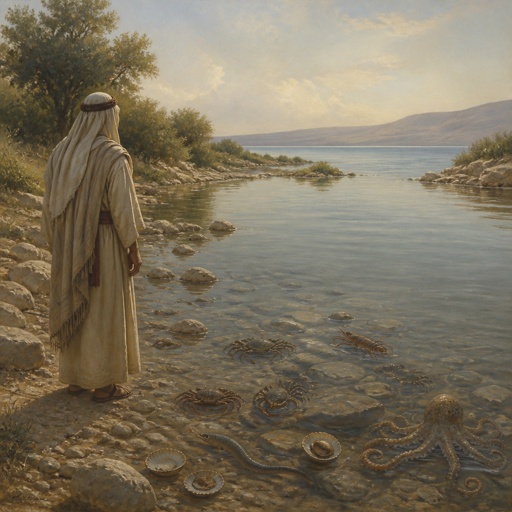
"And all that have not fins and scales in the seas, and in the rivers, of all that move in the waters, and of any living thing which is in the waters, they shall be an abomination unto you:" - Leviticus 11:10

Leviticus 11:41 - "And every creeping thing that creepeth upon the earth shall be an abomination; it shall not be eaten."

Leviticus 19:11 - "¶ Ye shall not steal, neither deal falsely, neither lie one to another."

Leviticus 7:11 - "And this is the law of the sacrifice of peace offerings, which he shall offer unto the LORD."

Leviticus 10:2 - "And there went out fire from the LORD, and devoured them, and they died before the LORD."

"And the swan, and the pelican, and the gier eagle," - Leviticus 11:18

Leviticus 11:12 - "Whatsoever hath no fins nor scales in the waters, that shall be an abomination unto you."

Leviticus 11:8 - "Of their flesh shall ye not eat, and their carcase shall ye not touch; they are unclean to you."

Leviticus 26:11 - "And I will set my tabernacle among you: and my soul shall not abhor you."

Leviticus 11:24 - "And for these ye shall be unclean: whosoever toucheth the carcase of them shall be unclean until the even."

Leviticus 3:11 - "And the priest shall burn it upon the altar: it is the food of the offering made by fire unto the LORD."

Leviticus 26:10 - "And ye shall eat old store, and bring forth the old because of the new."

Leviticus 8:10 - "And Moses took the anointing oil, and anointed the tabernacle and all that was therein, and sanctified them."