Feasting on Holiness: The Sacred Call to Remember
“And Moses spake unto Aaron, and unto Eleazar and unto Ithamar, his sons that were left, Take the meat offering that remaineth of the offerings of the LORD made by fire, and eat it without leaven beside the altar: for it is most holy:” — Leviticus 10:12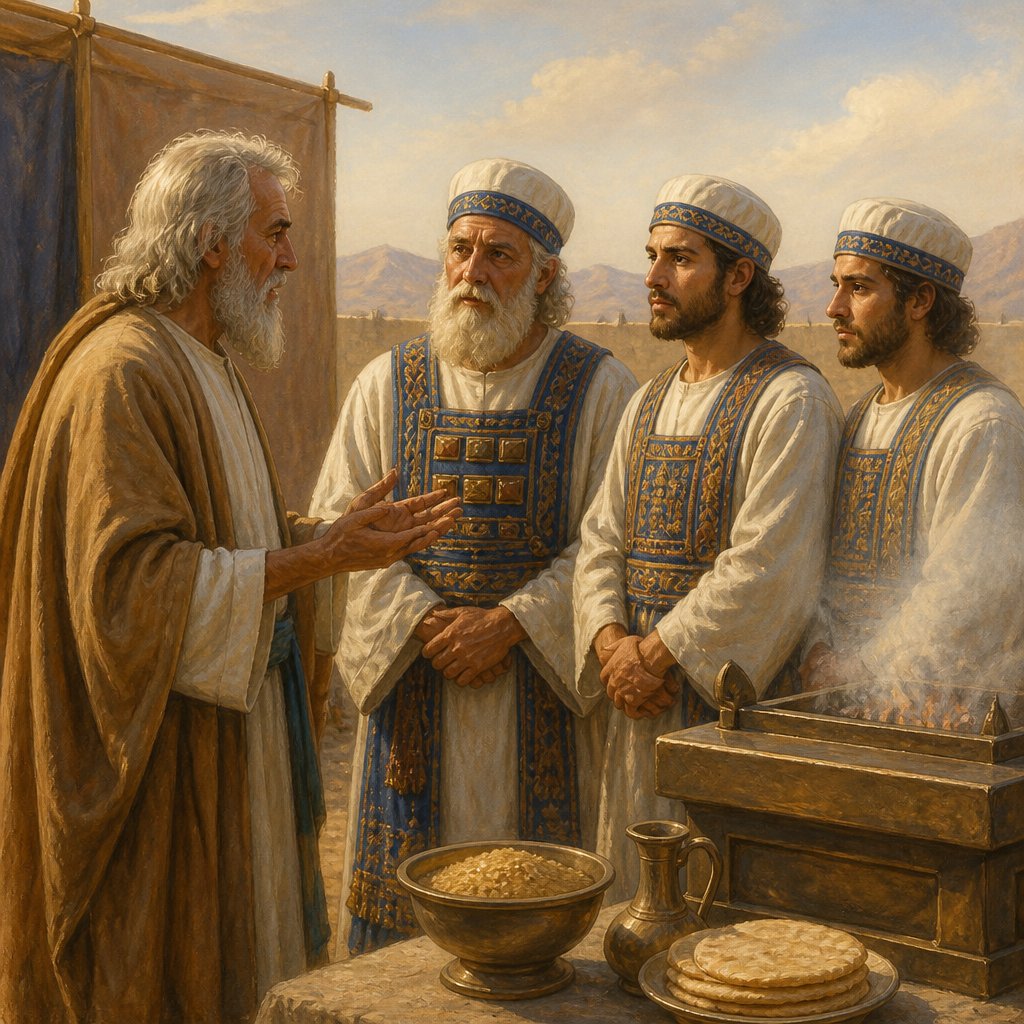
The book of Leviticus, though often overlooked in contemporary readings, encapsulates profound insights into God’s holiness and our response to it. The verse in Leviticus 10:12 states, “And Moses spake unto Aaron, and unto Eleazar and unto Ithamar, his sons that were left, Take the meat offering that remaineth of the offerings of the LORD made by fire, and eat it without leaven beside the altar: for it is most holy.” This exhortation serves as a reminder of the sacredness that underlies the worship and offerings presented to God.
In the context of Leviticus chapter 10, we find that Aaron and his sons are in a moment of grief and mourning after the tragic incident of Nadab and Abihu, who were consumed by divine fire after offering unauthorized fire in a careless attempt to worship God. Here, amidst a great loss and bewilderment, Moses speaks to those who remain—a poignant reminder that even in the darkest of times, God’s commands continue to guide His faithful.
To fully appreciate this verse, it’s crucial to understand the significance of the offerings. The meat offerings, or grain offerings, represent a form of worship and gratitude towards God. They were offerings of sustenance—a sharing of blessings between God and His people. Inherent in these offerings is the principle of giving back to God what is rightfully His. Their holiness is emphasized by the stipulation that they must be eaten without leaven, a representative symbol of sin and corruption, indicating that only pure worship is acceptable in the presence of a holy God.
As Moses directs Aaron and his sons to eat the remaining offering, we see the importance of remembrance and continuity. The act of eating is not merely about consuming food; it is a sacred participation in the presence of God. By instructing them to eat the meat offering beside the altar, Moses reconnects them to their divine calling. The altar symbolizes God’s presence amongst His people—a crucial reminder during a time of great loss. In doing so, Aaron and his sons are not only fulfilling a divine command but also engaging in an act of restoration and remembrance of all that God has done for them.
In our own lives, we often encounter moments of grief, sorrow, and confusion. Just like Aaron and his sons, we may feel overwhelmed by circumstances that seem unjust or incomprehensible. Yet, through these moments of despair, God invites us to remember His holiness, to partake in His provision, and to reignite our relationship with Him. This invitation is not merely about enduring through our trials; it is an opportunity to commune with God in a deeper way, to sit beside His altar, and to reflect on the blessings of our offering of life.
Moreover, God’s insistence on purity in worship challenges us to evaluate our own sacrifices. Are we offering our lives to Him genuinely and wholly? Are we seeking to live without ‘leaven’—those impurities that cloud our devotion and distract us from His truth? The purity aspect underscores the beauty of holiness, reminding us that worship is not just participation; it is a reflection of our heart’s condition before God. Such holiness invites self-examination but also extends grace, as we are reminded that in Christ, our imperfection can be covered by His perfect sacrifice.
Let this verse serve as both a solemn reminder and an encouraging call to action. As we navigate life’s ups and downs, let us commit to eating of God’s holiness—embracing His goodness, reflecting on His grace, keeping our hearts pure, and nurturing a deep-rooted relationship with Him. In every situation, like Aaron and his sons, let us return to the altar and partake of that which is most holy, participating in the sacred communion that fuels our faith and sustains our souls.
Get our apps


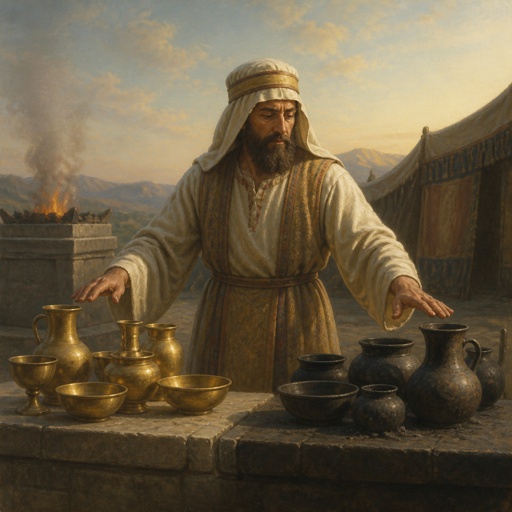
Artwork for Leviticus 10:12
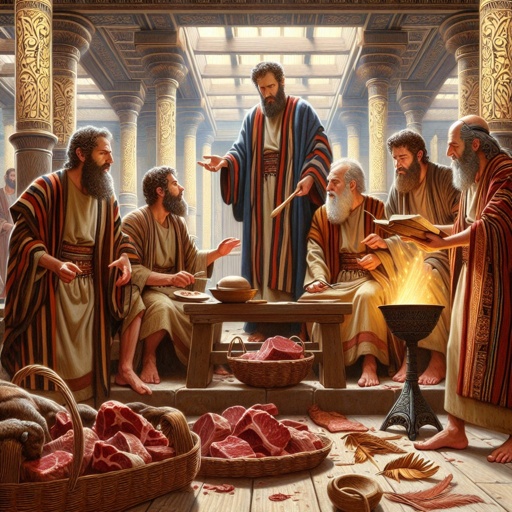
Leviticus 10:12 - "¶ And Moses spake unto Aaron, and unto Eleazar and unto Ithamar, his sons that were left, Take the meat offering that remaineth of the offerings of the LORD made by fire, and eat it without leaven beside the altar: for it is most holy:"
"¶ And Moses spake unto Aaron, and unto Eleazar and unto Ithamar, his sons that were left, Take the meat offering that remaineth of the offerings of the LORD made by fire, and eat it without leaven beside the altar: for it is most holy:" - Leviticus 10:12

Leviticus 20:10-12 - "Leviticus 20:10-12 If a man commits adultery with another man's wife—with the wife of his neighbor—both the adulterer and the adulteress are to be put to death. If a man has sexual relations with his father’s wife, he has dishonored his father. Both the man and the woman are to be put to death; their blood will be on their own heads. If a man has sexual relations with his daughter-in-law, both of them are to be put to death. What they have done is a perversion; their blood will be on their own heads."
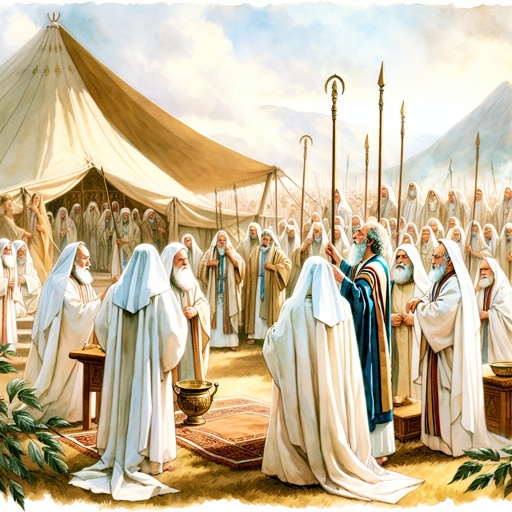
Leviticus 8:1-12

Leviticus 10:10 - "And that ye may put difference between holy and unholy, and between unclean and clean;"

leviticus 16:7-10

Leviticus 10:20 - "And when Moses heard that, he was content."
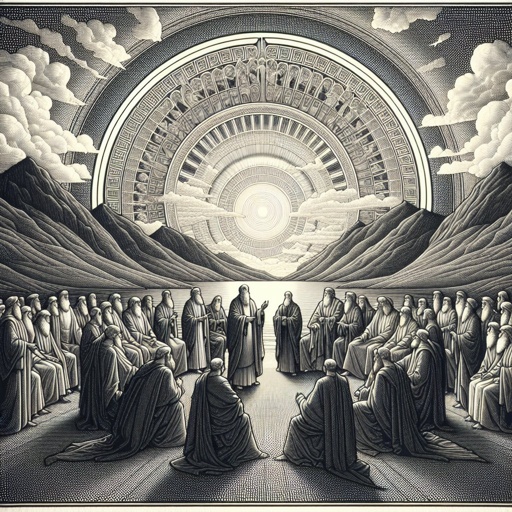
Leviticus 10:8 - "¶ And the LORD spake unto Aaron, saying,"

Leviticus 12:1 - "And the LORD spake unto Moses, saying,"

Leviticus 12:3 - "And in the eighth day the flesh of his foreskin shall be circumcised."

Leviticus 24:12 - "And they put him in ward, that the mind of the LORD might be shewed them."

Leviticus 3:12 - "¶ And if his offering be a goat, then he shall offer it before the LORD."

Leviticus 10:2 - "And there went out fire from the LORD, and devoured them, and they died before the LORD."

Ezra 10:10-12

Leviticus 26:12 - "And I will walk among you, and will be your God, and ye shall be my people."

Leviticus 11:12 - "Whatsoever hath no fins nor scales in the waters, that shall be an abomination unto you."
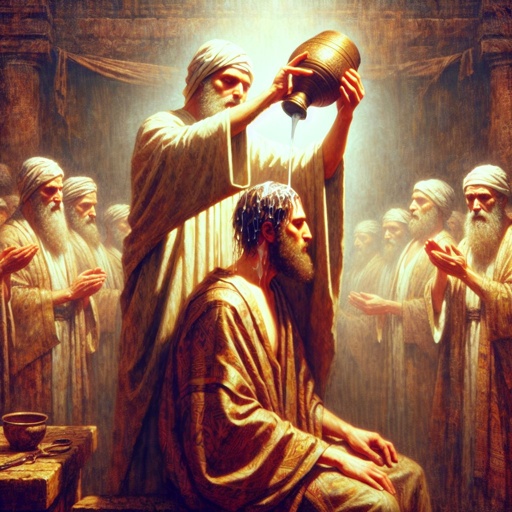
Leviticus 8:12 - "And he poured of the anointing oil upon Aaron's head, and anointed him, to sanctify him."

Leviticus 26:10 - "And ye shall eat old store, and bring forth the old because of the new."

Leviticus 8:10 - "And Moses took the anointing oil, and anointed the tabernacle and all that was therein, and sanctified them."

Leviticus 10:5 - "So they went near, and carried them in their coats out of the camp; as Moses had said."

Leviticus 25:12 - "For it is the jubile; it shall be holy unto you: ye shall eat the increase thereof out of the field."

"And the LORD spake unto Moses, saying," - Leviticus 12:1

Leviticus 18:12 - "Thou shalt not uncover the nakedness of thy father's sister: she is thy father's near kinswoman."

Leviticus 22:12 - "If the priest's daughter also be married unto a stranger, she may not eat of an offering of the holy things."
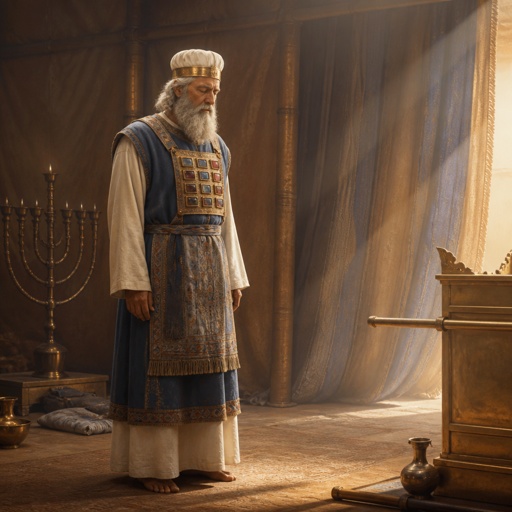
"¶ And the LORD spake unto Aaron, saying," - Leviticus 10:8
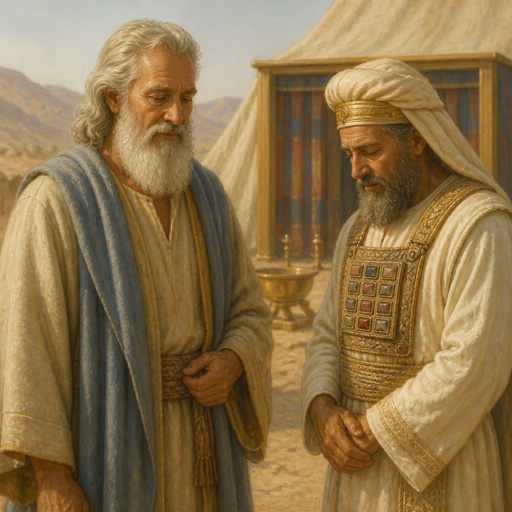
"And when Moses heard that, he was content." - Leviticus 10:20

Leviticus 27:12 - "And the priest shall value it, whether it be good or bad: as thou valuest it, who art the priest, so shall it be."

Leviticus 2:12 - "¶ As for the oblation of the firstfruits, ye shall offer them unto the LORD: but they shall not be burnt on the altar for a sweet savour."
"And that ye may put difference between holy and unholy, and between unclean and clean;" - Leviticus 10:10

Leviticus 22:10 - "There shall no stranger eat of the holy thing: a sojourner of the priest, or an hired servant, shall not eat of the holy thing."