What does Leviticus 10:12 mean?
“And Moses spake unto Aaron, and unto Eleazar and unto Ithamar, his sons that were left, Take the meat offering that remaineth of the offerings of the LORD made by fire, and eat it without leaven beside the altar: for it is most holy:” — Leviticus 10:12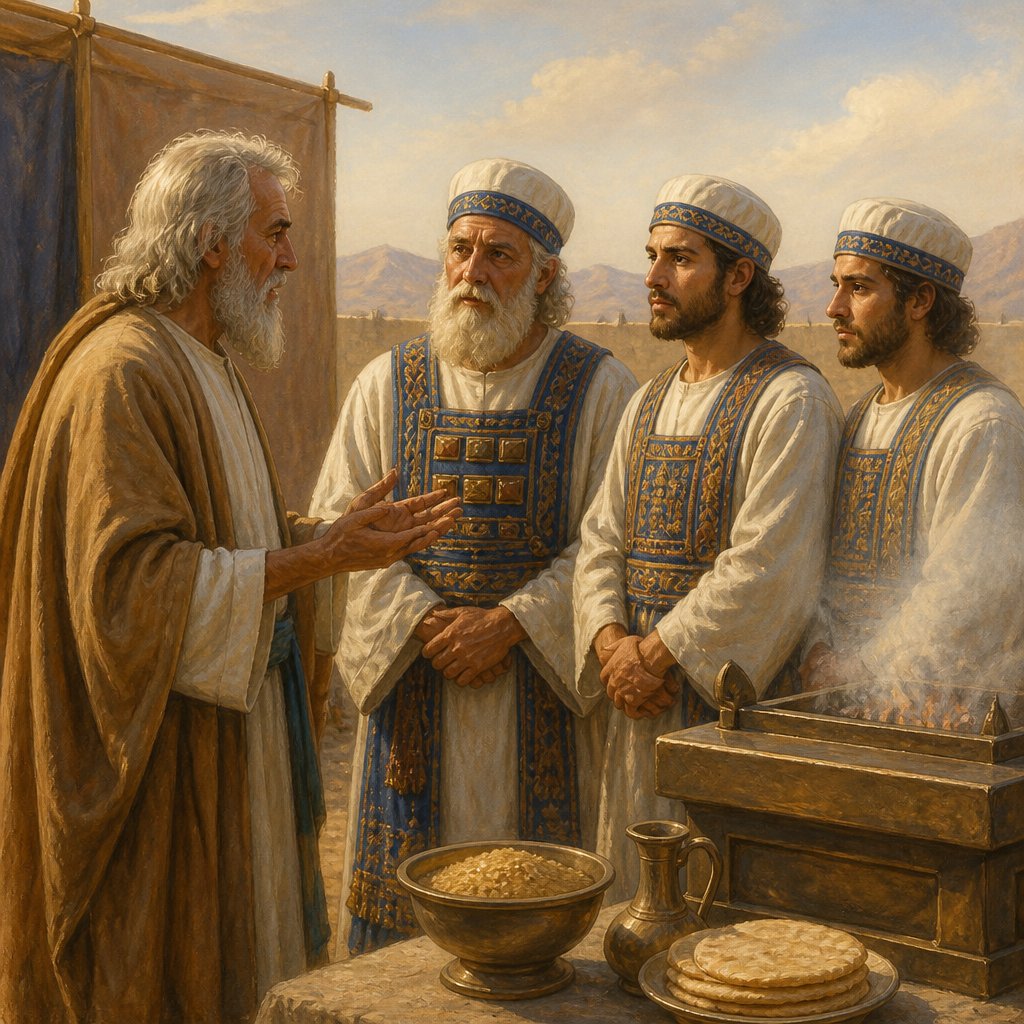
Leviticus 10:12 in the King James Version states, "And Moses spake unto Aaron, and unto Eleazar and unto Ithamar, his sons that were left, Take the meat offering that remaineth of the offerings of the Lord made by fire, and eat it without leaven beside the altar: for it is most holy."
This verse comes from the book of Leviticus in the Old Testament, which is filled with instructions and laws given to the descendants of Israel by God through Moses. In this particular passage, Moses is instructing Aaron and his remaining sons, Eleazar and Ithamar, regarding the proper handling of the remnant of the offerings made to the Lord.
The context of this verse occurs shortly after the ordination of Aaron and his sons as priests of the Lord. In Leviticus 9, Aaron and his sons had made their first offerings before the Lord, and the glory of the Lord had appeared to all the people. However, tragedy struck when two of Aaron's sons, Nadab and Abihu, offered unauthorized fire before the Lord and were consequently consumed by fire from the Lord. In the aftermath of this devastating event, Moses brings further instructions to Aaron and his remaining sons concerning the handling of the sacrificial offerings.
The verse carries several themes, the most predominant of which is the concept of holiness. The meat offering described in this passage is described as "most holy," emphasizing the sanctity of the offering and the importance of treating it with utmost reverence and respect. This idea of holiness is a fundamental principle in the book of Leviticus, as it underscores the absolute purity and separation required for the relationship between God and His people. The instructions regarding the meat offering serve as a reminder of the sacredness of the offerings made to the Lord and the necessity of maintaining purity and reverence in worship.
Furthermore, the verse highlights the importance of obedience to God's commands. After the tragic death of Nadab and Abihu, Moses reiterates the importance of following God's instructions regarding the handling of the offerings. This serves as a sobering reminder of the consequences of disobedience and the need for strict adherence to the laws and regulations given by God.
Symbolism also plays a significant role in this verse. The meat offering itself symbolizes the dedication and commitment of God's people in bringing their best to the Lord. It represents their willingness to offer a portion of their livelihood to honor and worship God. The requirement to eat the offering without leaven beside the altar underscores the need for purity and sincerity in worship. Leaven, which is often associated with fermentation and corruption, is to be kept away from the holy offerings, symbolizing the need for a pure and unblemished sacrifice before the Lord.
In a broader sense, this verse also points to the centrality of the sacrificial system in the worship of the Israelites. The offerings made by fire were a central aspect of Israelite worship, serving as a means of atonement, dedication, and fellowship with God. The careful instructions regarding the handling of the offerings demonstrate the meticulousness and reverence with which the Israelites were to approach their worship and relationship with God.
In conclusion, Leviticus 10:12 provides valuable insight into the themes of holiness, obedience, and symbolism in the context of the Israelite sacrificial system. It serves as a poignant reminder of the sacred nature of worship and the need for unwavering obedience to God's commands. As modern-day readers, we can gain a deeper understanding of the reverence and purity required in our own worship and relationship with God.
Get our apps


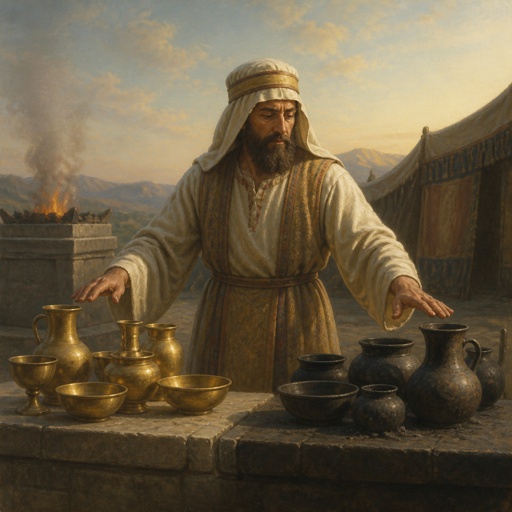
Artwork for Leviticus 10:12
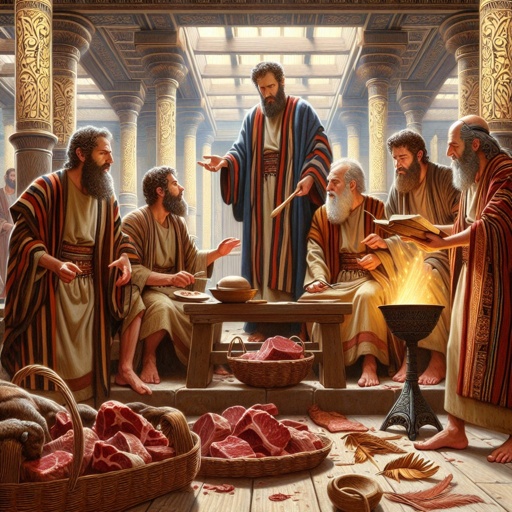
Leviticus 10:12 - "¶ And Moses spake unto Aaron, and unto Eleazar and unto Ithamar, his sons that were left, Take the meat offering that remaineth of the offerings of the LORD made by fire, and eat it without leaven beside the altar: for it is most holy:"
"¶ And Moses spake unto Aaron, and unto Eleazar and unto Ithamar, his sons that were left, Take the meat offering that remaineth of the offerings of the LORD made by fire, and eat it without leaven beside the altar: for it is most holy:" - Leviticus 10:12

Leviticus 20:10-12 - "Leviticus 20:10-12 If a man commits adultery with another man's wife—with the wife of his neighbor—both the adulterer and the adulteress are to be put to death. If a man has sexual relations with his father’s wife, he has dishonored his father. Both the man and the woman are to be put to death; their blood will be on their own heads. If a man has sexual relations with his daughter-in-law, both of them are to be put to death. What they have done is a perversion; their blood will be on their own heads."
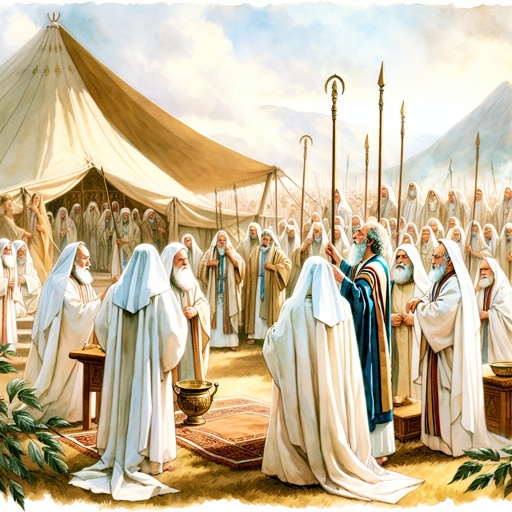
Leviticus 8:1-12

Leviticus 10:10 - "And that ye may put difference between holy and unholy, and between unclean and clean;"

leviticus 16:7-10

Leviticus 10:20 - "And when Moses heard that, he was content."
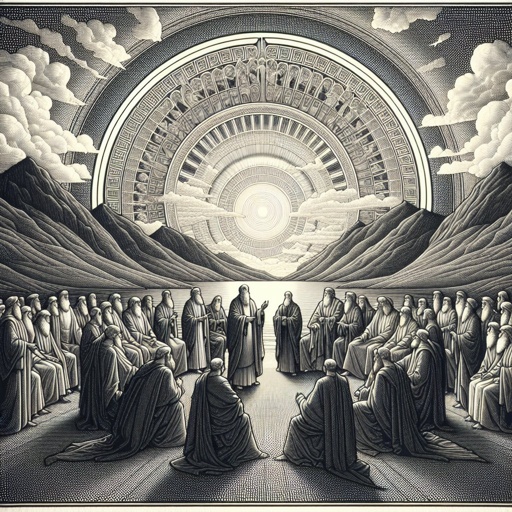
Leviticus 10:8 - "¶ And the LORD spake unto Aaron, saying,"

Leviticus 12:1 - "And the LORD spake unto Moses, saying,"

Leviticus 12:3 - "And in the eighth day the flesh of his foreskin shall be circumcised."

Leviticus 24:12 - "And they put him in ward, that the mind of the LORD might be shewed them."

Leviticus 3:12 - "¶ And if his offering be a goat, then he shall offer it before the LORD."

Leviticus 10:2 - "And there went out fire from the LORD, and devoured them, and they died before the LORD."

Ezra 10:10-12

Leviticus 26:12 - "And I will walk among you, and will be your God, and ye shall be my people."

Leviticus 11:12 - "Whatsoever hath no fins nor scales in the waters, that shall be an abomination unto you."
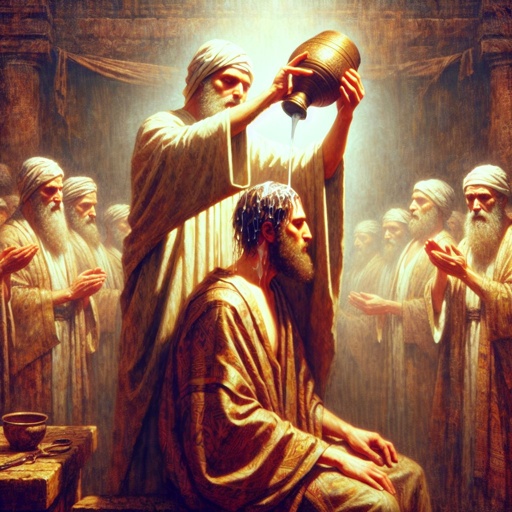
Leviticus 8:12 - "And he poured of the anointing oil upon Aaron's head, and anointed him, to sanctify him."

Leviticus 26:10 - "And ye shall eat old store, and bring forth the old because of the new."

Leviticus 8:10 - "And Moses took the anointing oil, and anointed the tabernacle and all that was therein, and sanctified them."

Leviticus 10:5 - "So they went near, and carried them in their coats out of the camp; as Moses had said."

Leviticus 25:12 - "For it is the jubile; it shall be holy unto you: ye shall eat the increase thereof out of the field."

"And the LORD spake unto Moses, saying," - Leviticus 12:1

Leviticus 18:12 - "Thou shalt not uncover the nakedness of thy father's sister: she is thy father's near kinswoman."

Leviticus 22:12 - "If the priest's daughter also be married unto a stranger, she may not eat of an offering of the holy things."
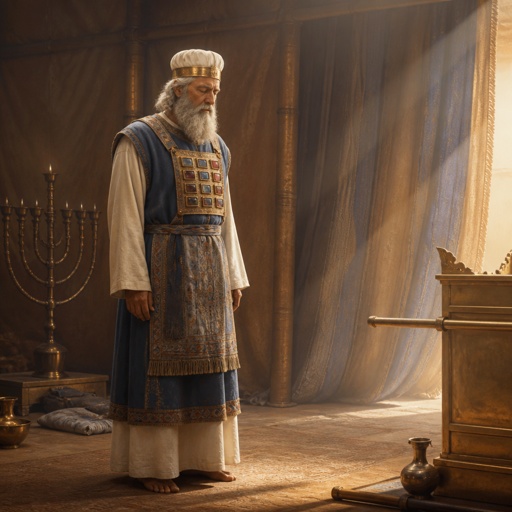
"¶ And the LORD spake unto Aaron, saying," - Leviticus 10:8
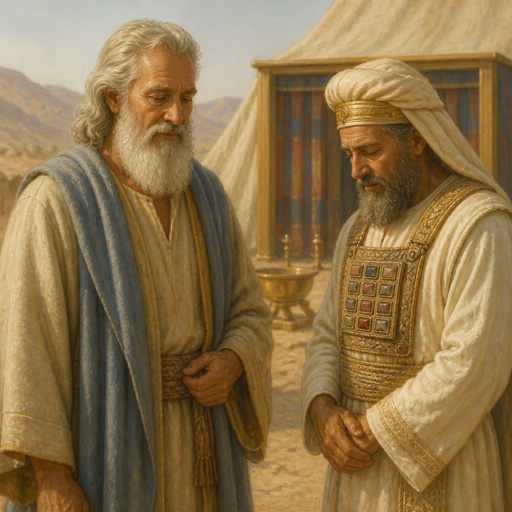
"And when Moses heard that, he was content." - Leviticus 10:20

Leviticus 27:12 - "And the priest shall value it, whether it be good or bad: as thou valuest it, who art the priest, so shall it be."

Leviticus 2:12 - "¶ As for the oblation of the firstfruits, ye shall offer them unto the LORD: but they shall not be burnt on the altar for a sweet savour."
"And that ye may put difference between holy and unholy, and between unclean and clean;" - Leviticus 10:10

Leviticus 22:10 - "There shall no stranger eat of the holy thing: a sojourner of the priest, or an hired servant, shall not eat of the holy thing."