Divine Distinctions: Lessons from Leviticus 11:17
“And the little owl, and the cormorant, and the great owl,” — Leviticus 11:17
In Leviticus 11:17, we read, "And the little owl, and the cormorant, and the great owl." This scripture is part of a broader passage outlining dietary laws given to the Israelites. Through these laws, God was establishing a framework for His people, not merely for health reasons but as a means to cultivate holiness, obedience, and a distinct identity among the nations.
The mention of specific animals, including the little owl and the cormorant, invites us to explore the significance of divine distinctions. God’s instructions regarding clean and unclean animals touch upon a fundamental theme in the Bible: the concept of holiness. To be holy means to be set apart, to be different from anything common or contaminated. In this context, the dietary laws served as a tangible reminder to the Israelites of their special relationship with God. They were to reflect His purity and righteousness, and their adherence to these laws demonstrated their commitment to living according to His commands.
As we delve deeper into this verse, let us recognize that the little owl, the cormorant, and the great owl symbolize the creatures of the world that often go unnoticed. Just as these birds are seen as unclean for consumption, they remind us of the distractions and influences that can cloud our spiritual lives. In our modern context, these distractions often manifest as temptation, sin, and worldly pursuits. The call to discern what is clean and unclean is as relevant today as it was for the Israelites.
In a world where so much is permissible, Christians are challenged to cultivate a mindset that evaluates life through the lens of scripture. The act of distinguishing between what is holy and what is not involves an internal transformation that reflects our hearts' alignment with God. Romans 12:2 urges us, "And be not conformed to this world: but be ye transformed by the renewing of your mind, that ye may prove what is that good, and acceptable, and perfect, will of God." This transformation leads to a life that honors God and encourages others toward spiritual clarity.
Furthermore, these dietary laws are not merely prohibitory but protective. God, in His omniscience, understands the implications of our choices. He knows that what we consume—physically and spiritually—has profound effects on our being. Just as certain animals were to be avoided to protect the health of the Israelites, we too must choose wisely what we allow into our lives. Our spiritual and emotional health hinges on engaging with God’s Word, nurturing relationships that foster growth, and avoiding influences or practices that lead us away from His presence.
Indeed, this call to discernment extends beyond our plates and into our daily lives. Are we consuming content that cultivates faith, or are we indulging in media that promotes despair? Are we surrounding ourselves with individuals who uplift our spirits and encourage holiness, or do we find ourselves in the company of those who lead us toward compromise?
Moreover, in acknowledging these distinctions, we must also embrace the grace that comes from Christ. While the Old Testament laws laid the groundwork, our salvation through Jesus offers a new covenant—a chance to draw near to God through faith rather than mere adherence to ritual. Hebrews 10:19-22 exemplifies this, stating we have confidence to enter the Most Holy Place through the blood of Jesus, enabling us to approach God not as distant creatures but as beloved children.
In conclusion, Leviticus 11:17, while seemingly about dietary restrictions, opens a deeper discussion on holiness, discernment, and our commitment to live distinct lives in a world filled with distractions. Let us strive to set ourselves apart, not merely through abstaining from certain behaviors but by actively pursuing a lifestyle that reflects God’s light and love. As we navigate each day, may we continually seek out the ways to align our hearts, minds, and actions with His divine will.
Get our apps


Artwork for Leviticus 11:17
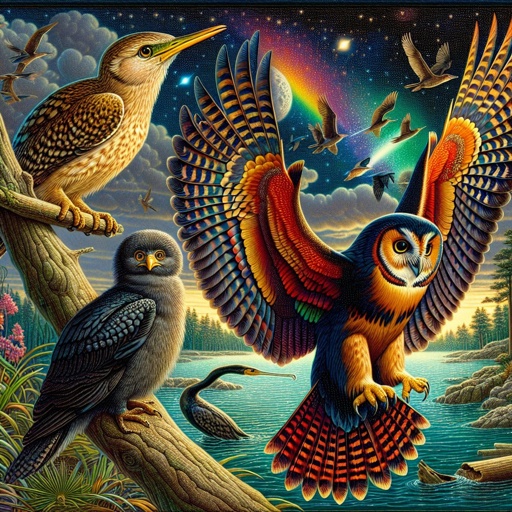
Leviticus 11:17 - "And the little owl, and the cormorant, and the great owl,"

"And the little owl, and the cormorant, and the great owl," - Leviticus 11:17

Leviticus 17:11 - "For the life of the flesh is in the blood: and I have given it to you upon the altar to make an atonement for your souls: for it is the blood that maketh an atonement for the soul."

Leviticus 17:7

Leviticus 23:17-22
Leviticus 11:22

Leviticus 22:17 - "¶ And the LORD spake unto Moses, saying,"

Leviticus 17:1 - "And the LORD spake unto Moses, saying,"
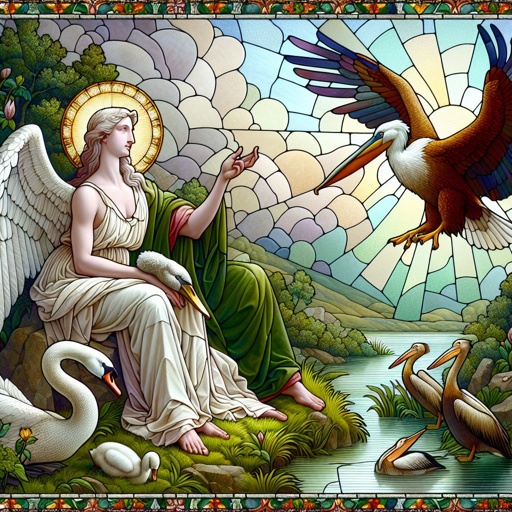
Leviticus 11:18 - "And the swan, and the pelican, and the gier eagle,"

Leviticus 7:17 - "But the remainder of the flesh of the sacrifice on the third day shall be burnt with fire."

Leviticus 11:14 - "And the vulture, and the kite after his kind;"
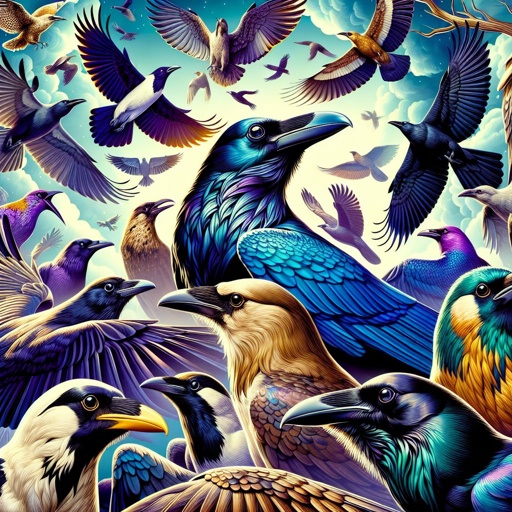
Leviticus 11:15 - "Every raven after his kind;"

"For the life of the flesh is in the blood: and I have given it to you upon the altar to make an atonement for your souls: for it is the blood that maketh an atonement for the soul." - Leviticus 17:11

Leviticus 11:30 - "And the ferret, and the chameleon, and the lizard, and the snail, and the mole."

Leviticus 24:17 - "¶ And he that killeth any man shall surely be put to death."

Leviticus 11:19 - "And the stork, the heron after her kind, and the lapwing, and the bat."

Leviticus 9:11 - "And the flesh and the hide he burnt with fire without the camp."

Revelation 1:7

Leviticus 11:1 - "And the LORD spake unto Moses and to Aaron, saying unto them,"

Leviticus 11:16 - "And the owl, and the night hawk, and the cuckow, and the hawk after his kind,"

Ephesians 1:7

Ephesians 1:7

Revelation 1:7

Leviticus 17:3 - "What man soever there be of the house of Israel, that killeth an ox, or lamb, or goat, in the camp, or that killeth it out of the camp,"

Leviticus 15:17 - "And every garment, and every skin, whereon is the seed of copulation, shall be washed with water, and be unclean until the even."

"¶ And the LORD spake unto Moses, saying," - Leviticus 22:17

"And the LORD spake unto Moses, saying," - Leviticus 17:1

Leviticus 27:17 - "If he sanctify his field from the year of jubile, according to thy estimation it shall stand."

Leviticus 17:16 - "But if he wash them not, nor bathe his flesh; then he shall bear his iniquity."

Leviticus 11:41 - "And every creeping thing that creepeth upon the earth shall be an abomination; it shall not be eaten."