Clean Yet Changed: Embracing God’s Perspective
“And he that hath his hair fallen off from the part of his head toward his face, he is forehead bald: yet is he clean.” — Leviticus 13:41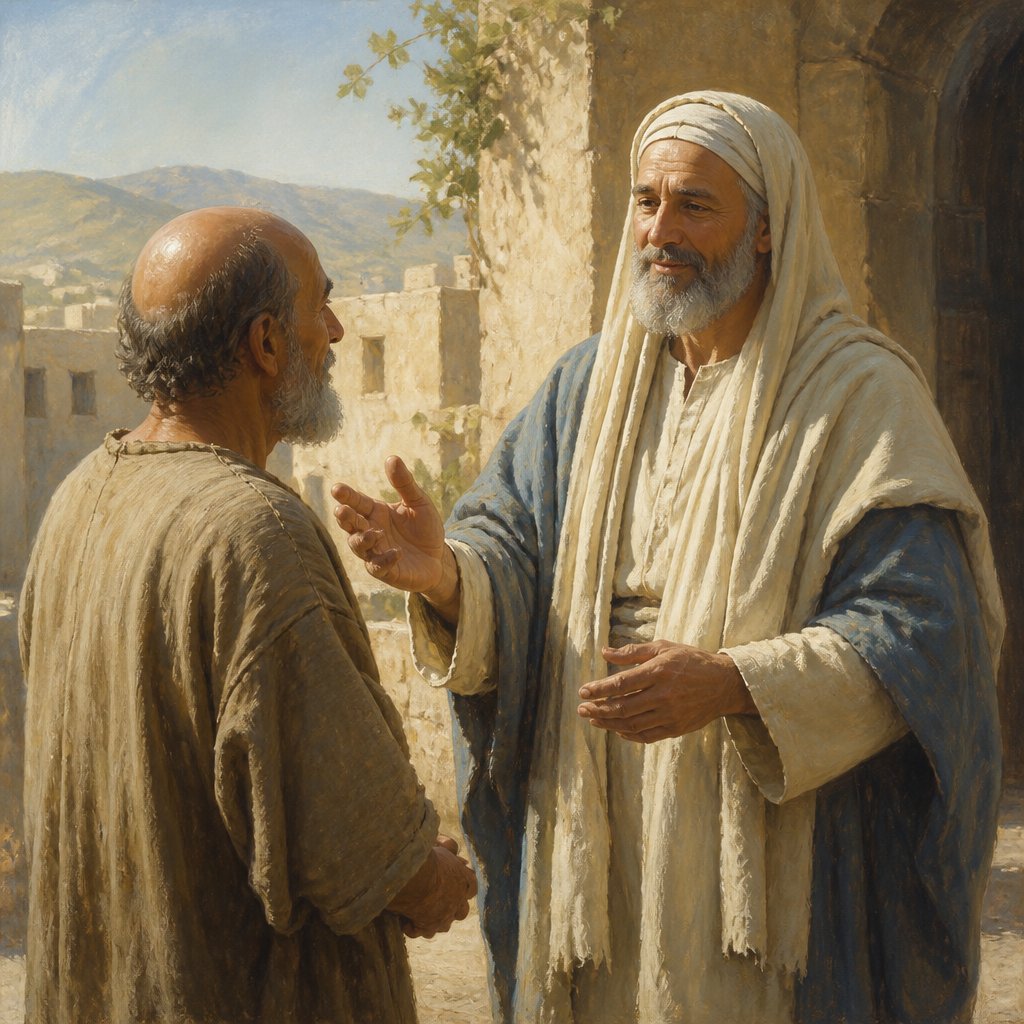
In Leviticus 13:41, we read: "And he that hath his hair fallen off from the part of his head toward his face, he is forehead bald: yet is he clean." At first glance, this verse from the Old Testament might seem like a mere statement about physical appearance, specifically related to the condition of baldness. Yet, as we explore the deeper implications of this scripture, we find rich meanings that extend beyond the physical realm, revealing profound truths about our identity, worth, and relationship with God.
In the context of Leviticus, the entire chapter addresses the issue of ceremonial purity and the laws regarding skin diseases, which included conditions like leprosy. The Israelites were given strict guidelines to differentiate between what was clean and unclean, mostly to uphold the community’s health and spiritual well-being. In verse 41, God specifically mentions that baldness in a certain area (the forehead) does not render a person unclean. This distinction is crucial because it shifts the focus from physical appearance to spiritual integrity.
When we think about baldness, especially in biblical times, it carried various social and cultural implications. For many, hair is often seen as a symbol of vitality and strength. In today's society, this remains true as many associate hair with youth, beauty, and desirability. However, here we see God declaring that even those who are bald in a specific way—those whose hair has fallen off at the front—are still clean. This statement of cleanliness signifies acceptance, belonging, and the idea that God looks beyond outward appearances.
One might wonder, why would God emphasize the state of one’s hair? As we reflect, it becomes clearer that this is about more than physical conditions. It’s an invitation to look at ourselves through the lens of God’s grace. Just as a person might grapple with feelings of inadequacy or concern over their physical appearance, we too can carry burdens of self-doubt based on our own life experiences, afflictions, or what society dictates as acceptable. Yet, what we discover here is that our value, in God’s eyes, is not determined by such external factors.
The word “clean” in this context transcends physical cleanliness. It speaks to the mind and spirit. God sees the heart, and He discerns our purity based on our relationship with Him rather than societal standards or physical attributes. In a world that often prioritizes image and outward judgment, we are reminded that God’s perception of us is fundamentally different. 1 Samuel 16:7 encapsulates this idea perfectly: "...for the Lord seeth not as man seeth; for man looketh on the outward appearance, but the Lord looketh on the heart."
Moreover, this passage is a reflection of how God lavishes grace upon us. Feeling 'bald' in our lives—perhaps from failures, losses, or transitions—can leave us feeling exposed and vulnerable. Yet, like baldness in this scripture, which does not render us unworthy or unclean, we too can rest in the assurance that our flaws, struggles, and unique stories do not make us inferior in God’s kingdom.
Embracing our baldness—whether that be literal or metaphorical—can lead us to humble acceptance of ourselves and deeper reliance on God’s grace. We learn to celebrate our imperfections, recognizing that they are part of our journey to becoming more like Christ.
In conclusion, as we meditate on Leviticus 13:41, let us also reassure ourselves that we are deemed clean by the blood of Jesus, no matter our physical conditions or life struggles. Embrace your vulnerability, your unique identity, and remember that in God’s eyes, you are perfectly clean and accepted. Let that realization fill you with peace as you navigate life, knowing that your worth is not defined by your looks or circumstances but by God’s unending love for you.
Get our apps


Artwork for Leviticus 13:41

Leviticus 13:41 - "And he that hath his hair fallen off from the part of his head toward his face, he is forehead bald: yet is he clean."

"And he that hath his hair fallen off from the part of his head toward his face, he is forehead bald: yet is he clean." - Leviticus 13:41

Ezekiel 4:1-3

Daniel 4:1-3

Leviticus 11:41 - "And every creeping thing that creepeth upon the earth shall be an abomination; it shall not be eaten."

Isaiah 41:13

Leviticus 23:41 - "And ye shall keep it a feast unto the LORD seven days in the year. It shall be a statute for ever in your generations: ye shall celebrate it in the seventh month."

Leviticus 26:41 - "And that I also have walked contrary unto them, and have brought them into the land of their enemies; if then their uncircumcised hearts be humbled, and they then accept of the punishment of their iniquity:"

Leviticus 14:41 - "And he shall cause the house to be scraped within round about, and they shall pour out the dust that they scrape off without the city into an unclean place:"

Psalms 41:13 - "Blessed be the LORD God of Israel from everlasting, and to everlasting. Amen, and Amen."

"And every creeping thing that creepeth upon the earth shall be an abomination; it shall not be eaten." - Leviticus 11:41

Leviticus 24:13 - "And the LORD spake unto Moses, saying,"

Leviticus 25:41 - "And then shall he depart from thee, both he and his children with him, and shall return unto his own family, and unto the possession of his fathers shall he return."

Job 41:13 - "Who can discover the face of his garment? or who can come to him with his double bridle?"

Leviticus 21:13 - "And he shall take a wife in her virginity."

Leviticus 13:1 - "And the LORD spake unto Moses and Aaron, saying,"

Isaiah 41:13 - "For I the LORD thy God will hold thy right hand, saying unto thee, Fear not; I will help thee."

Leviticus 13:35 - "But if the scall spread much in the skin after his cleansing;"

Leviticus 13:29 - "¶ If a man or woman have a plague upon the head or the beard;"

Genesis 41:13 - "And it came to pass, as he interpreted to us, so it was; me he restored unto mine office, and him he hanged."

Ezekiel 41:13 - "So he measured the house, an hundred cubits long; and the separate place, and the building, with the walls thereof, an hundred cubits long;"

Leviticus 13:18 - "¶ The flesh also, in which, even in the skin thereof, was a boil, and is healed,"

Leviticus 13:14 - "But when raw flesh appeareth in him, he shall be unclean."

Leviticus 13:47 - "¶ The garment also that the plague of leprosy is in, whether it be a woollen garment, or a linen garment;"

Leviticus 13:9 - "¶ When the plague of leprosy is in a man, then he shall be brought unto the priest;"

Leviticus 13:22 - "And if it spread much abroad in the skin, then the priest shall pronounce him unclean: it is a plague."

Leviticus 25:13 - "In the year of this jubile ye shall return every man unto his possession."

Leviticus 6:13 - "The fire shall ever be burning upon the altar; it shall never go out."

Matthew 13:41 - "The Son of man shall send forth his angels, and they shall gather out of his kingdom all things that offend, and them which do iniquity;"

Leviticus 13:19 - "And in the place of the boil there be a white rising, or a bright spot, white, and somewhat reddish, and it be shewed to the priest;"