The Scapegoat: A Journey of Redemption and Reconciliation
“And when he hath made an end of reconciling the holy place, and the tabernacle of the congregation, and the altar, he shall bring the live goat:” — Leviticus 16:20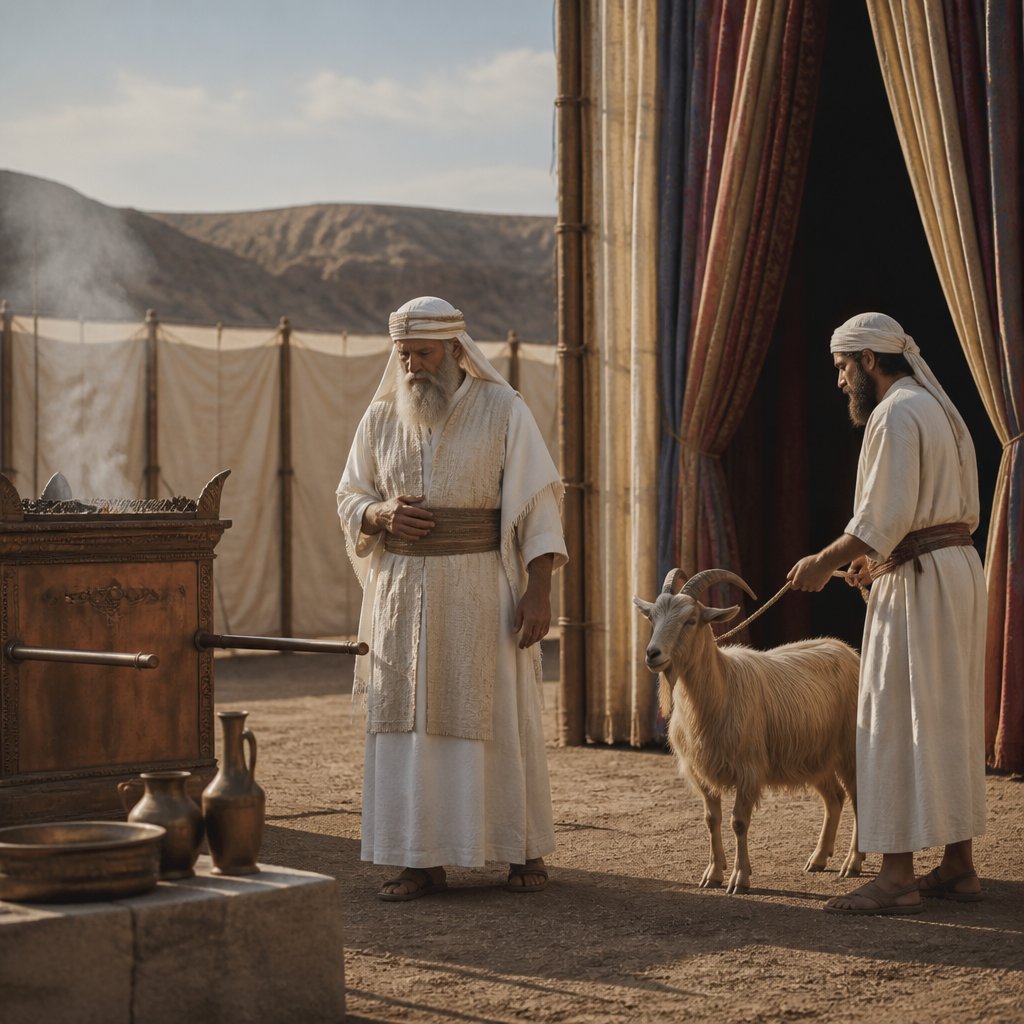
In Leviticus 16:20, we encounter a profound moment in the sacred practices of ancient Israel: "And when he hath made an end of reconciling the holy place, and the tabernacle of the congregation, and the altar, he shall bring the live goat." This verse is situated within the intricate ritual of Yom Kippur, or the Day of Atonement, which illustrates God’s desire for reconciliation and restoration between Himself and His people. It compels us to reflect upon our own need for spiritual atonement and the lengths to which God goes to cleanse us from our sins.
To appreciate the significance of the live goat, we must first understand the broader context of Leviticus 16. The chapter outlines the annual process of atonement for the sins of the nation. On this sacred day, the high priest would enter the Holy of Holies, following a detailed set of procedures aimed at cleansing not only himself but also the entire community of Israel. He would sprinkle the blood of a sacrificial lamb to purify the sanctuary and the altar, signifying the severity and holiness of sin, while simultaneously showcasing God's mercy.
The climax of this sacred ritual is the choice of the live goat, often referred to as the "scapegoat." After the priest has made atonement for the physical places of worship, he would ceremonially place his hands upon the head of the goat and confess over it all the iniquities and transgressions of the Israelites (Leviticus 16:21). This act symbolically transferred the nation's sins onto the goat, which was then sent into the wilderness, never to return. In this poignant symbolism lies a deep illustration of how our sins, once confessed, are removed from us, effectively taken away by the appointed sacrifice.
This practice brings to mind the New Testament revelation of Jesus Christ as our ultimate scapegoat. In John 1:29, John the Baptist proclaims, "Behold the Lamb of God, which taketh away the sin of the world." Just as the ceremonial shedding of blood provided temporary atonement for the Israelites, the sacrifice of Jesus serves as the everlasting solution for humanity’s sins. The imagery of the scapegoat profoundly resonates with our understanding of grace and redemption; our sins are not merely covered or overlooked but completely borne away by Christ’s sacrificial love.
As we meditate on the significance of Leviticus 16:20, we are reminded of a God who desires to reconcile the broken relationship that sin incurs. The high priest initially had to ensure holiness in the sacred spaces, amplifying the reality that God cannot dwell in the presence of unconfessed sin. Consequently, our personal spiritual seasons require us to approach God, seeking His mercy to cleanse our brokenness.
Furthermore, this verse invites us to examine our own lives and offers a practical framework for how we can seek reconciliation daily. Are there areas in our hearts that need confrontation and confession? Are we holding onto guilt or shame that God desires to take away? Just as the live goat carried the sins of the people far from them, Christ carries our burdens, as He invites us to cast our cares upon Him (1 Peter 5:7).
Leviticus 16:20 thus challenges us to actively participate in this divine process of reconciliation. It calls us not only to acknowledge our failures but also to embrace the freedom that comes from confession and the assurance of forgiveness. In a world where shame often binds us, let us remember that God has made a way for us through Christ to be free from guilt, standing reconciled before Him.
In closing, reflect on the enormity of being reconciled to God. Spend a moment in prayer, seeking to cast your burdens upon Him, knowing that in Christ, we are wholly and completely forgiven. And like the live goat that was sent away, may we walk in the liberation of leaving our sins behind, continually acknowledging His grace and the gift of atonement that enables us to draw near to the holy places of His presence.
Get our apps


Artwork for Leviticus 16:20

Leviticus 16:20 - "¶ And when he hath made an end of reconciling the holy place, and the tabernacle of the congregation, and the altar, he shall bring the live goat:"
"¶ And when he hath made an end of reconciling the holy place, and the tabernacle of the congregation, and the altar, he shall bring the live goat:" - Leviticus 16:20

Leviticus 23:20

Leviticus 24:20-23

Leviticus 16:8

Leviticus 20:1 - "And the LORD spake unto Moses, saying,"

Leviticus 10:20 - "And when Moses heard that, he was content."

leviticus 16:7-10

Leviticus 21:16 - "¶ And the LORD spake unto Moses, saying,"

Leviticus 20:22-26 simple picture

Picture to summarize Leviticus 20:22-26

Leviticus 20:20 - "And if a man shall lie with his uncle's wife, he hath uncovered his uncle's nakedness: they shall bear their sin; they shall die childless."

Leviticus 9:16 - "And he brought the burnt offering, and offered it according to the manner."

Leviticus 9:20 - "And they put the fat upon the breasts, and he burnt the fat upon the altar:"

Leviticus 8:20 - "And he cut the ram into pieces; and Moses burnt the head, and the pieces, and the fat."

Leviticus 22:20 - "But whatsoever hath a blemish, that shall ye not offer: for it shall not be acceptable for you."

Leviticus 4:16 - "And the priest that is anointed shall bring of the bullock's blood to the tabernacle of the congregation:"

Leviticus 11:16 - "And the owl, and the night hawk, and the cuckow, and the hawk after his kind,"

Leviticus 16:25 - "And the fat of the sin offering shall he burn upon the altar."

Leviticus 20:7 - "¶ Sanctify yourselves therefore, and be ye holy: for I am the LORD your God."

Mark 16:20
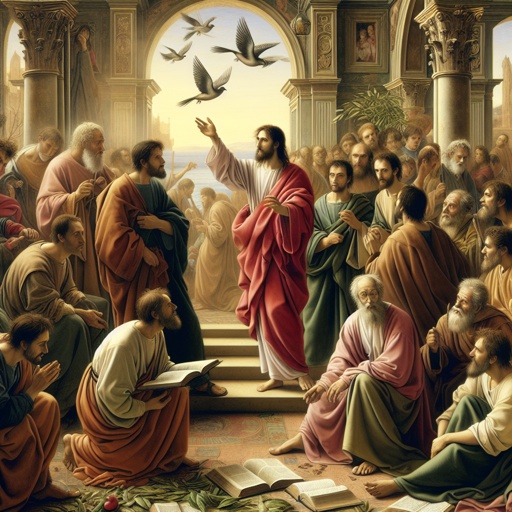
Mark 16:20

Deuteronomy 20:16
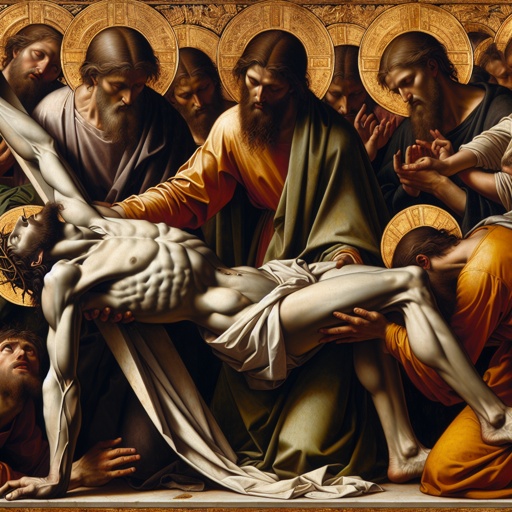
Mark 16:20

Genesis 20-16

Mark 16:20

Deuteronomy 20:16

Mark 16:20

Deuteronomy 20:16

Leviticus 18:16 - "Thou shalt not uncover the nakedness of thy brother's wife: it is thy brother's nakedness."