Cleansed and Made Whole: Understanding Leviticus 17:15 in Our Spiritual Lives
“And every soul that eateth that which died of itself, or that which was torn with beasts, whether it be one of your own country, or a stranger, he shall both wash his clothes, and bathe himself in water, and be unclean until the even: then shall he be clean.” — Leviticus 17:15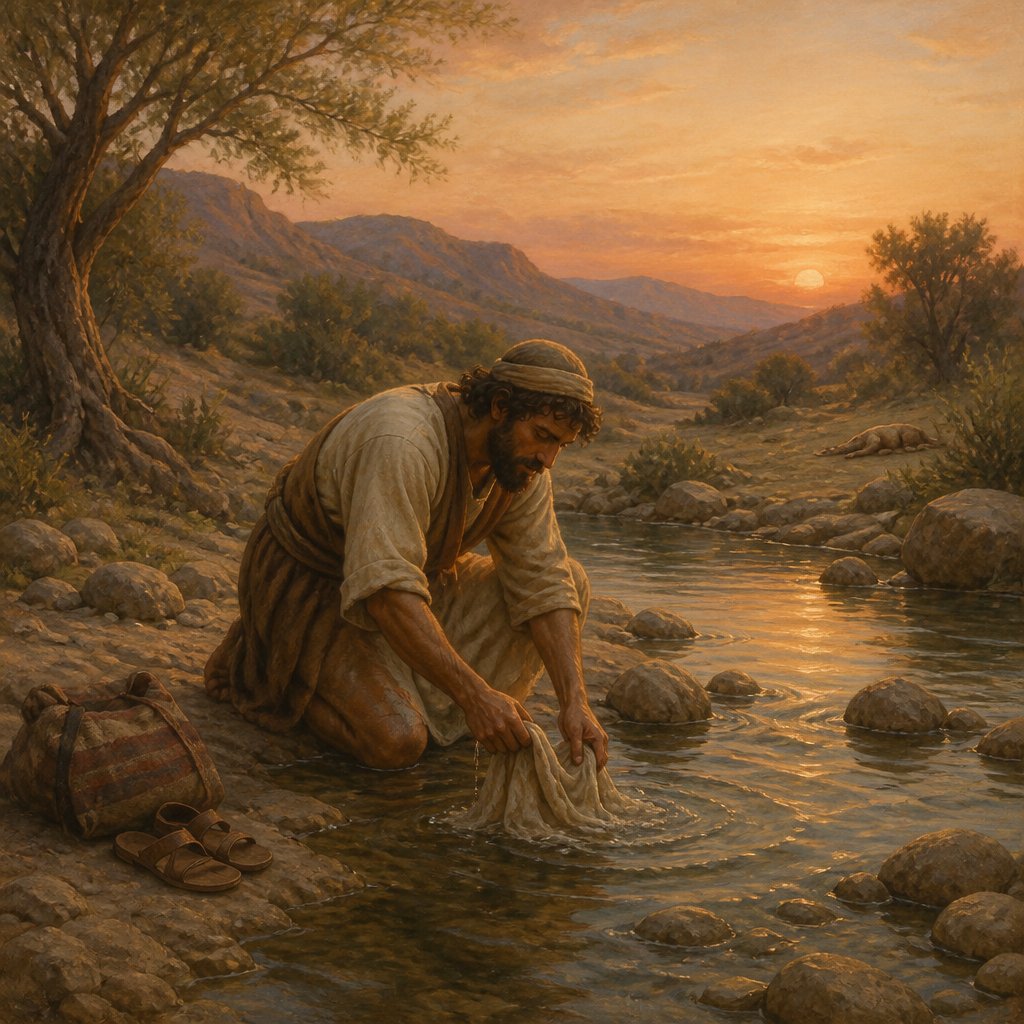
Leviticus 17:15 states, "And every soul that eateth that which died of itself, or that which was torn with beasts, whether it be one of your own country, or a stranger, he shall both wash his clothes, and bathe himself in water, and be unclean until the even: then shall he be clean." This verse, while steeped in ceremonial purity laws of the Old Testament, carries deeper implications that resonate profoundly with our spiritual walk today.
As we explore the meaning of this scripture, it is vital to set the context of the Book of Leviticus. It is primarily a manual for the priests and the people of Israel on how to live a life that is pleasing to God. The themes of holiness, cleanliness, and atonement are woven throughout the chapters, addressing not just physical cleanliness but the condition of the heart in relationship to God.
In ancient Israel, the laws concerning what could be eaten and what resulted in uncleanness were significantly important. They served not only to protect the people from disease but were also part of God’s covenant with them, signaling their distinctiveness among the nations. To touch something dead or to consume it represented contamination, a breach of the holiness that God demanded of His people. Thus, the act of washing clothes and bathing was not merely a physical wash but a ritual restoration of one’s state before God.
Translating this process into our lives today, we must ask ourselves: what are the 'things' we consume that could render our hearts unclean? These are not just physical foods but also the ideologies, attitudes, relationships, and influences that we allow to enter our lives. In a world flooded with negativity, immorality, and distractions, it is paramount that we remain steadfast in our commitment to spiritual purity. Just as the Israelites had to take physical steps to be cleansed through washing and bathing, we too must engage in spiritual disciplines that restore our hearts and minds.
When we identify areas in our lives that can be compared to "that which died of itself" or "that which was torn with beasts," we might think of feelings of bitterness, anger, jealousy, or regret—often arising from our life experiences. We can get torn by the beasts of our circumstances, relationships, or even our past. Therefore, like the Israelites, we too need a place of washing and bathing—figuratively speaking. This is where confession, repentance, and prayer come into play.
1 John 1:9 reminds us that "If we confess our sins, he is faithful and just to forgive us our sins, and to cleanse us from all unrighteousness." Here, we find the requirement to acknowledge our impurities and to come to God with our transgressions. The washing symbolizes a return to cleanliness—a state of being worthy to approach God.
Furthermore, the specific instruction that one would remain unclean until the evening serves as a reminder of the time it takes for reflection and renewal. It is sometimes necessary to spend time in solitude, prayer, and meditation on God’s Word. We should not rush this process; rather, let us embrace the time it takes to be made whole again.
As we conclude our study on Leviticus 17:15, we can see that God’s commandments were designed not merely as restrictions but as loving guidance toward a wholesome life. These teachings foreshadow the ultimate cleansing offered through Christ. In the New Testament, Jesus became our ultimate sacrifice, purifying us from every sin (1 Peter 1:18-19). Thus, while we need to reflect on our daily choices and engage in practices of spiritual cleansing, we must always remember that our worthiness comes not from our efforts but from His sacrifice.
May we continually seek to wash our lives in the living water of His grace and ultimately be made clean in His sight.
Get our apps


Artwork for Leviticus 17:15
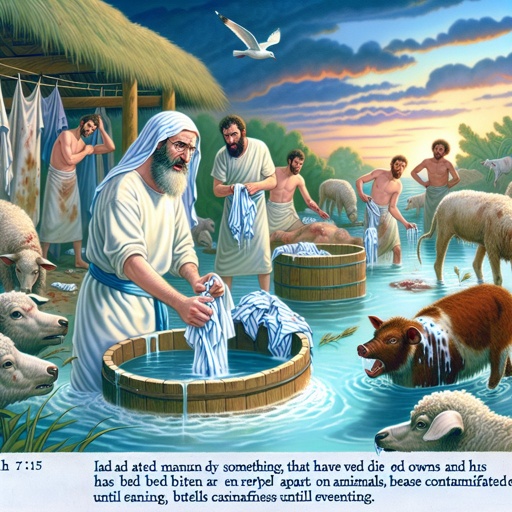
Leviticus 17:15 - "And every soul that eateth that which died of itself, or that which was torn with beasts, whether it be one of your own country, or a stranger, he shall both wash his clothes, and bathe himself in water, and be unclean until the even: then shall he be clean."
"And every soul that eateth that which died of itself, or that which was torn with beasts, whether it be one of your own country, or a stranger, he shall both wash his clothes, and bathe himself in water, and be unclean until the even: then shall he be clean." - Leviticus 17:15

Leviticus 15:17 - "And every garment, and every skin, whereon is the seed of copulation, shall be washed with water, and be unclean until the even."
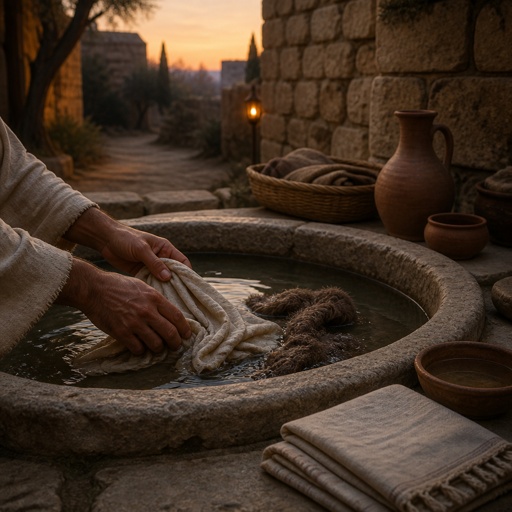
"And every garment, and every skin, whereon is the seed of copulation, shall be washed with water, and be unclean until the even." - Leviticus 15:17

Leviticus 17:7

Leviticus 23:17-22

Leviticus 11:17 - "And the little owl, and the cormorant, and the great owl,"

Leviticus 22:17 - "¶ And the LORD spake unto Moses, saying,"

Leviticus 23:15-22

Leviticus 17:1 - "And the LORD spake unto Moses, saying,"

Leviticus 11:15 - "Every raven after his kind;"

Leviticus 15:1 - "And the LORD spake unto Moses and to Aaron, saying,"

Leviticus 7:17 - "But the remainder of the flesh of the sacrifice on the third day shall be burnt with fire."

Leviticus 24:17 - "¶ And he that killeth any man shall surely be put to death."

Leviticus 15:15 - "And the priest shall offer them, the one for a sin offering, and the other for a burnt offering; and the priest shall make an atonement for him before the LORD for his issue."

Genesis 17-15

Provers 15:17

Acts 17:15

Genesis 15:17

Leviticus 15:9 - "And what saddle soever he rideth upon that hath the issue shall be unclean."

Leviticus 2:15 - "And thou shalt put oil upon it, and lay frankincense thereon: it is a meat offering."

Leviticus 22:15 - "And they shall not profane the holy things of the children of Israel, which they offer unto the LORD;"

Leviticus 17:3 - "What man soever there be of the house of Israel, that killeth an ox, or lamb, or goat, in the camp, or that killeth it out of the camp,"

"¶ And the LORD spake unto Moses, saying," - Leviticus 22:17

"And the LORD spake unto Moses, saying," - Leviticus 17:1

"And the little owl, and the cormorant, and the great owl," - Leviticus 11:17

Leviticus 27:17 - "If he sanctify his field from the year of jubile, according to thy estimation it shall stand."

Leviticus 17:16 - "But if he wash them not, nor bathe his flesh; then he shall bear his iniquity."

Leviticus 9:17 - "And he brought the meat offering, and took an handful thereof, and burnt it upon the altar, beside the burnt sacrifice of the morning."

Leviticus 13:15 - "And the priest shall see the raw flesh, and pronounce him to be unclean: for the raw flesh is unclean: it is a leprosy."