The Heart of Sacrifice: Understanding Leviticus 17:8
“And thou shalt say unto them, Whatsoever man there be of the house of Israel, or of the strangers which sojourn among you, that offereth a burnt offering or sacrifice,” — Leviticus 17:8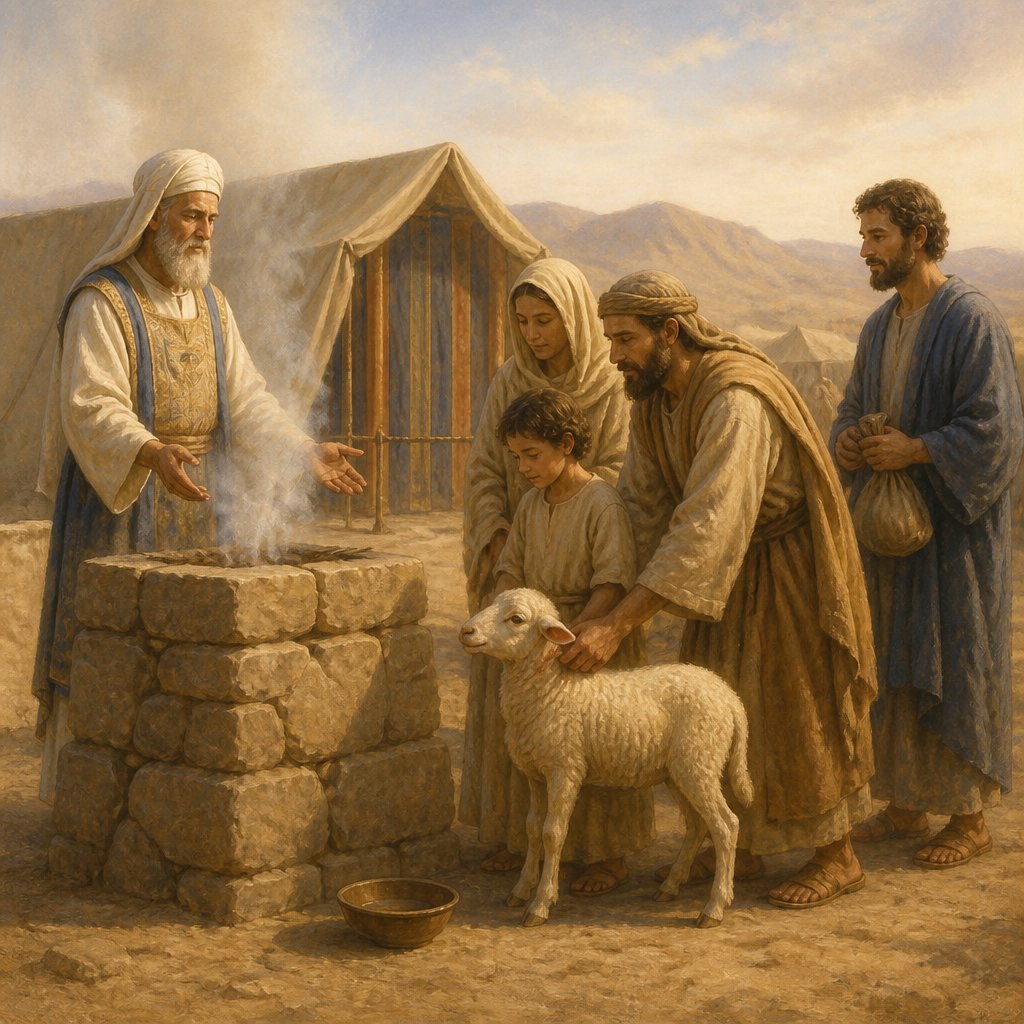
Leviticus 17:8 states, "And thou shalt say unto them, Whatsoever man there be of the house of Israel, or of the strangers which sojourn among you, that offereth a burnt offering or sacrifice." This verse captures a profound significance about the nature of sacrifice, community, and worship, revealing God's heart towards both His chosen people and those who join them in faith.
In ancient Israel, the burnt offering served as a fundamental expression of devotion to God. It symbolized atonement, total surrender, and a deep desire to restore a broken relationship with the Creator. The meticulous regulations surrounding these offerings in Leviticus underscore not only the seriousness of sin but also the divine provision for redemption. Each offering demanded more than mere ritual. It required an understanding of the weight of sin and an earnest response of repentance and love.
The inclusion of "the strangers which sojourn among you" is particularly striking. God’s open invitation to non-Israelites shows His encompassing love and grace towards all humanity. It emphasizes that God’s covenant was not limited solely to the descendants of Abraham, Isaac, and Jacob but rather extended to all who recognized His sovereignty and sought relationship through sacrificial offerings. This signifies the inclusion of Gentiles into the fold of God's people—an anticipation of the universal reach of the Gospel, as demonstrated in the life and ministry of Jesus Christ.
Moreover, consider the collective nature of this command. God instructs Moses to convey this truth not only to the Israelites but to all who resided among them. This teaches us about the importance of community and the shared responsibility in worship. As believers, we are called to create an environment where others can participate in worship and sacrifice. The church should be a welcoming space for those seeking God—regardless of their past or lineage.
Looking deeper, the act of offering a burnt sacrifice required careful consideration and preparation. The offerer had to bring the best of his flock, highlighting another aspect of sacrifice: it is intrinsic to worship. Worship must cost us something. When we come before God, we are expected to lay down our own desires, ambitions, and even sins at the altar. It is a declaration that we trust in His provision and supremacy. This brings to mind Romans 12:1, which encourages, “I beseech you therefore, brethren, by the mercies of God, that ye present your bodies a living sacrifice, holy, acceptable unto God, which is your reasonable service.” As New Testament believers, we are called to live lives of continual sacrifice, reflecting the ultimate sacrifice made by Christ.
This verse beckons us to evaluate the quality of our own sacrifices. Are we giving God our best or merely our leftovers? Taking time to assess our daily lives and the offerings we present to God is vital. It can be easy to fall into the trap of complacency, giving God our time when it is convenient or serving when it aligns with our schedule. However, true worship demands surrender and prioritization of God above all.
Furthermore, let us not overlook the communal aspect of sacrificial worship. It calls us to reach out, involve others, and extend the invitation to join in our sacred journey. Just as God values the offerings made by the strangers among the Israelites, let us embrace individuals in our midst who may feel unwelcome or unworthy of his love. By doing so, we bear witness to the love of Christ, creating a culture of acceptance and grace.
In conclusion, Leviticus 17:8 invites us into a deeper understanding of sacrifice, not just as an act, but as a lifestyle characterized by love, inclusivity, and heartfelt devotion to God. Let us continuously examine our hearts, ensuring our sacrifices reflect the depth of gratitude we owe to the One who sacrificed everything for our redemption.
Get our apps


Artwork for Leviticus 17:8

Leviticus 17:8 - "¶ And thou shalt say unto them, Whatsoever man there be of the house of Israel, or of the strangers which sojourn among you, that offereth a burnt offering or sacrifice,"
"¶ And thou shalt say unto them, Whatsoever man there be of the house of Israel, or of the strangers which sojourn among you, that offereth a burnt offering or sacrifice," - Leviticus 17:8

Leviticus 8:17 - "But the bullock, and his hide, his flesh, and his dung, he burnt with fire without the camp; as the LORD commanded Moses."

Leviticus 17:7

Leviticus 23:17-22

Leviticus 11:17 - "And the little owl, and the cormorant, and the great owl,"

Leviticus 22:17 - "¶ And the LORD spake unto Moses, saying,"

Leviticus 16:8

Leviticus 8:30

Leviticus 17:1 - "And the LORD spake unto Moses, saying,"
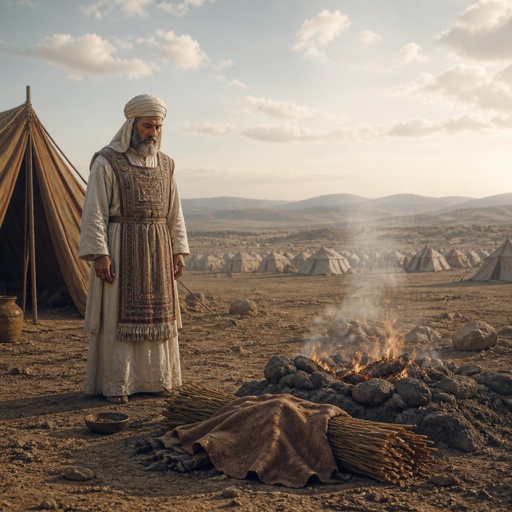
"But the bullock, and his hide, his flesh, and his dung, he burnt with fire without the camp; as the LORD commanded Moses." - Leviticus 8:17
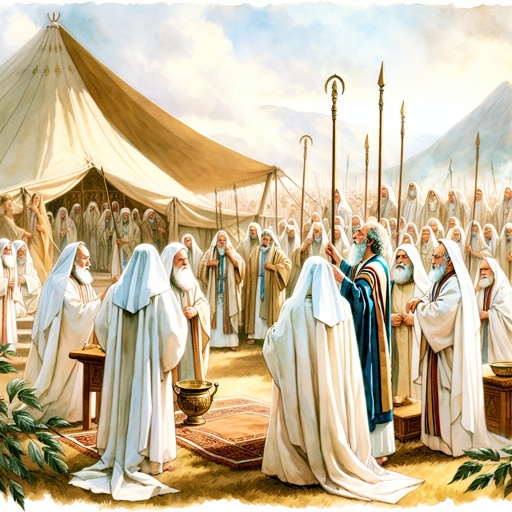
Leviticus 8:1-12

Leviticus 8:8 - "And he put the breastplate upon him: also he put in the breastplate the Urim and the Thummim."

Leviticus 7:17 - "But the remainder of the flesh of the sacrifice on the third day shall be burnt with fire."

Leviticus 6:8 - "¶ And the LORD spake unto Moses, saying,"
Leviticus 10:8 - "¶ And the LORD spake unto Aaron, saying,"

Leviticus 24:17 - "¶ And he that killeth any man shall surely be put to death."

Leviticus 8:1 - "And the LORD spake unto Moses, saying,"

Leviticus 8:32 - "And that which remaineth of the flesh and of the bread shall ye burn with fire."

Leviticus 17:3 - "What man soever there be of the house of Israel, that killeth an ox, or lamb, or goat, in the camp, or that killeth it out of the camp,"

Leviticus 15:17 - "And every garment, and every skin, whereon is the seed of copulation, shall be washed with water, and be unclean until the even."

Leviticus 8:6 - "And Moses brought Aaron and his sons, and washed them with water."

Leviticus 8:19 - "And he killed it; and Moses sprinkled the blood upon the altar round about."

Leviticus 8:3 - "And gather thou all the congregation together unto the door of the tabernacle of the congregation."

Leviticus 8:5 - "And Moses said unto the congregation, This is the thing which the LORD commanded to be done."

"¶ And the LORD spake unto Moses, saying," - Leviticus 22:17

"And the LORD spake unto Moses, saying," - Leviticus 17:1

"And the little owl, and the cormorant, and the great owl," - Leviticus 11:17

Leviticus 27:17 - "If he sanctify his field from the year of jubile, according to thy estimation it shall stand."

Leviticus 17:16 - "But if he wash them not, nor bathe his flesh; then he shall bear his iniquity."