The Call of the Blemish-Free Sacrifice
“And if his offering be of the flocks, namely, of the sheep, or of the goats, for a burnt sacrifice; he shall bring it a male without blemish.” — Leviticus 1:10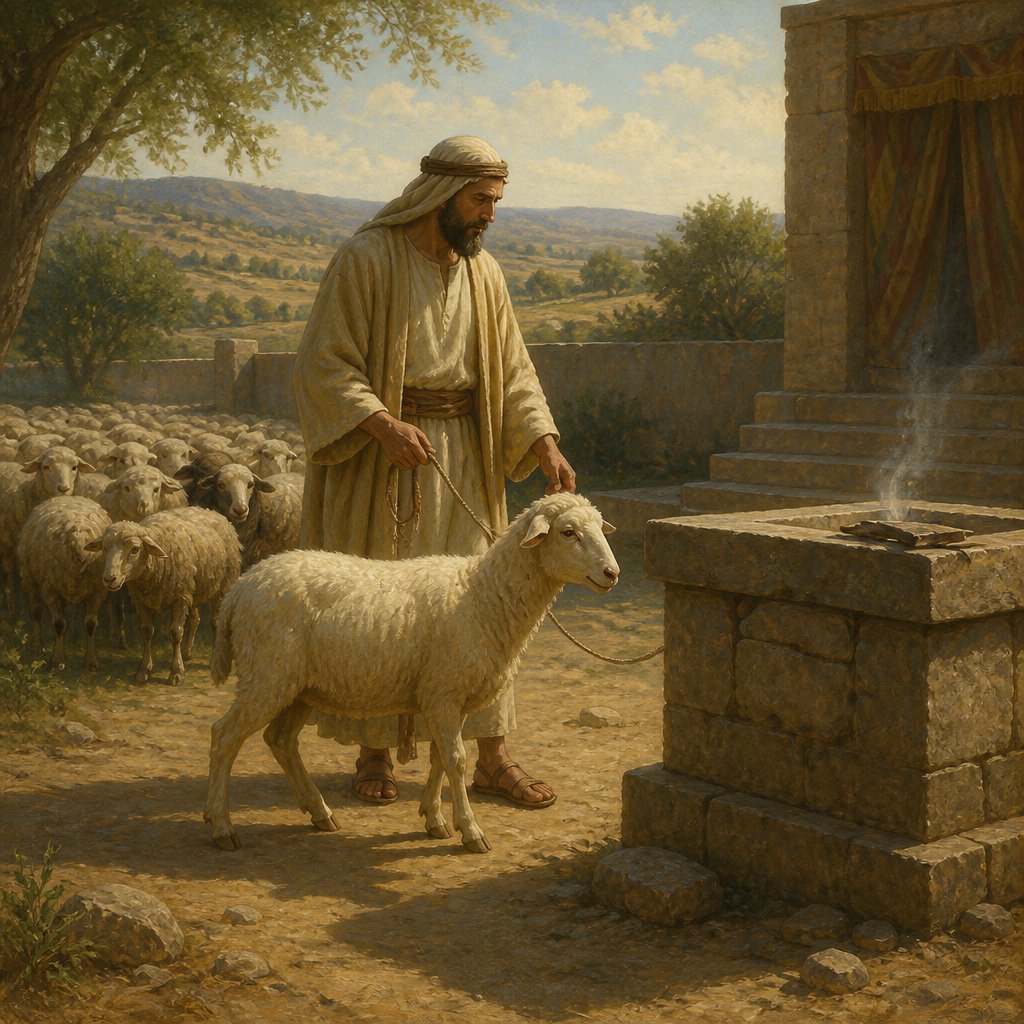
Leviticus 1:10 states, "And if his offering be of the flocks, namely, of the sheep, or of the goats, for a burnt sacrifice; he shall bring it a male without blemish." At first glance, this passage might seem like an obscure instruction from an ancient text far removed from our daily lives. However, delving into its depths unveils profound truths that resonate with our walk with God and His expectations of us.
In the context of Leviticus, the regulations set forth by Moses are about holiness and the intimate relationship God desires with His people. The burnt offerings described here were intended as acts of worship, a means of atonement, and expressions of thanksgiving. They symbolized the speaker’s recognition of God's sovereignty and their willingness to offer a part of their substance back to Him.
The scripture draws particular attention to the specification of the animal being a "male without blemish." The emphasis on a sacrificial animal without defects carries deep theological weight, for it foreshadows the perfect and ultimate sacrifice of Jesus Christ, the Lamb of God, who was without sin and blemish. The requirement for unblemished sacrifices reveals God’s demand for purity, holiness, and excellence in our offerings.
When we consider what it means to present ourselves as living sacrifices (Romans 12:1), it raises the question—are we offering our best to God? The invitation to bring a male without blemish obligates us to examine our own lives. Are we offering to God the best of our time, talents, and resources? Or are we holding back, thinking that a half-hearted attempt is good enough?
God’s standard of ‘without blemish’ challenges us to pursue a life that is marked by integrity, righteousness, and a heart geared towards Him. It compels us to reflect on the sacrifices we bring to our worship, our service, and our daily living. Our lives should be like that lamb—pure and submission to God’s will, unhindered by sin, and willing to walk in the light of His truth.
Moreover, it teaches us about grace. The requirement of a flawless animal for sacrifice can evoke a sense of despair in our own inadequacies. However, the beauty of the Gospel is that while we may never live up to the standard by our own means, we have a Savior who fulfills this requirement on our behalf. Jesus, the unblemished Lamb, took upon Himself the sins of the world, allowing us, through faith, to approach God with confidence. With Christ as our advocate, we can be sure that our flaws do not disqualify us from fellowship with Him.
The act of bringing a sacrifice to God is also deeply connected to the idea of surrender. When the Israelites brought forth their unblemished sheep or goats, they were making a statement of trust in God’s provision and His desires. When we bring our own sacrifices—be they our time, our resources, or our very lives—we acknowledge that everything we have comes from God. Surrendering these offerings requires us to relinquish control, embracing faith over fear; it invites the Holy Spirit to act powerfully through our lives.
As you reflect on Leviticus 1:10 today, consider what unblemished sacrifices you can offer. What does it mean to come before God without blemish in the spirit of your thoughts, actions, and deeds?
Let us pray: Lord, help us to recognize the importance of bringing our best to You. Forgive us for the times we have offered You our leftovers instead of our first fruits. Teach us to live lives of holiness, and may we look to Jesus, the perfect sacrifice, as our example. May our offerings be pure, fully surrendered, and reflective of Your love and grace in our lives. In Jesus’s name, Amen.
Get our apps


Artwork for Leviticus 1:10

Leviticus 1:10 - "¶ And if his offering be of the flocks, namely, of the sheep, or of the goats, for a burnt sacrifice; he shall bring it a male without blemish."
"¶ And if his offering be of the flocks, namely, of the sheep, or of the goats, for a burnt sacrifice; he shall bring it a male without blemish." - Leviticus 1:10

Leviticus 10:10 - "And that ye may put difference between holy and unholy, and between unclean and clean;"

leviticus 16:7-10

Leviticus 10:20 - "And when Moses heard that, he was content."
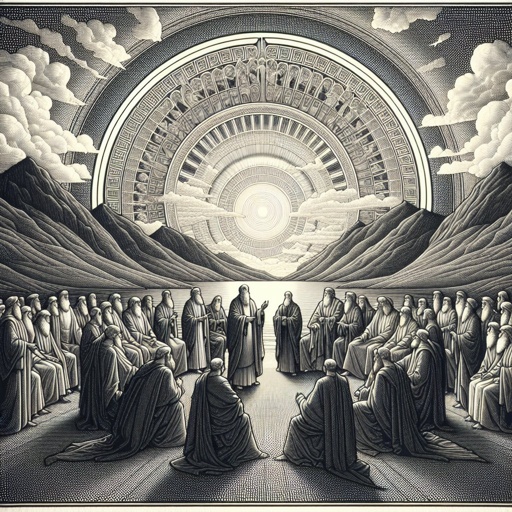
Leviticus 10:8 - "¶ And the LORD spake unto Aaron, saying,"

Leviticus 10:1 - "And Nadab and Abihu, the sons of Aaron, took either of them his censer, and put fire therein, and put incense thereon, and offered strange fire before the LORD, which he commanded them not."

Leviticus 10:2 - "And there went out fire from the LORD, and devoured them, and they died before the LORD."

Leviticus 26:10 - "And ye shall eat old store, and bring forth the old because of the new."

Leviticus 8:10 - "And Moses took the anointing oil, and anointed the tabernacle and all that was therein, and sanctified them."

Leviticus 10:5 - "So they went near, and carried them in their coats out of the camp; as Moses had said."
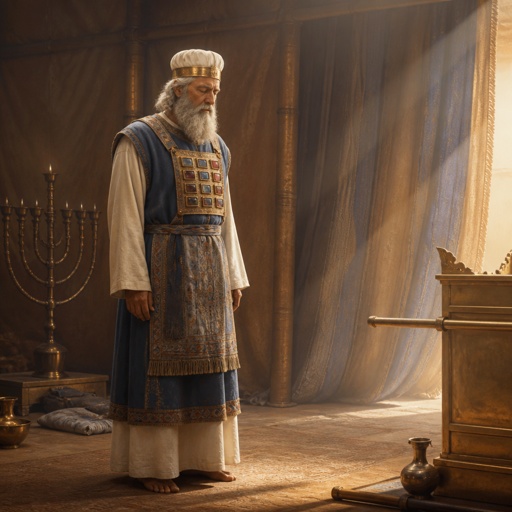
"¶ And the LORD spake unto Aaron, saying," - Leviticus 10:8
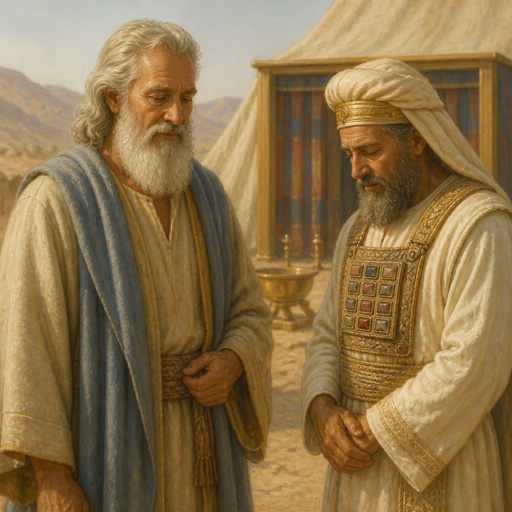
"And when Moses heard that, he was content." - Leviticus 10:20
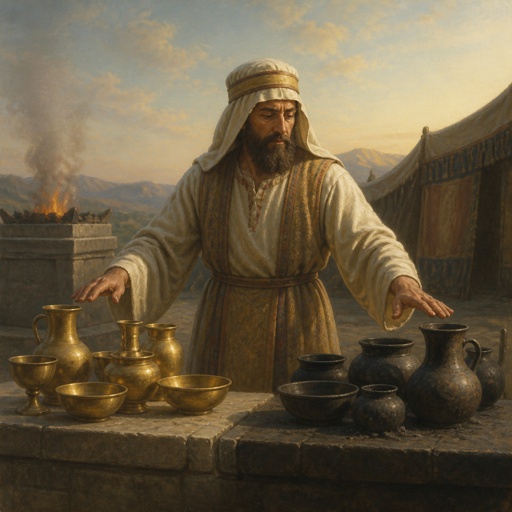
"And that ye may put difference between holy and unholy, and between unclean and clean;" - Leviticus 10:10

Leviticus 22:10 - "There shall no stranger eat of the holy thing: a sojourner of the priest, or an hired servant, shall not eat of the holy thing."

Leviticus 7:10 - "And every meat offering, mingled with oil, and dry, shall all the sons of Aaron have, one as much as another."

Leviticus 23:21

Leviticus 14:51

Leviticus 23:21

Leviticus 23:20

Leviticus 23:21

Leviticus 23:21

Leviticus 23:21

Leviticus 23:21

Leviticus 9:10 - "But the fat, and the kidneys, and the caul above the liver of the sin offering, he burnt upon the altar; as the LORD commanded Moses."

Leviticus 10:11 - "And that ye may teach the children of Israel all the statutes which the LORD hath spoken unto them by the hand of Moses."
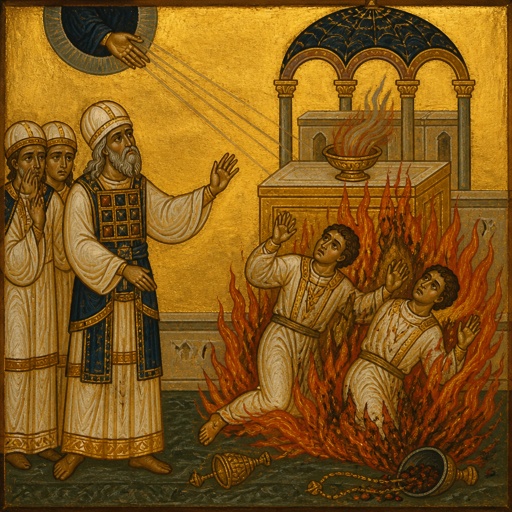
Leviticus 10 Aaron’s son burned alive for offering strange fire and incense.

Leviticus 3:10 - "And the two kidneys, and the fat that is upon them, which is by the flanks, and the caul above the liver, with the kidneys, it shall he take away."

Leviticus 10:18 - "Behold, the blood of it was not brought in within the holy place: ye should indeed have eaten it in the holy place, as I commanded."

Leviticus 4:10 - "As it was taken off from the bullock of the sacrifice of peace offerings: and the priest shall burn them upon the altar of the burnt offering."