What does Leviticus 1:10 mean?
“And if his offering be of the flocks, namely, of the sheep, or of the goats, for a burnt sacrifice; he shall bring it a male without blemish.” — Leviticus 1:10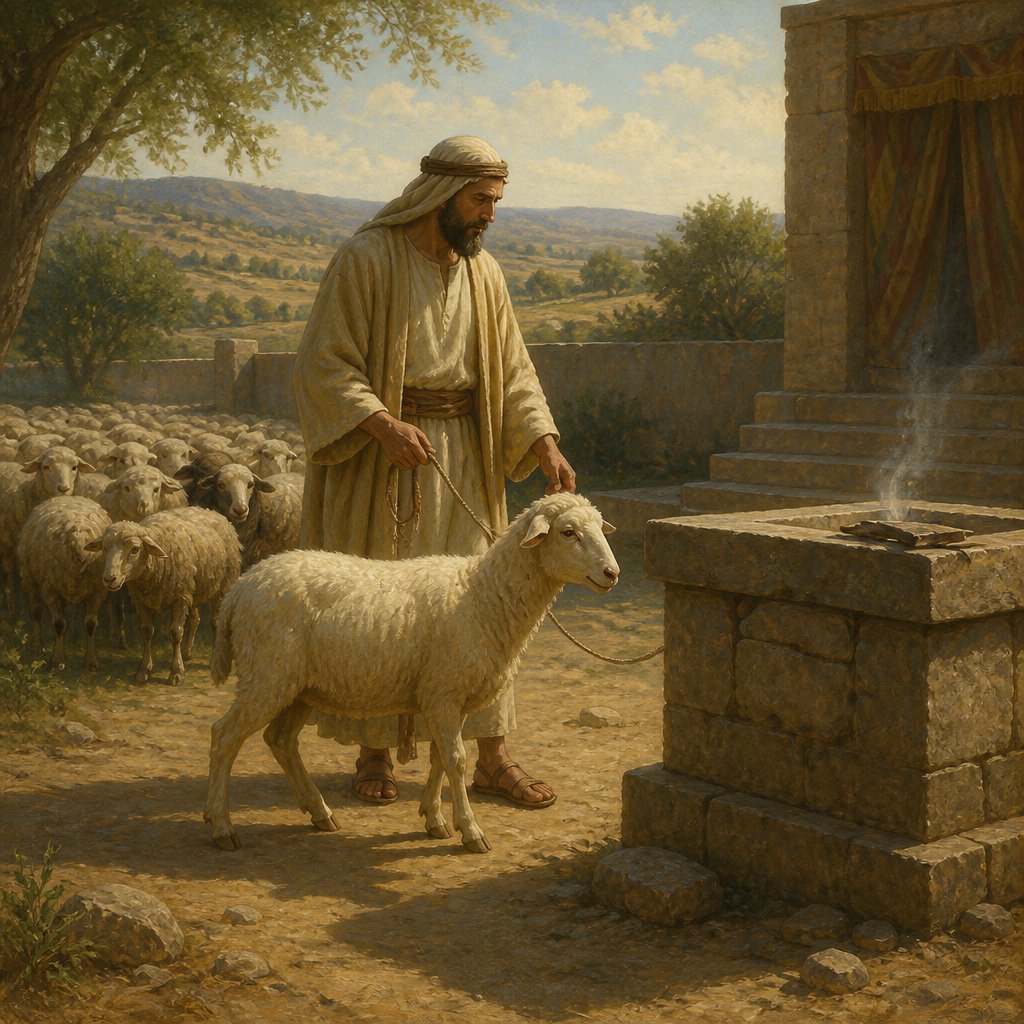
Leviticus 1:10 (KJV) says, "And if his offering be of the flocks, namely, of the sheep, or of the goats, for a burnt sacrifice; he shall bring it a male without blemish." This verse is part of a passage in Leviticus that outlines the procedures for making burnt offerings to the Lord. In this particular verse, the focus is on the requirement that the animal being offered for sacrifice must be a male without blemish.
To truly understand the significance of this verse, it is necessary to explore the broader context of the book of Leviticus and the cultural and religious implications of burnt offerings in ancient Israelite society. Leviticus is the third book of the Bible and is primarily concerned with matters of religious ritual and purity. It is known for its detailed instructions on the practices and regulations of the Israelite priesthood, including guidelines for sacrifices, festivals, and dietary laws. The book of Leviticus is considered a central text in the Hebrew Bible and has had a profound influence on Jewish and Christian religious practices.
In the broader context of the book of Leviticus, the concept of sacrifice is central to the Israelite religious system. Burnt offerings were a key form of worship and were seen as a way for the Israelites to show their devotion to God and seek atonement for their sins. In offering an animal without blemish, the worshipper was demonstrating their commitment to giving God their best and acknowledging His holiness and perfection. The requirement for an unblemished male animal also symbolized the purity and completeness of the sacrifice, emphasizing the seriousness of the act of atonement and the need for a perfect offering to reconcile with a holy God.
The theme of purity and perfection is further emphasized in Leviticus 22:20-25, where it is made clear that any animal with a defect or blemish is unacceptable for sacrifice. This underscores the idea that the sacrifice must be without imperfection in order to be deemed worthy to be offered to the Lord. The emphasis on the quality of the sacrifice reflects the Israelite understanding of God's holiness and the need for humanity to strive for excellence in their worship and devotion.
Symbolically, the requirement for a male without blemish in the burnt offering can be seen as a foreshadowing of the ultimate sacrifice of Jesus Christ in Christian theology. In the New Testament, Jesus is often portrayed as the unblemished Lamb of God who takes away the sins of the world. The parallels between the unblemished sacrificial animals in Leviticus and the sacrificial death of Jesus are clear, highlighting the continuity and fulfillment of the sacrificial system in the Hebrew Bible with the person and work of Christ in the New Testament.
Leviticus 1:10 also carries ethical and spiritual implications for believers today. The demand for an unblemished male animal as a burnt offering challenges Christians to reflect on the quality of their worship and devotion to God. It prompts believers to consider the sincerity and purity of their hearts in offering themselves as living sacrifices, as the apostle Paul exhorts in Romans 12:1. Furthermore, the imagery of unblemished sacrifice points to the importance of personal integrity and moral purity in the life of a follower of God.
In conclusion, Leviticus 1:10 is a verse that is rich in theological and symbolic significance. It reflects the ancient Israelite understanding of the requirements for offering burnt sacrifices, emphasizing purity, perfection, and the need for a flawless offering to atone for sins. The verse also carries implications for the Christian understanding of sacrifice and worship, pointing to the ultimate sacrificial work of Jesus Christ. As such, Leviticus 1:10 invites believers to consider the quality and integrity of their worship and devotion, and to strive for moral and spiritual purity in their lives.
Get our apps


Artwork for Leviticus 1:10

Leviticus 1:10 - "¶ And if his offering be of the flocks, namely, of the sheep, or of the goats, for a burnt sacrifice; he shall bring it a male without blemish."
"¶ And if his offering be of the flocks, namely, of the sheep, or of the goats, for a burnt sacrifice; he shall bring it a male without blemish." - Leviticus 1:10

Leviticus 10:10 - "And that ye may put difference between holy and unholy, and between unclean and clean;"

leviticus 16:7-10

Leviticus 10:20 - "And when Moses heard that, he was content."
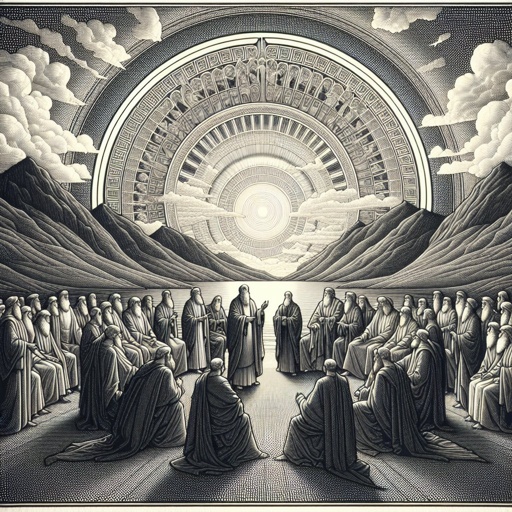
Leviticus 10:8 - "¶ And the LORD spake unto Aaron, saying,"

Leviticus 10:1 - "And Nadab and Abihu, the sons of Aaron, took either of them his censer, and put fire therein, and put incense thereon, and offered strange fire before the LORD, which he commanded them not."

Leviticus 10:2 - "And there went out fire from the LORD, and devoured them, and they died before the LORD."

Leviticus 26:10 - "And ye shall eat old store, and bring forth the old because of the new."

Leviticus 8:10 - "And Moses took the anointing oil, and anointed the tabernacle and all that was therein, and sanctified them."

Leviticus 10:5 - "So they went near, and carried them in their coats out of the camp; as Moses had said."
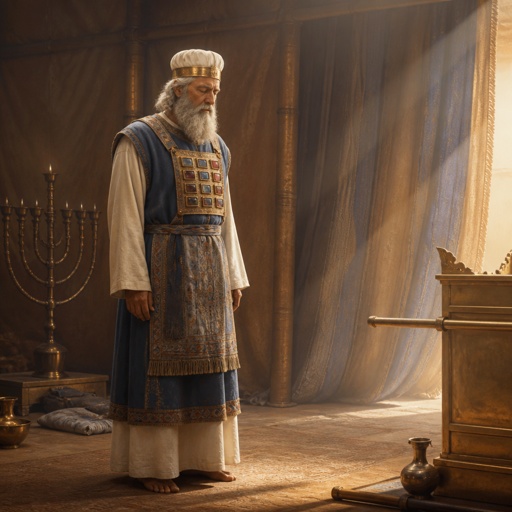
"¶ And the LORD spake unto Aaron, saying," - Leviticus 10:8
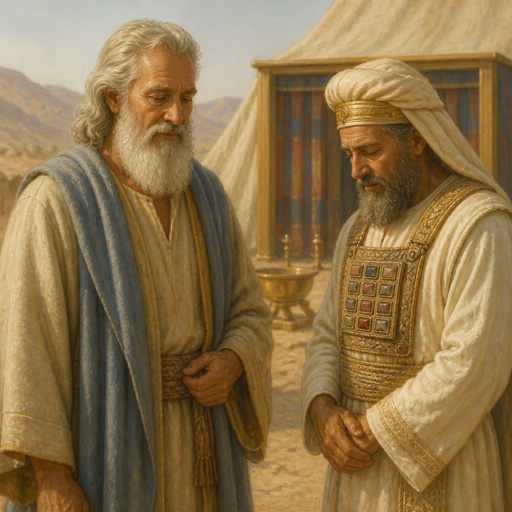
"And when Moses heard that, he was content." - Leviticus 10:20
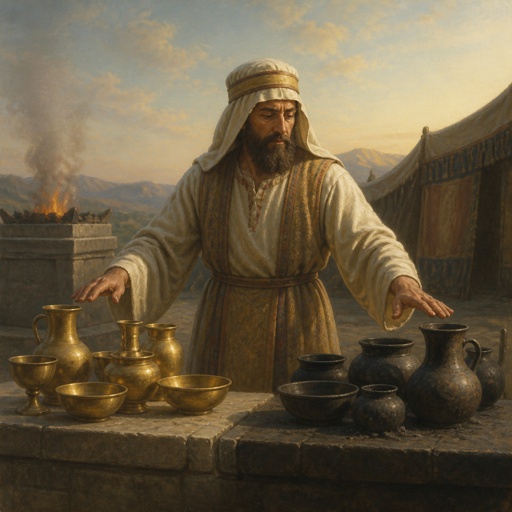
"And that ye may put difference between holy and unholy, and between unclean and clean;" - Leviticus 10:10

Leviticus 22:10 - "There shall no stranger eat of the holy thing: a sojourner of the priest, or an hired servant, shall not eat of the holy thing."

Leviticus 7:10 - "And every meat offering, mingled with oil, and dry, shall all the sons of Aaron have, one as much as another."

Leviticus 23:21

Leviticus 14:51

Leviticus 23:21

Leviticus 23:20

Leviticus 23:21

Leviticus 23:21

Leviticus 23:21

Leviticus 23:21

Leviticus 9:10 - "But the fat, and the kidneys, and the caul above the liver of the sin offering, he burnt upon the altar; as the LORD commanded Moses."

Leviticus 10:11 - "And that ye may teach the children of Israel all the statutes which the LORD hath spoken unto them by the hand of Moses."
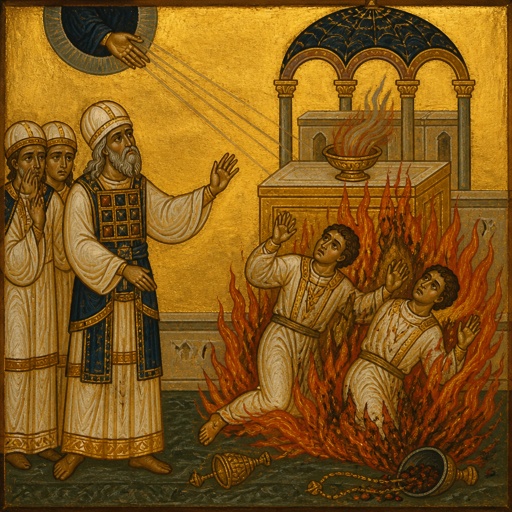
Leviticus 10 Aaron’s son burned alive for offering strange fire and incense.

Leviticus 3:10 - "And the two kidneys, and the fat that is upon them, which is by the flanks, and the caul above the liver, with the kidneys, it shall he take away."

Leviticus 10:18 - "Behold, the blood of it was not brought in within the holy place: ye should indeed have eaten it in the holy place, as I commanded."

Leviticus 4:10 - "As it was taken off from the bullock of the sacrifice of peace offerings: and the priest shall burn them upon the altar of the burnt offering."