The Call to Compassion: Living Out Leviticus 25:36
“Take thou no usury of him, or increase: but fear thy God; that thy brother may live with thee.” — Leviticus 25:36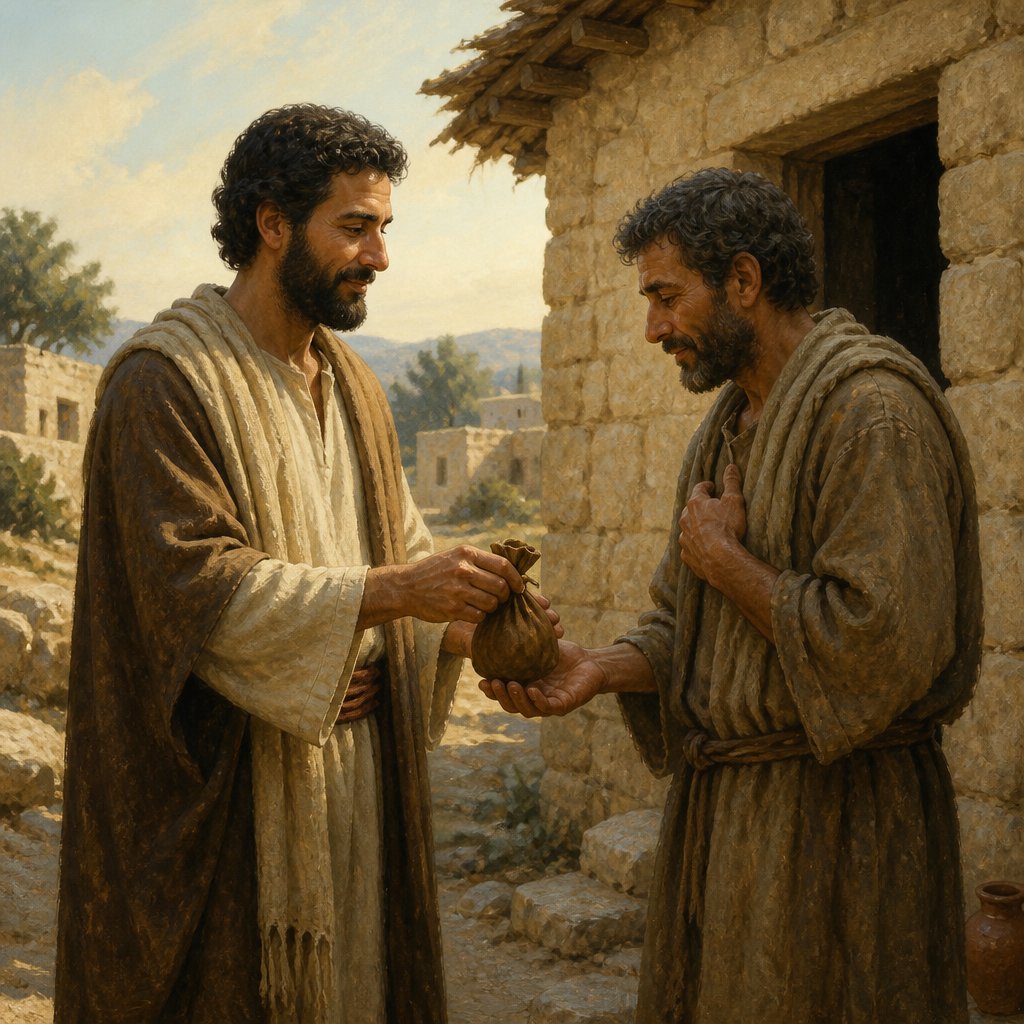
In the heart of the Old Testament, the book of Leviticus was God’s instruction manual to His people. A collection of laws and decrees, its purpose was to set the Israelites apart as a holy nation, enabling them to live in covenant relationship with Him. One such directive can be found in Leviticus 25:36, which states, “Take thou no usury of him, or increase: but fear thy God; that thy brother may live with thee.” At first glance, this decree seems to be strictly about financial transactions—particularly prohibiting the charging of interest on loans given to fellow Israelites. However, a deeper exploration reveals timeless principles concerning our relationships with others, the nature of charity, and the fear of God.
To understand the weight of this verse, we must acknowledge the cultural context of ancient Israel. In a society heavily reliant on agrarian systems, many citizens would find themselves in need. Economic hardship could lead one to borrow from a neighbor, and yet, out of a spirit of greed, the lender could exploit this need by charging exorbitant interest or “usury.” God's commandment acts as a safeguard against such exploitative practices, positioning compassion and brotherhood at the center of human interactions. When God says, "Take thou no usury of him, or increase," He is emphasizing that our relationships should not be governed by profit at the expense of our brethren—it demands of us generosity over greed.
This directive is not simply about the act of lending; it speaks to a broader principle of mutual care within the community. God’s desire is for His people to flourish together, and for each person’s well-being to be valued over financial gain. When we consider this in the light of modern society, the challenges remain strikingly similar. The rush for profit and the tendency to self-serve often lead to neglecting those around us who are in need. We find ourselves facing an economy that can pressure us into seeing financial interactions as merely transactional rather than relational.
The latter part of the verse, “but fear thy God,” serves as a profound reminder of the divine perspective that should govern our actions. "Fear" in this context highlights reverence and awe—recognizing God’s authority and His expectations for how we engage with others. God's call to fear Him underscores that our treatment of one another is a reflection of our relationship with Him. To fear God is to acknowledge that every act of kindness or exploitation does not go unnoticed. Our interactions are rooted in a larger narrative of God’s justice and mercy. As we lend a hand to our brothers and sisters, we are ultimately serving God.
The phrase “that thy brother may live with thee” encapsulates the promise of community and life in relationship. When we practice forgiveness and generosity, we nurture an environment where life can thrive—spiritually, emotionally, and physically. God’s desire is for His people to cultivate a society wherein every individual experiences the fullness of life, which His design intended. To live together in community is to share in the struggles, successes, and joys of one another, thus fulfilling the essence of the body of believers.
In applying Leviticus 25:36 to our lives, we are called to cultivate hearts of compassion and community-driven actions. Is there someone in your sphere of influence in need of help—be it financial, emotional, or spiritual? Do we view our resources as personal possessions or as tools for community building? The true measure of faith lies not only in our reverence for God but also in our active love for our neighbors.
Let us strive to embody these principles as we go through our daily lives, continually asking—"How can I support my brother today?” And as we do so, we not only honor God, but we reflect His love to those around us, demonstrating that through compassion, fear of God, and neighborly love, we are thriving as a collective community, living fully together, as He intends.
Get our apps


Artwork for Leviticus 25:36

Leviticus 25:36 - "Take thou no usury of him, or increase: but fear thy God; that thy brother may live with thee."
"Take thou no usury of him, or increase: but fear thy God; that thy brother may live with thee." - Leviticus 25:36

Genesis 36:25 - "And the children of Anah were these; Dishon, and Aholibamah the daughter of Anah."

Leviticus 8:36 - "So Aaron and his sons did all things which the LORD commanded by the hand of Moses."

Leviticus 11:36 - "Nevertheless a fountain or pit, wherein there is plenty of water, shall be clean: but that which toucheth their carcase shall be unclean."

Job 36:25 - "Every man may see it; man may behold it afar off."

Leviticus 13:36 - "Then the priest shall look on him: and, behold, if the scall be spread in the skin, the priest shall not seek for yellow hair; he is unclean."

Exodus 36:25 - "And for the other side of the tabernacle, which is toward the north corner, he made twenty boards,"

Exodus 25:36 - "Their knops and their branches shall be of the same: all it shall be one beaten work of pure gold."

Leviticus 7:36 - "Which the LORD commanded to be given them of the children of Israel, in the day that he anointed them, by a statute for ever throughout their generations."

Leviticus 25:26 - "And if the man have none to redeem it, and himself be able to redeem it;"

Jeremiah 25:36 - "A voice of the cry of the shepherds, and an howling of the principal of the flock, shall be heard: for the LORD hath spoiled their pasture."

Leviticus 25:34 - "But the field of the suburbs of their cities may not be sold; for it is their perpetual possession."

Leviticus 25:1 - "And the LORD spake unto Moses in mount Sinai, saying,"

Leviticus 16:25 - "And the fat of the sin offering shall he burn upon the altar."

Leviticus 25:24 - "And in all the land of your possession ye shall grant a redemption for the land."

Leviticus 25:13 - "In the year of this jubile ye shall return every man unto his possession."

Leviticus 25:23 - "¶ The land shall not be sold for ever: for the land is mine; for ye are strangers and sojourners with me."

Leviticus 25:7 - "And for thy cattle, and for the beast that are in thy land, shall all the increase thereof be meat."

Matthew 25:36 - "Naked, and ye clothed me: I was sick, and ye visited me: I was in prison, and ye came unto me."

Leviticus 25:43 - "Thou shalt not rule over him with rigour; but shalt fear thy God."

Leviticus 25:32 - "Notwithstanding the cities of the Levites, and the houses of the cities of their possession, may the Levites redeem at any time."

Leviticus 27:25 - "And all thy estimations shall be according to the shekel of the sanctuary: twenty gerahs shall be the shekel."

Jeremiah 36:25 - "Nevertheless Elnathan and Delaiah and Gemariah had made intercession to the king that he would not burn the roll: but he would not hear them."

Leviticus 25:25 - "¶ If thy brother be waxen poor, and hath sold away some of his possession, and if any of his kin come to redeem it, then shall he redeem that which his brother sold."

"And the children of Anah were these; Dishon, and Aholibamah the daughter of Anah." - Genesis 36:25

Leviticus 14:36 - "Then the priest shall command that they empty the house, before the priest go into it to see the plague, that all that is in the house be not made unclean: and afterward the priest shall go in to see the house:"

Leviticus 25:12 - "For it is the jubile; it shall be holy unto you: ye shall eat the increase thereof out of the field."

Leviticus 25:40 - "But as an hired servant, and as a sojourner, he shall be with thee, and shall serve thee unto the year of jubile:"

Cycle of sabbath rest year. Leviticus 25:1-7