Rest for the Land: Lessons from Leviticus 26:43
“The land also shall be left of them, and shall enjoy her sabbaths, while she lieth desolate without them: and they shall accept of the punishment of their iniquity: because, even because they despised my judgments, and because their soul abhorred my statutes.” — Leviticus 26:43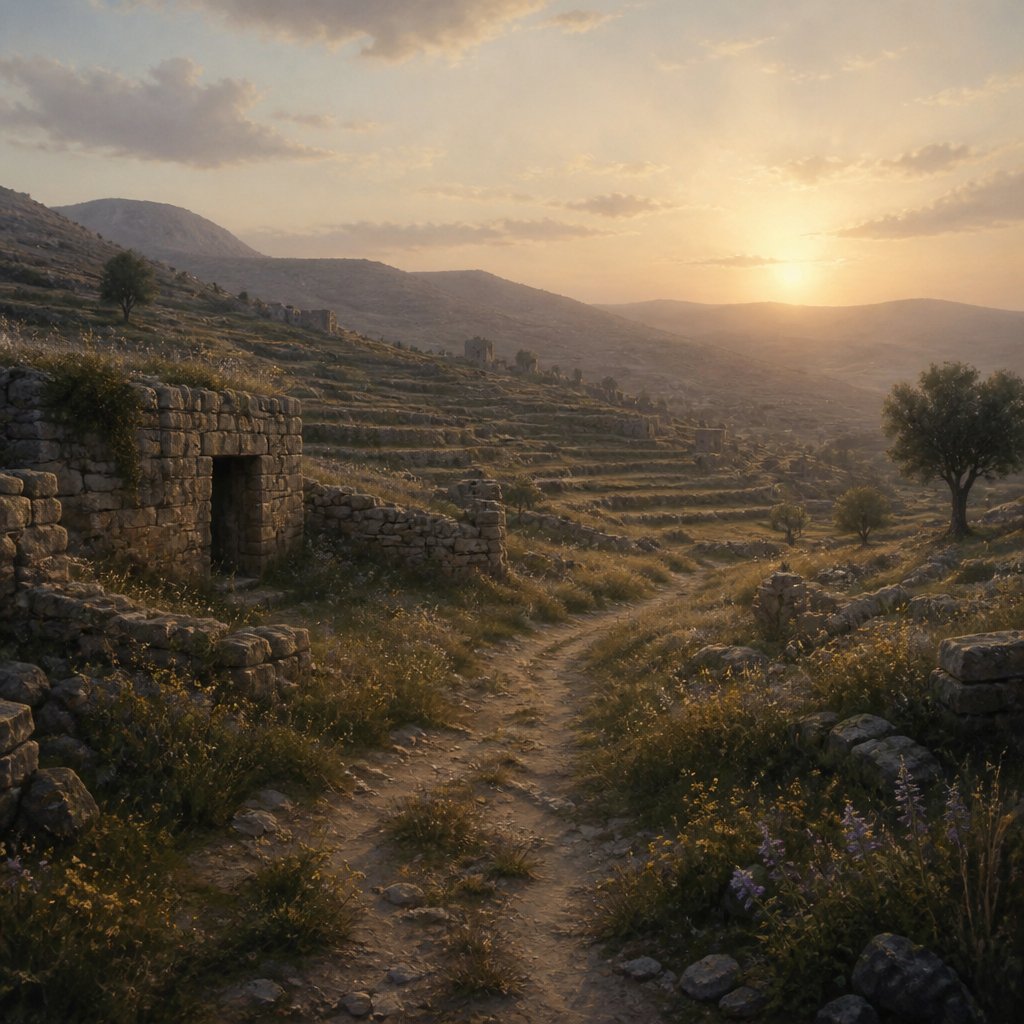
Leviticus 26:43 (KJV) reads, "The land also shall be left of them, and shall enjoy her sabbaths, while she lieth desolate without them: and they shall accept of the punishment of their iniquity: because, even because they despised my judgments, and because their soul abhorred my statutes."
This verse, nestled within the poignant chapter of God’s covenant with the Israelites, carries significant weight in understanding divine justice, human responsibility, and the intrinsic relationship between the land and its people. As we delve deeper, we are invited to reflect on the themes of rest, consequence, and redemption.
God’s conversation through Moses to the Israelites in Leviticus assumes a tone of both authority and sorrow. The Holy Land, heir to the covenantal blessings and a reflection of God’s providence, becomes the living example of a relationship strained by disobedience. When the Lord speaks of the sabbaths the land shall enjoy, it is essential to recognize that this is not merely a statement about agricultural cycles; it’s an echo of the divine order established at creation, where rest signifies restoration and abundance.
The sabbaths of the land were part of God’s original design. Just as God rested on the seventh day (Genesis 2:2), He ordained that the land too would need its periods of rest every seven years. This divine setup was intended to remind His people of their need to surrender and trust in His provision. In failing to honor this commandment, the Israelites exhibited a fundamental misunderstanding of their dependence on God, leading them into neglect and, eventually, disobedience.
God’s judgment is evident when He declares, "they shall accept of the punishment of their iniquity." Here lies a profound truth: punishment is seen not as vindictiveness but as a constructive response aimed at restoration. The desolation of the land while the Israelites are in exile comes as a clear indication of the consequences of their actions. When human beings are reluctant to acknowledge their wrongdoings, God sometimes has to step in to facilitate recognition.
Consider this, the phrase “accept the punishment of their iniquity” is pivotal. It reflects an attitude that goes beyond mere acknowledgment of wrongdoing to actively embracing the consequences. Accepting punishment opens a pathway to repentance and renewal. It prompts the question: Are we willing to accept our own spiritual shortcomings and turn back to God? In our lives, how often do we simply want God's grace but avoid the responsibility of acknowledging our failings?
The deeper aspect of this scripture lies in how it relates to our relationship with God's statutes and judgments. The verse states, "because they despised my judgments, and because their soul abhorred my statutes." They turned away not just from typical laws; they turned from the very essence of what maintains the sanctity of their covenant relationship with God. To despise God's commandments is to reject the very blueprint for a thriving and purpose-driven life. In our contemporary age, we might not explicitly despise the Scriptures, yet our actions may portray indifference towards God’s direction in our lives. How often do we let culture or convenience dictate our beliefs and practices?
Therefore, let Leviticus 26:43 act as a call to introspection. As the Israelites faced desolation, we must consider the areas in our lives where we might be neglecting God’s commandments or experiencing a ‘desolation’ due to our estrangement from Him. This verse encourages us not only to recognize the consequences of iniquity but also to embrace the grace of repentance—a return to God’s loving arms facilitates the restoration of both our souls and the brokenness in our lives.
In prayer, let us ask for the humility to accept our shortcomings, the wisdom to understand God’s judgments, and the reverence to restore our relationship with Him. May we honor God’s sabbaths in our lives so that both we and the land we inhabit may flourish under His divine care.
Get our apps


Artwork for Leviticus 26:43

Leviticus 26:43 - "The land also shall be left of them, and shall enjoy her sabbaths, while she lieth desolate without them: and they shall accept of the punishment of their iniquity: because, even because they despised my judgments, and because their soul abhorred my statutes."
"The land also shall be left of them, and shall enjoy her sabbaths, while she lieth desolate without them: and they shall accept of the punishment of their iniquity: because, even because they despised my judgments, and because their soul abhorred my statutes." - Leviticus 26:43
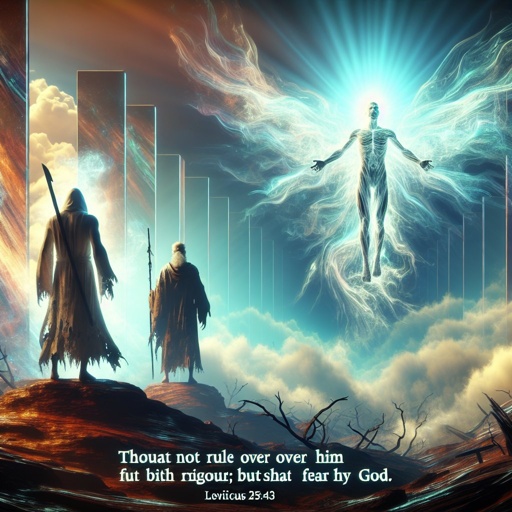
Leviticus 25:43 - "Thou shalt not rule over him with rigour; but shalt fear thy God."

Matthew 26:43 - "And he came and found them asleep again: for their eyes were heavy."

Isaiah 43:26 - "Put me in remembrance: let us plead together: declare thou, that thou mayest be justified."

Numbers 26:43 - "All the families of the Shuhamites, according to those that were numbered of them, were threescore and four thousand and four hundred."

Leviticus 26: 4-6

Leviticus 26: 4-6
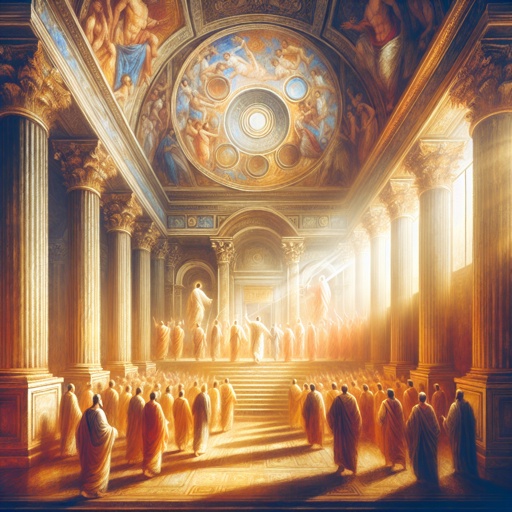
Leviticus 26: 4-6

Genesis 43:26 - "¶ And when Joseph came home, they brought him the present which was in their hand into the house, and bowed themselves to him to the earth."

Leviticus 14:43 - "And if the plague come again, and break out in the house, after that he hath taken away the stones, and after he hath scraped the house, and after it is plaistered;"

Leviticus 23:26 - "¶ And the LORD spake unto Moses, saying,"

Leviticus 22:26 - "¶ And the LORD spake unto Moses, saying,"

Leviticus 13:43 - "Then the priest shall look upon it: and, behold, if the rising of the sore be white reddish in his bald head, or in his bald forehead, as the leprosy appeareth in the skin of the flesh;"

Ezekiel 43:26 - "Seven days shall they purge the altar and purify it; and they shall consecrate themselves." The image should not depict explicit or offensive content but be symbolic.

Leviticus 11:43 - "Ye shall not make yourselves abominable with any creeping thing that creepeth, neither shall ye make yourselves unclean with them, that ye should be defiled thereby."

Leviticus 26:14 - "¶ But if ye will not hearken unto me, and will not do all these commandments;"

Leviticus 25:26 - "And if the man have none to redeem it, and himself be able to redeem it;"

Leviticus 23:43 - "That your generations may know that I made the children of Israel to dwell in booths, when I brought them out of the land of Egypt: I am the LORD your God."

Leviticus 20:22-26 simple picture

Picture to summarize Leviticus 20:22-26

"Thou shalt not rule over him with rigour; but shalt fear thy God." - Leviticus 25:43

Leviticus 26:23 - "And if ye will not be reformed by me by these things, but will walk contrary unto me;"

"Seven days shall they purge the altar and purify it; and they shall consecrate themselves." - Ezekiel 43:26

Leviticus 26:3 - "¶ If ye walk in my statutes, and keep my commandments, and do them;"

Leviticus 14:26 - "And the priest shall pour of the oil into the palm of his own left hand:"

Leviticus 26:27 - "And if ye will not for all this hearken unto me, but walk contrary unto me;"

Leviticus 26:7 - "And ye shall chase your enemies, and they shall fall before you by the sword."

"And he came and found them asleep again: for their eyes were heavy." - Matthew 26:43

Leviticus 26:12 - "And I will walk among you, and will be your God, and ye shall be my people."