Listening to the Voice of God: A Call to Obedience and Action
“And the LORD spake unto Moses, saying,” — Leviticus 4:1
"And the LORD spake unto Moses, saying..." (Leviticus 4:1 KJV)
In the quietude of the wilderness, amidst the vastness of God's creation, we find one of the most profound truths in the interaction between God and humanity: our calling to listen and respond to God's voice. Leviticus 4:1 begins with a powerful affirmation of God's desire to communicate with His people through Moses, illustrating the essential role of divine instruction in our lives. Here, we unpack the significance of God's voice, the importance of our response, and how we navigate our daily journey of faith.
As we reflect on this passage, we see that God speaks. This should instill hope and encouragement in our hearts. In a world filled with noise, distractions, and chaos, the Lord still finds a way to communicate His will and purpose to us. He desires to guide us, admonish us, and draw us closer to Himself. The opening phrase, "And the LORD spake unto Moses," is an invitation for us to lean into a personal relationship with God. Just as He spoke to Moses, He speaks to us through His Word, through prayer, and sometimes through the counsel of other believers.
Every encounter with God requires us to listen attentively. Imagine the setting: Moses, surrounded by the tumult of the Israelite camp, was called to silence the noise and focus on God's voice. This is critical for us, too. Listening to God necessitates intentionality. We must carve out time in our lives to read scripture, pray, and be still before Him. Psalm 46:10 reminds us, "Be still, and know that I am God." When we adopt a posture of listening, we position ourselves to receive guidance not only for spiritual matters but also for our daily decisions and the challenges we face.
Obedience is a natural response to hearing God's voice. After God spoke to Moses, the subsequent chapters unfold a comprehensive approach towards sin offerings and atonement, illustrating the seriousness of sin and the holiness of God. This highlights a critical truth: when we hear God's commands, our calling is to obey. God’s instructions often challenge us to confront our shortcomings, prioritize our relationships, and live a life of holiness.
The process of offering sacrifices outlined in Leviticus teaches us about the gravity of sin and the necessity of atonement. As New Testament believers, we can reflect on how Christ fulfilled these sacrificial systems through His ultimate act on the cross. While the sacrifices of old were important, they pointed to the greater need for redemption found in Jesus. Still, the principles of obedience remain unchanged.
Responding to God's voice involves active participation from our side. We cannot afford to merely listen; we must act. James 1:22 exhorts us, "But be ye doers of the word, and not hearers only, deceiving your own selves." What does your obedience look like in your current circumstances? Are there areas in your life where God is calling you to make a change, take a step of faith, or speak out in truth?
In conclusion, Leviticus 4:1 serves as a profound reminder of God’s proactive engagement in our lives. He speaks; are we listening? He commands; are we obeying? Throughout the book of Leviticus, we are invited not merely to view God’s laws as restrictive but as loving guidance that leads us toward wholeness. In our personal devotion, may we foster an ongoing dialogue with the Lord, be quick to listen, and have the courage to respond. In our obedience lies the pathway to abundant life, aligning ourselves with God's divine purpose.
Today, let us reflect: What is God saying to you in this season of your life? How can you respond to His voice in an act of faith and obedience?
Get our apps


Artwork for Leviticus 4:1

Leviticus 4:1 - "And the LORD spake unto Moses, saying,"

"And the LORD spake unto Moses, saying," - Leviticus 4:1

Leviticus 1:4 - "And he shall put his hand upon the head of the burnt offering; and it shall be accepted for him to make atonement for him."

Leviticus 26: 4-6

Leviticus 26: 4-6

Leviticus 26: 4-6

Leviticus 27:4 - "And if it be a female, then thy estimation shall be thirty shekels."

Leviticus 4:16 - "And the priest that is anointed shall bring of the bullock's blood to the tabernacle of the congregation:"

Leviticus 4:5 - "And the priest that is anointed shall take of the bullock's blood, and bring it to the tabernacle of the congregation:"

Leviticus 24:4 - "He shall order the lamps upon the pure candlestick before the LORD continually."

Leviticus 23:4 - "¶ These are the feasts of the LORD, even holy convocations, which ye shall proclaim in their seasons."

Leviticus 23:21

Leviticus 14:51

Leviticus 23:21

Leviticus 23:20

Leviticus 23:21

Leviticus 4:4 - "And he shall bring the bullock unto the door of the tabernacle of the congregation before the LORD; and shall lay his hand upon the bullock's head, and kill the bullock before the LORD."

Leviticus 4:32 - "And if he bring a lamb for a sin offering, he shall bring it a female without blemish."

Leviticus 4:19 - "And he shall take all his fat from him, and burn it upon the altar."

Leviticus 23:21

Leviticus 21:4 - "But he shall not defile himself, being a chief man among his people, to profane himself."

Leviticus 23:21

Leviticus 23:21
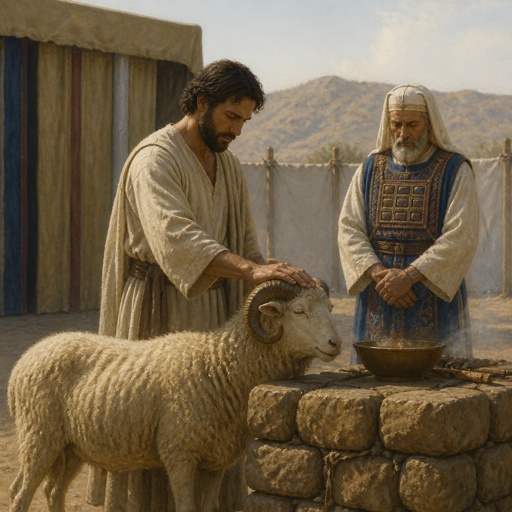
"And he shall put his hand upon the head of the burnt offering; and it shall be accepted for him to make atonement for him." - Leviticus 1:4

Leviticus 8:4 - "And Moses did as the LORD commanded him; and the assembly was gathered together unto the door of the tabernacle of the congregation."
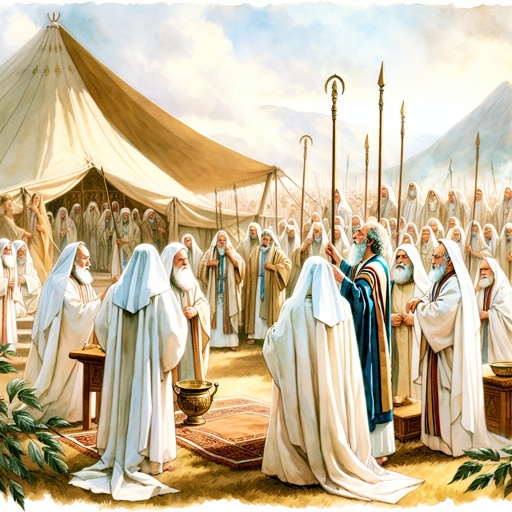
Leviticus 8:1-12

Leviticus 4:11 - "And the skin of the bullock, and all his flesh, with his head, and with his legs, and his inwards, and his dung,"

Leviticus 23:15-22

Leviticus 23:17-22

Leviticus 7:4 - "And the two kidneys, and the fat that is on them, which is by the flanks, and the caul that is above the liver, with the kidneys, it shall he take away:"