The Weight of Sin: A Reflection on Leviticus 4:33
“And he shall lay his hand upon the head of the sin offering, and slay it for a sin offering in the place where they kill the burnt offering.” — Leviticus 4:33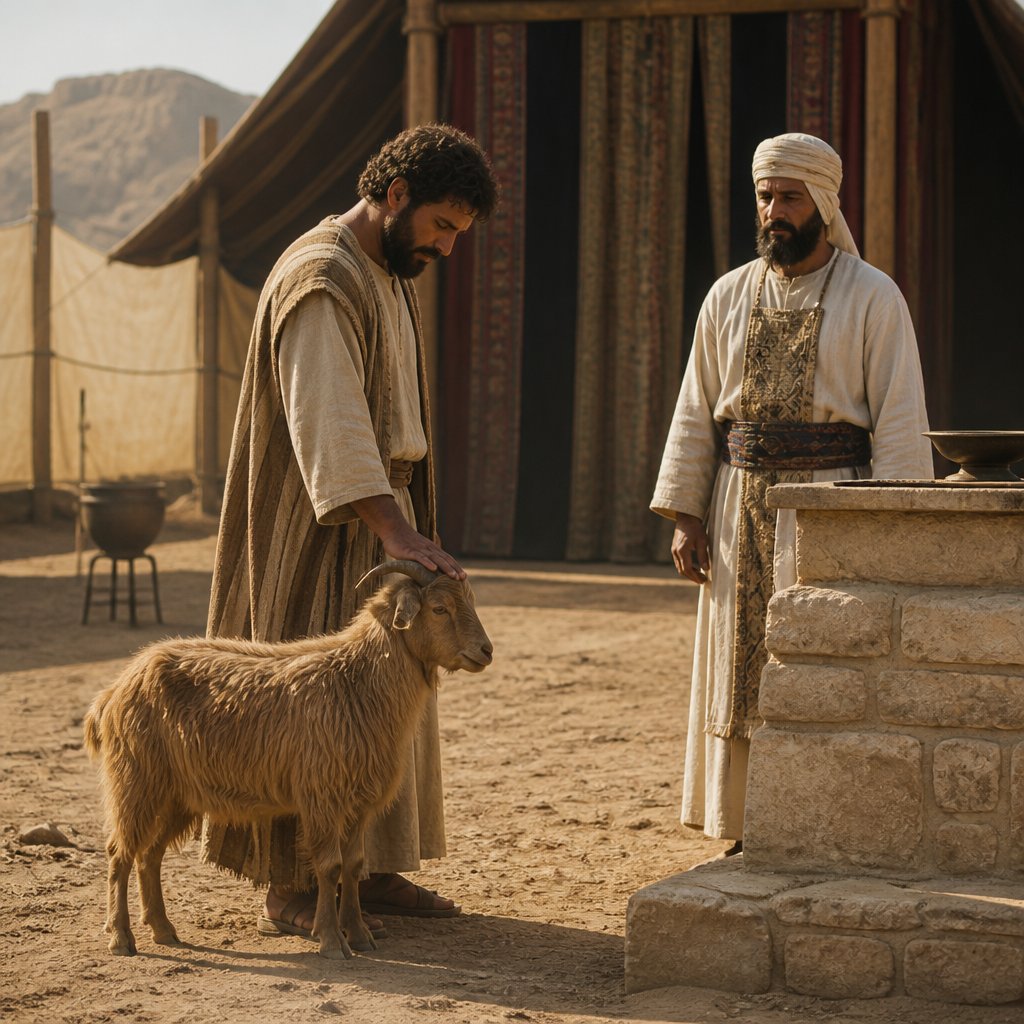
In the book of Leviticus, we encounter the holiness of God and the seriousness of sin. Leviticus 4:33 states, "And he shall lay his hand upon the head of the sin offering, and slay it for a sin offering in the place where they kill the burnt offering." This scripture illuminates vital truths about the atonement of sin and God's provision for reconciliation.
To fully grasp the depth of this passage, we must consider the context in which it was given. Leviticus is often viewed as a book filled with laws and rituals, but at its core is the longing for a relationship with a holy God. The Israelites, as God’s chosen people, needed to understand how to come before Him and uphold His holiness. This sacrificial system was not merely a series of rituals; it was the means by which sinful humanity could approach a perfect Creator.
The act of laying one’s hand on the head of the sin offering is profound. This action symbolizes the transfer of guilt or sin from the individual to the animal. When the worshiper placed their hand on the offering, they were acknowledging their sinfulness and the need for atonement. They were confessing their shortcomings, their failures, and ultimately, their reliance on God’s mercy. This physical act acted as a poignant reminder that sin has weight and consequences. The innocent shoulder the burden in place of the guilty.
Furthermore, the shedding of the blood of the sin offering signifies the severity of sin. In God’s economy, "without shedding of blood is no remission" (Hebrews 9:22). The death of the animal was not just a ritual; it represented the cost of sin. As the animal's life was taken, it brought forth the understanding that something innocent had to suffer to cover something guilty. This foreshadows the ultimate sacrifice of Jesus Christ, the Lamb of God. Just like the sin offering, Jesus bore our sins, transferring our guilt onto Him, so that we, the guilty, could be declared innocent before God.
When we reflect on our current relationship with God, we must recognize that sin still requires a response. While we no longer participate in the sacrificial system of the Old Testament, the principles still apply. We must acknowledge our failures and transgressions before a holy God. In 1 John 1:9 we are reminded, "If we confess our sins, he is faithful and just to forgive us our sins, and to cleanse us from all unrighteousness." Confession is vital; it is our admission of need for grace and mercy, just as the Israelites did through their sin offerings.
It is also crucial to recognize where the offering was killed. The verse indicates that the offering was slain in the same place as the burnt offerings. In the earlier chapters of Leviticus, burnt offerings signify total dedication and surrender to God. This connection invites us to consider where we bring our sins. We are encouraged to bring our sins to the altar, the place of sacrifice, where we lay down our guilt and allow God to work in our lives. Coming to God with our sin is an act of surrender; it acknowledges our utter dependence on His grace for forgiveness and restoration.
In essence, Leviticus 4:33 teaches us that recognizing our sin and seeking atonement is an inherent part of our faith journey. It is a reminder of the weight of our sins, the cost of forgiveness, and the profound grace offered through Jesus Christ. As we come before God, let us place our burdens upon Him, knowing that He bore our sins in His body on the cross (1 Peter 2:24) and provides the wonderful grace to reconcile us back to Him. Let us not forget the holiness of God and the gravity of our need for His cleansing power. Through confession and faith, we can experience the transformative grace that assures us of His love and acceptance.
Get our apps


Artwork for Leviticus 4:33

Leviticus 4:33 - "And he shall lay his hand upon the head of the sin offering, and slay it for a sin offering in the place where they kill the burnt offering."
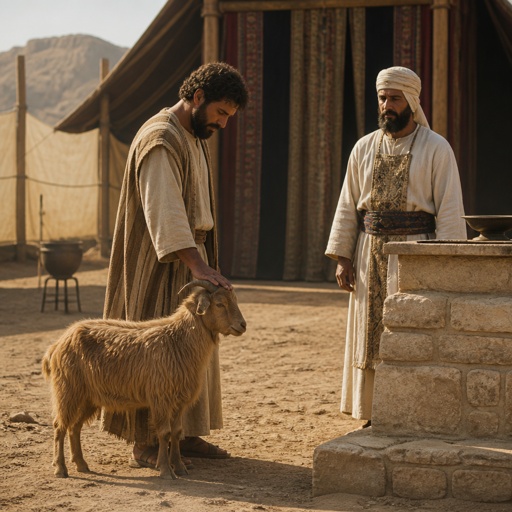
"And he shall lay his hand upon the head of the sin offering, and slay it for a sin offering in the place where they kill the burnt offering." - Leviticus 4:33

Leviticus 23:33 - "¶ And the LORD spake unto Moses, saying,"

Leviticus 14:33 - "¶ And the LORD spake unto Moses and unto Aaron, saying,"

Leviticus 19:33 - "¶ And if a stranger sojourn with thee in your land, ye shall not vex him."

Leviticus 22:33 - "That brought you out of the land of Egypt, to be your God: I am the LORD."

"¶ And the LORD spake unto Moses, saying," - Leviticus 23:33

Leviticus 11:33 - "And every earthen vessel, whereinto any of them falleth, whatsoever is in it shall be unclean; and ye shall break it."

Leviticus 15:33 - "And of her that is sick of her flowers, and of him that hath an issue, of the man, and of the woman, and of him that lieth with her that is unclean."

Leviticus 7:33 - "He among the sons of Aaron, that offereth the blood of the peace offerings, and the fat, shall have the right shoulder for his part."

Leviticus 26:33 - "And I will scatter you among the heathen, and will draw out a sword after you: and your land shall be desolate, and your cities waste."

"¶ And the LORD spake unto Moses and unto Aaron, saying," - Leviticus 14:33

Leviticus 13:33 - "He shall be shaven, but the scall shall he not shave; and the priest shall shut up him that hath the scall seven days more:"

Leviticus 27:33 - "He shall not search whether it be good or bad, neither shall he change it: and if he change it at all, then both it and the change thereof shall be holy; it shall not be redeemed."

"¶ And if a stranger sojourn with thee in your land, ye shall not vex him." - Leviticus 19:33

Leviticus 16:33 - "And he shall make an atonement for the holy sanctuary, and he shall make an atonement for the tabernacle of the congregation, and for the altar, and he shall make an atonement for the priests, and for all the people of the congregation."

Leviticus 8:33 - "And ye shall not go out of the door of the tabernacle of the congregation in seven days, until the days of your consecration be at an end: for seven days shall he consecrate you."

Leviticus 25:33 - "And if a man purchase of the Levites, then the house that was sold, and the city of his possession, shall go out in the year of jubile: for the houses of the cities of the Levites are their possession among the children of Israel."

Leviticus 26: 4-6

Leviticus 26: 4-6

Leviticus 26: 4-6

"That brought you out of the land of Egypt, to be your God: I am the LORD." - Leviticus 22:33

Leviticus 4:1 - "And the LORD spake unto Moses, saying,"

Deuteronomy 33:4 - "Moses commanded us a law, even the inheritance of the congregation of Jacob."

Psalms 33:4 - "For the word of the LORD is right; and all his works are done in truth."

Leviticus 27:4 - "And if it be a female, then thy estimation shall be thirty shekels."

Mark 4:33 - "And with many such parables spake he the word unto them, as they were able to hear it."

Luke 4:33 - "¶ And in the synagogue there was a man, which had a spirit of an unclean devil, and cried out with a loud voice,"

Job 33:4 - "The Spirit of God hath made me, and the breath of the Almighty hath given me life."

Leviticus 4:16 - "And the priest that is anointed shall bring of the bullock's blood to the tabernacle of the congregation:"