The Heart of Sacrifice: Understanding Leviticus 5:7
“And if he be not able to bring a lamb, then he shall bring for his trespass, which he hath committed, two turtledoves, or two young pigeons, unto the LORD; one for a sin offering, and the other for a burnt offering.” — Leviticus 5:7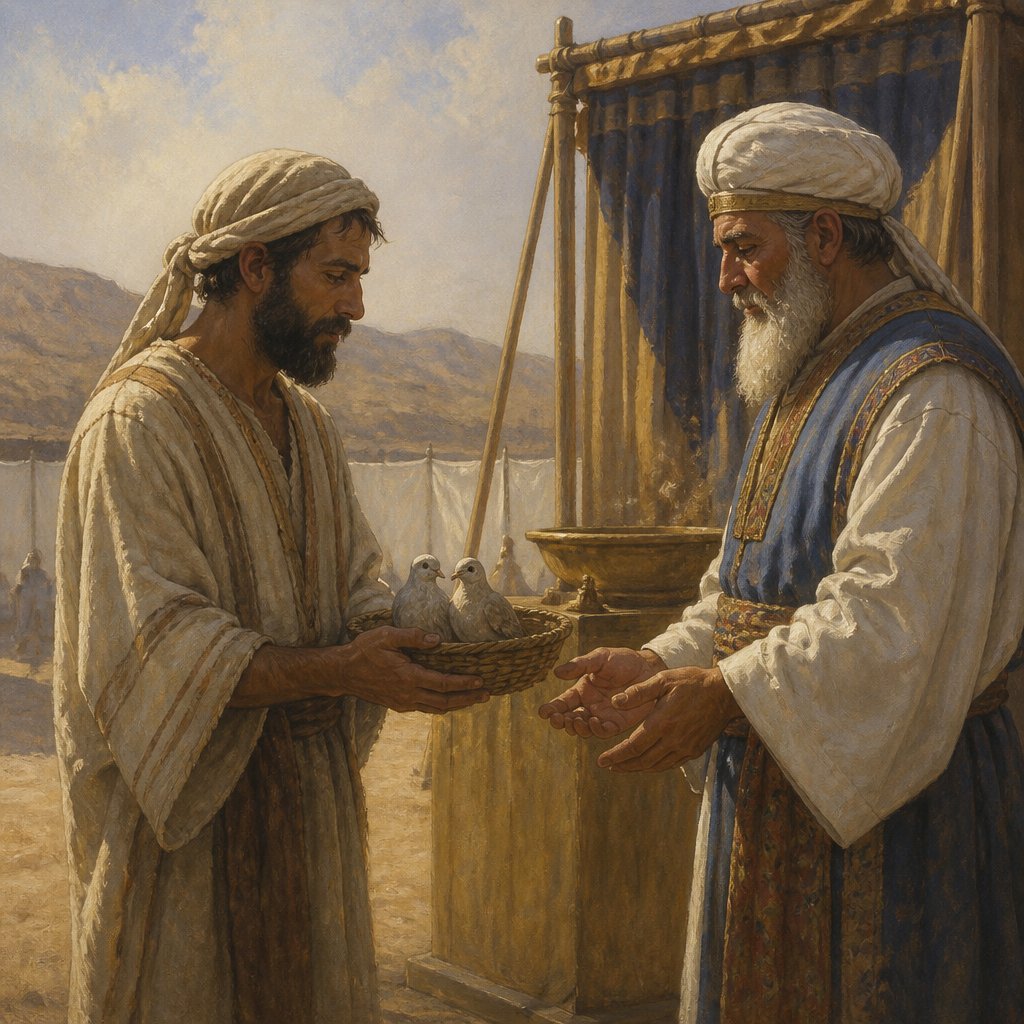
The book of Leviticus is often seen as a collection of laws and rituals that may appear archaic to the modern reader. However, beneath its surface lies a profound understanding of the nature of sin, atonement, and God's desire for genuine relationship with His people. Leviticus 5:7 reads, "And if he be not able to bring a lamb, then he shall bring for his trespass, which he hath committed, two turtledoves, or two young pigeons, unto the LORD; one for a sin offering, and the other for a burnt offering."
In this verse, we see God’s provision for those who find themselves in a less privileged position. The lamb was the ideal offering for sin, representing purity and the highest standard of sacrifice. Nevertheless, God does not disregard those who cannot afford such a costly gift. Instead, He allows for alternatives that also reach His heart—the turtledoves or pigeons. This is essential for us to understand: God values the intention and the heart of the giver over the material worth of the gift.
The concept of sacrifice runs deeply throughout the Old Testament and culminates in the ultimate sacrifice of Jesus Christ in the New Testament. When we consider our own lives, how often do we feel like our contributions or sacrifices are not enough? We might think, "I cannot give as much time as others," or, "I cannot donate as generously as those who are more affluent than I am." In moments like these, Leviticus 5:7 encourages us not to underestimate the value of what we can offer.
God is primarily concerned with our hearts. In times of trespass, when we find ourselves in need of forgiveness, what is essential is not the weight of our offering but the sincerity of our repentance and our desire to be reconciled to Him. The young pigeons or turtledoves, while less costly than a lamb, were still sacrificial offerings. They represented a recognition of wrongdoing and a desire for restoration. Just because something is less valuable does not lessen its importance in the context of worship and relationship with God.
When we read this verse, we are reminded that the social and economic inequalities present in our world do not limit the grace of God. Everyone has access to Him, no matter what their circumstances or resources may be. God is intimately aware of the condition of our hearts and our capabilities. He invites us into a relationship where our honest efforts, irrespective of their size, are welcomed and cherished by Him.
Moreover, we can reflect on the significance of the two offerings mentioned. The first is a sin offering—a recognition of our failings before God. It serves as an acknowledgment that we need forgiveness and cleansing. The second is a burnt offering—a total dedication to God, where the offering is consumed entirely by fire, symbolizing complete surrender and commitment. This duality teaches us to approach God with both acknowledgment of our sins while simultaneously offering our lives as living sacrifices dedicated to His service.
As we move forward in our spiritual journeys, let us be filled with the spirit of humility that recognizes our shortcomings yet clings to the promise of grace afforded to us through genuine repentance. Whether we feel like we have a lamb to offer or only turtledoves, the act of coming before the Lord with sincerity is what counts.
Let us not shy away because of a perceived lack; rather, let us present ourselves fully, knowing that God values the posture of our hearts above all. In every inadequacy, whether in finances, time, or talent, He meets us with His abundant grace and mercy. This is the beauty of our relationship with God—He takes what we offer, however humble it may be, and transforms it into something magnificent for His glory.
Get our apps


Artwork for Leviticus 5:7

Leviticus 5:7 - "And if he be not able to bring a lamb, then he shall bring for his trespass, which he hath committed, two turtledoves, or two young pigeons, unto the LORD; one for a sin offering, and the other for a burnt offering."
"And if he be not able to bring a lamb, then he shall bring for his trespass, which he hath committed, two turtledoves, or two young pigeons, unto the LORD; one for a sin offering, and the other for a burnt offering." - Leviticus 5:7

Leviticus 7:5 - "And the priest shall burn them upon the altar for an offering made by fire unto the LORD: it is a trespass offering."

Leviticus 17:7
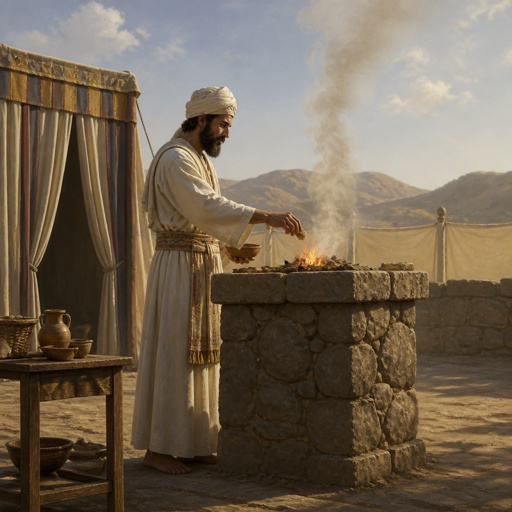
"And the priest shall burn them upon the altar for an offering made by fire unto the LORD: it is a trespass offering." - Leviticus 7:5

leviticus 16:7-10
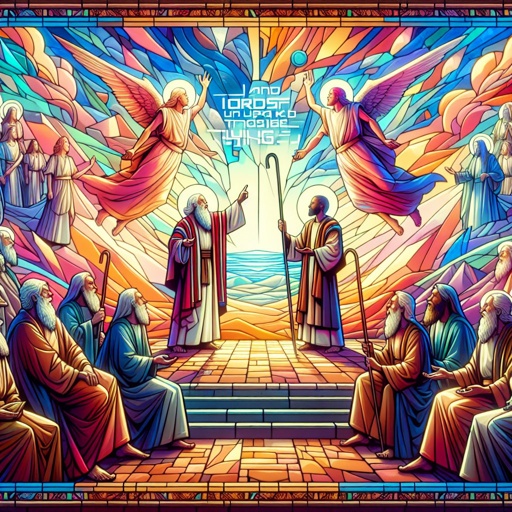
Leviticus 5:14 - "¶ And the LORD spake unto Moses, saying,"

Leviticus 7:22 - "¶ And the LORD spake unto Moses, saying,"

Leviticus 7:28 - "¶ And the LORD spake unto Moses, saying,"

Leviticus 5:5 - "And it shall be, when he shall be guilty in one of these things, that he shall confess that he hath sinned in that thing:"

Leviticus 7:1 - "Likewise this is the law of the trespass offering: it is most holy."

Leviticus 7:7 - "As the sin offering is, so is the trespass offering: there is one law for them: the priest that maketh atonement therewith shall have it."

Leviticus 23:5 - "In the fourteenth day of the first month at even is the LORD'S passover."

Leviticus 19:7 - "And if it be eaten at all on the third day, it is abominable; it shall not be accepted."

Leviticus 5:19 - "It is a trespass offering: he hath certainly trespassed against the LORD."

Leviticus 7:17 - "But the remainder of the flesh of the sacrifice on the third day shall be burnt with fire."

Leviticus 8:5 - "And Moses said unto the congregation, This is the thing which the LORD commanded to be done."
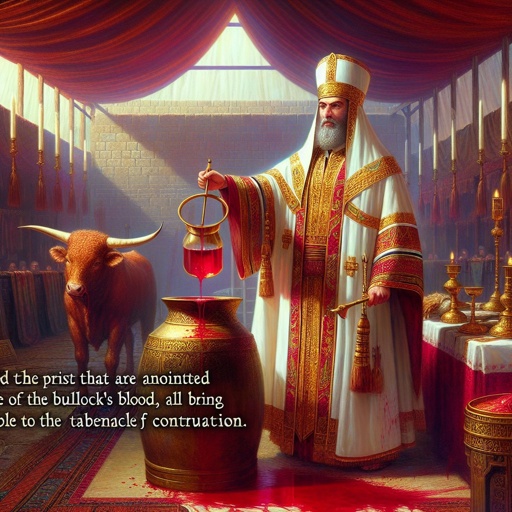
Leviticus 4:5 - "And the priest that is anointed shall take of the bullock's blood, and bring it to the tabernacle of the congregation:"

Leviticus 3:7 - "If he offer a lamb for his offering, then shall he offer it before the LORD."

Leviticus 7:3 - "And he shall offer of it all the fat thereof; the rump, and the fat that covereth the inwards,"

Leviticus 26:7 - "And ye shall chase your enemies, and they shall fall before you by the sword."
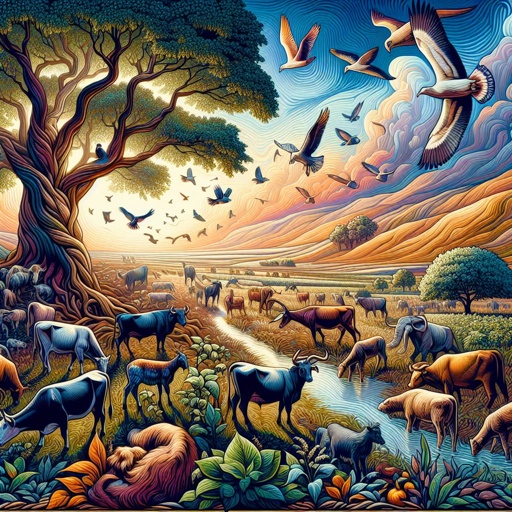
Leviticus 25:7 - "And for thy cattle, and for the beast that are in thy land, shall all the increase thereof be meat."

Leviticus 7:11 - "And this is the law of the sacrifice of peace offerings, which he shall offer unto the LORD."

Leviticus 20:7 - "¶ Sanctify yourselves therefore, and be ye holy: for I am the LORD your God."

Leviticus 10:5 - "So they went near, and carried them in their coats out of the camp; as Moses had said."

Leviticus 2:7 - "¶ And if thy oblation be a meat offering baken in the fryingpan, it shall be made of fine flour with oil."

Leviticus 14:5 - "And the priest shall command that one of the birds be killed in an earthen vessel over running water:"

Leviticus 11:5 - "And the coney, because he cheweth the cud, but divideth not the hoof; he is unclean unto you."

Leviticus 7:31 - "And the priest shall burn the fat upon the altar: but the breast shall be Aaron's and his sons'."

Leviticus 19:5 - "¶ And if ye offer a sacrifice of peace offerings unto the LORD, ye shall offer it at your own will."