What does Leviticus 5:7 mean?
“And if he be not able to bring a lamb, then he shall bring for his trespass, which he hath committed, two turtledoves, or two young pigeons, unto the LORD; one for a sin offering, and the other for a burnt offering.” — Leviticus 5:7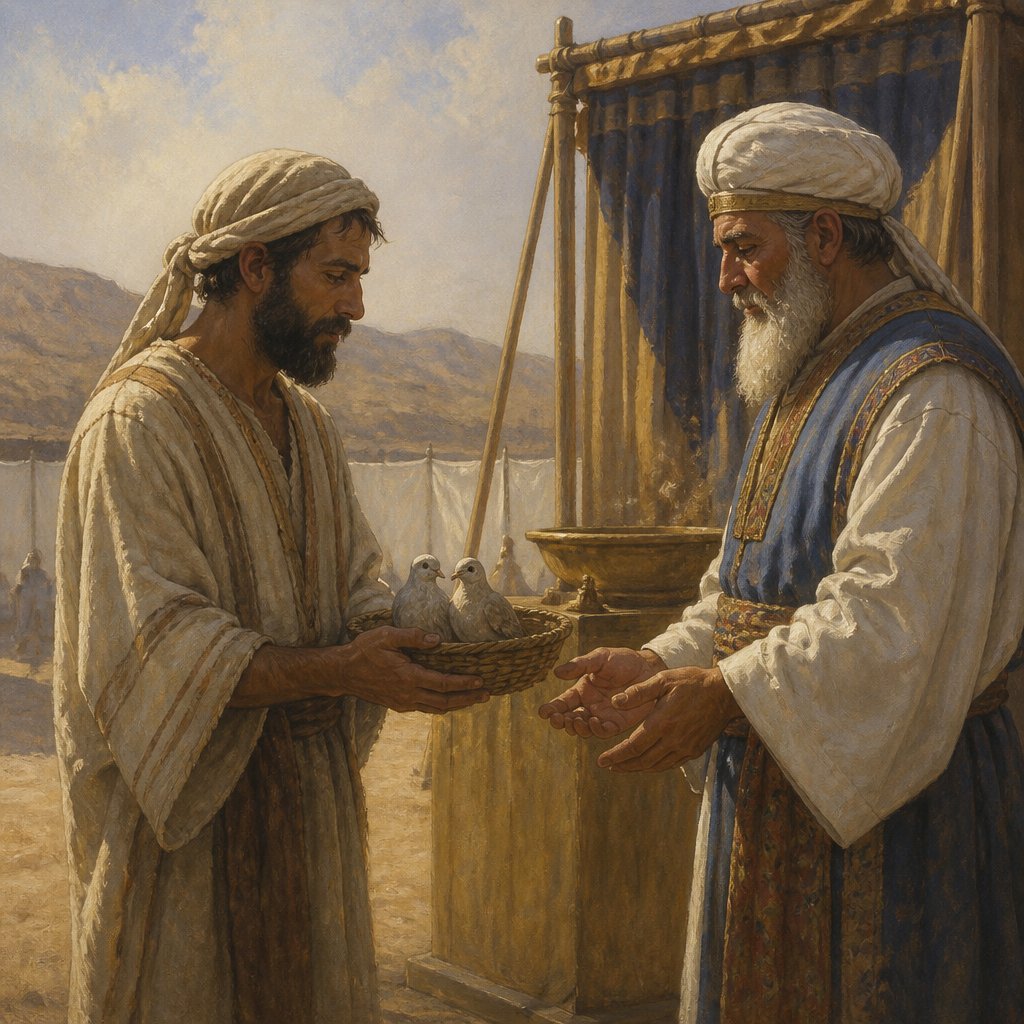
Leviticus 5:7 (KJV) states: "And if he be not able to bring a lamb, then he shall bring for his trespass, which he hath committed, two turtledoves, or two young pigeons, unto the Lord; one for a sin offering, and the other for a burnt offering."
The book of Leviticus is the third book of the Hebrew Bible and the Old Testament. It is a book of laws and regulations for the Israelites, particularly concerning their religious and moral obligations. Leviticus covers a wide range of topics, including sacrifices, purity, and the role of the priests. In this particular verse, the focus is on the process of atonement for a sin committed unintentionally.
The verse begins by addressing a person who is unable to bring a lamb as an offering for his trespass. In this case, the individual is required to bring two turtledoves or two young pigeons as offerings to the Lord. One bird is designated as a sin offering, while the other is to be offered as a burnt offering. This provision allowed individuals who were not able to afford a lamb to still present a sacrifice for their sin.
One of the primary themes of Leviticus 5:7 is the concept of atonement. The act of bringing a sacrifice to the Lord was an integral part of seeking forgiveness and reconciliation. In the Old Testament, sacrifices were a tangible way for the Israelites to express their remorse for sin and their desire to be restored to a right relationship with God. The offering of these sacrifices was an acknowledgment of the individual's wrongdoing and a demonstration of their commitment to seeking forgiveness.
Another theme present in this verse is that of accessibility to atonement. The provision for a lesser offering demonstrates an understanding of the socioeconomic diversity among the Israelites. Not everyone was able to afford a lamb, and the Lord provided an alternative that allowed individuals from different financial backgrounds to participate in the process of atonement. This demonstrates God's fairness and consideration for the circumstances of His people.
The context of Leviticus 5:7 is essential for understanding its significance. The book of Leviticus was written during a time when the Israelites were wandering in the wilderness after their exodus from Egypt. The laws and regulations outlined in this book were designed to guide the Israelites in their worship and daily living, as well as to set them apart as a holy nation. The sacrificial system was central to their religious life, and the requirements for offering sacrifices were a significant part of their spiritual and moral obligations.
Symbolism is also present in this verse. The act of bringing a sacrifice to the Lord symbolizes the individual's desire for reconciliation and restoration. The offering itself represents a substitutionary atonement, where the innocent animal takes the place of the guilty individual. This concept of substitutionary atonement is a precursor to the ultimate sacrifice of Jesus Christ, who would later serve as the ultimate atonement for the sins of humanity.
In summary, Leviticus 5:7 serves as a reminder of the importance of atonement and the accessibility of forgiveness for all individuals, regardless of their circumstances. The verse reflects the mercy of God in providing a way for everyone to seek reconciliation and forgiveness. It also points to the ultimate atonement provided by Jesus Christ, who became the sacrificial lamb for the sins of the world. This verse serves as a foundational principle in understanding the nature of sin, atonement, and the grace of God.
Get our apps


Artwork for Leviticus 5:7

Leviticus 5:7 - "And if he be not able to bring a lamb, then he shall bring for his trespass, which he hath committed, two turtledoves, or two young pigeons, unto the LORD; one for a sin offering, and the other for a burnt offering."
"And if he be not able to bring a lamb, then he shall bring for his trespass, which he hath committed, two turtledoves, or two young pigeons, unto the LORD; one for a sin offering, and the other for a burnt offering." - Leviticus 5:7

Leviticus 7:5 - "And the priest shall burn them upon the altar for an offering made by fire unto the LORD: it is a trespass offering."

Leviticus 17:7
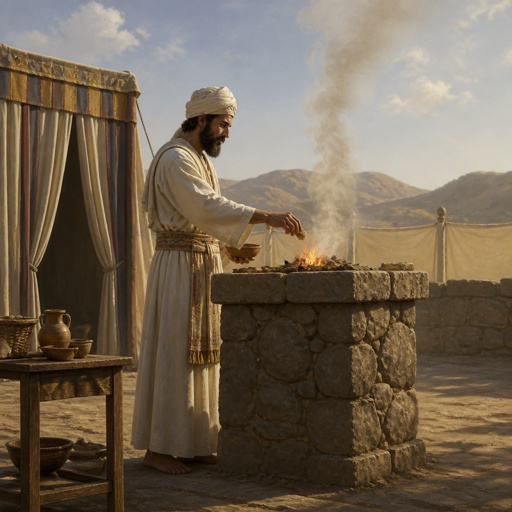
"And the priest shall burn them upon the altar for an offering made by fire unto the LORD: it is a trespass offering." - Leviticus 7:5

leviticus 16:7-10
Leviticus 5:14 - "¶ And the LORD spake unto Moses, saying,"

Leviticus 7:22 - "¶ And the LORD spake unto Moses, saying,"

Leviticus 7:28 - "¶ And the LORD spake unto Moses, saying,"

Leviticus 5:5 - "And it shall be, when he shall be guilty in one of these things, that he shall confess that he hath sinned in that thing:"

Leviticus 7:1 - "Likewise this is the law of the trespass offering: it is most holy."

Leviticus 7:7 - "As the sin offering is, so is the trespass offering: there is one law for them: the priest that maketh atonement therewith shall have it."

Leviticus 23:5 - "In the fourteenth day of the first month at even is the LORD'S passover."

Leviticus 19:7 - "And if it be eaten at all on the third day, it is abominable; it shall not be accepted."

Leviticus 5:19 - "It is a trespass offering: he hath certainly trespassed against the LORD."

Leviticus 7:17 - "But the remainder of the flesh of the sacrifice on the third day shall be burnt with fire."

Leviticus 8:5 - "And Moses said unto the congregation, This is the thing which the LORD commanded to be done."
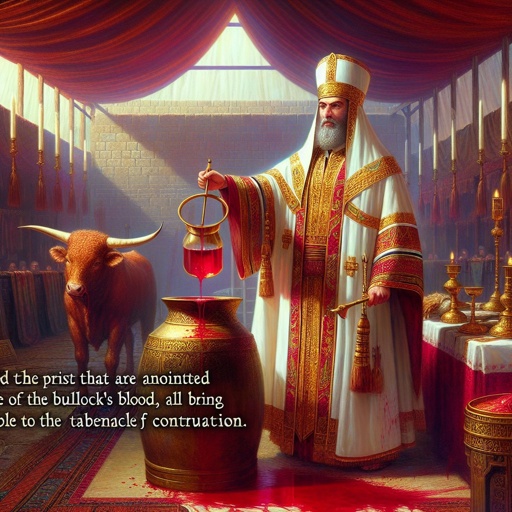
Leviticus 4:5 - "And the priest that is anointed shall take of the bullock's blood, and bring it to the tabernacle of the congregation:"

Leviticus 3:7 - "If he offer a lamb for his offering, then shall he offer it before the LORD."

Leviticus 7:3 - "And he shall offer of it all the fat thereof; the rump, and the fat that covereth the inwards,"

Leviticus 26:7 - "And ye shall chase your enemies, and they shall fall before you by the sword."
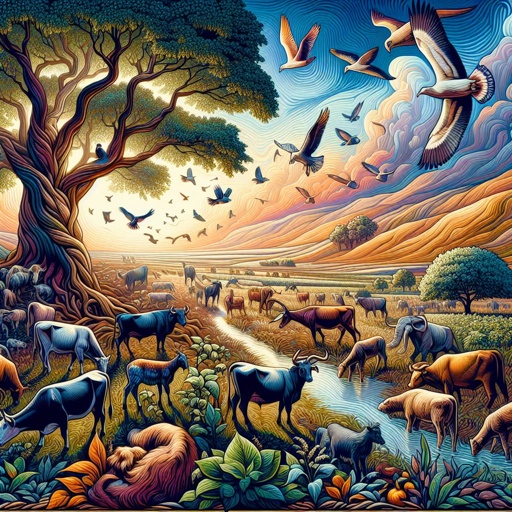
Leviticus 25:7 - "And for thy cattle, and for the beast that are in thy land, shall all the increase thereof be meat."

Leviticus 7:11 - "And this is the law of the sacrifice of peace offerings, which he shall offer unto the LORD."

Leviticus 20:7 - "¶ Sanctify yourselves therefore, and be ye holy: for I am the LORD your God."

Leviticus 10:5 - "So they went near, and carried them in their coats out of the camp; as Moses had said."

Leviticus 2:7 - "¶ And if thy oblation be a meat offering baken in the fryingpan, it shall be made of fine flour with oil."

Leviticus 14:5 - "And the priest shall command that one of the birds be killed in an earthen vessel over running water:"

Leviticus 11:5 - "And the coney, because he cheweth the cud, but divideth not the hoof; he is unclean unto you."

Leviticus 7:31 - "And the priest shall burn the fat upon the altar: but the breast shall be Aaron's and his sons'."

Leviticus 19:5 - "¶ And if ye offer a sacrifice of peace offerings unto the LORD, ye shall offer it at your own will."